
Is grassroots soccer more important than the elite level?

It’s easy to live in the present, to enjoy the moment, the times that you live in. It’s even easier to keep your concentration solely on your priorities in the present. 

But what the great businesses and organisations do differently is what sets them apart from everyone else. Their ability to adapt and look forward to the future, to those who will define their business/organisation when they’re long gone. 

In the case of soccer clubs and the FFA, to keep a sustained and vested interest in grassroots is what is going to hold them in good stead in the next 20-30 years. Planning for the long term, strategically, is critical to the success of anything. 

And it all starts at that level, grassroots. Junior soccer participation numbers are at optimum levels and soccer, as a sport, has never been more popular. The A-League, for all its divisiveness, has grown exponentially and has begun attracting attention from across the world. The NPL, the second division of Australian soccer, has grown in recent years and has risen from the ashes of the NSL. 

Combine this with the fact that the Socceroos haven’t missed a World Cup since 2006, Australian soccer is in a perfect position to capitalise on youth. To motivate them to want to play soccer in the future. To try and turn Australia into a soccer powerhouse. 

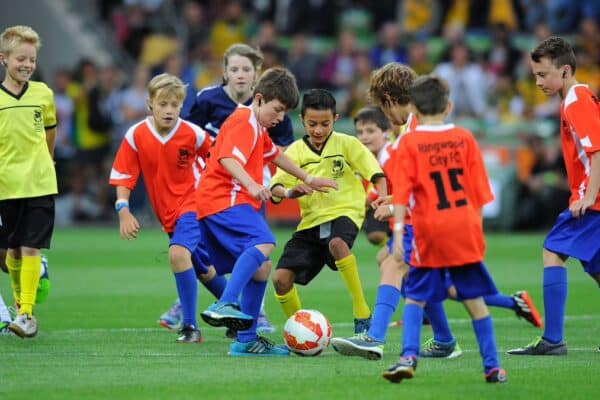
It all begins at the grassroots level. Why? First impressions. It’s always about the first impressions, especially with children. The soccer ability of children needs to be nurtured at a young age, in a way that helps develop them as a player, but more importantly as a person. If done successfully and in a way that doesn’t demotivate them, the sky is the limit. 

Take for example, Paris-Saint Germain wonderkid Kylian Mbappe. At 19 years old, he won the FIFA World Cup with France, had played Champions League football, became one of the world’s most expensive players and had comparisons to the great Thierry Henry. How many 19 year old boys can say that they had a net worth of seven plus figures at the same age?  

I certainly can’t say that. And I’m 367 days older than Kylian. But what most likely differentiates him from everyone else is that he had the talent as a junior. That talent was then nurtured correctly, allowing him to unlock his potential as a soccer player. His career would be nothing without the hard work he puts in, obviously. But at a young age, his ability was recognised and then allowed the blossom under the guidance of the right people. 

And sure, meeting Thierry Henry at a young age would’ve motived him to no end. It would motivate anyone, really. But all that motivation would culminate in him understanding how hard he needed to work to get to the top. Nothing comes without hard work, that’s a fact. But through his upbringing, coaching and talent, he has been able to do what very few can. 

On the flip side of all that, we have those who had the talent, but not the work ethic. Casual fans refer to these players as ‘flops’. It’s a very harsh word to use, but they’re on the right track. 

Take Ravel Morrison. I’m sure Manchester United fans know this name all too well. Once described by Rio Ferdinand and Sir Alex Ferguson as the next big thing, Morrison always had the talent. Plus, playing for Manchester United and under Ferguson would’ve been the dream for a young player wanting to make a name for themselves. 

But Morrison, as the soccer world has come to know, didn’t have the desire to work hard. Loaned out more times than we could count, sold off to different clubs, Morrison saw his career go from hero to zero. 

After being sent out on loan by Italian club Lazio to Mexican club Atlas, Morrison decided to permanently move closer to home, signing a contract with Swedish club Ostersunds. But to say it’s a huge fall from grace would be the understatement of the year. And it’s barely March. 

Morrison could’ve been anything. An England great, a United great, a Champions League winner. He had the soccer world at his feet. But he lacked the one thing he needed most to attain all those accolades. 

The desire to work hard. 

And here we are. He’s 26, supposed to be in the prime of his career. Yet, he couldn’t be further from it. And for how much people will say he’s the definition of a ‘flop’, it’s actually quite sad. He would’ve had dreams, wanting to be the next superstar, just like any other young star. But it hasn’t come to fruition. He still has time to turn it around, but we’ve been saying it for so long now, it’s almost like beating a dead horse. One can hope. 

But he does show one thing, if nothing else. The grassroots level is critical to the development of soccer players, mentally and physically. If a player has the talent, it needs to be nurtured. If nurtured properly, it becomes a case of wanting to do the hard yards all day, every day. Some will turn out to be Mbappes, some will turn out to be Morrisons.  

But everything has a beginning. And the beginning is the most integral part of the entire process. 

Previous ArticleNext Article

Football NSW Expands Flexible Football Program as Women’s Participation Surges

Football NSW has expanded its Flexible Football Initiatives program into six additional associations in 2026, building on a successful pilot year that demonstrated measurable demand for shorter, more accessible formats among women and girls across the state.

The program, a key pillar of the NSW Football Legacy Program funded by the NSW Office of Sport, offers casual tournaments and abbreviated competitions designed to fit around the schedules of women who may not be able to commit to the structure of a traditional 90-minute outdoor winter season. The participation data supports the premise: women currently make up 33 percent of summer football participants compared to 26 percent in outdoor winter football, representing a gap that points directly to the role format flexibility plays in driving female engagement with the game.

First piloted in 2025 in partnership with Football Canterbury, Northern Suburbs Football Association, Macarthur Football Association and Hills Football, the program has now expanded to ten associations across NSW following strong results in its inaugural year.

“Flexible Football gives women more ways to get involved, whether through shorter games or casual competitions,” said Football NSW Female Football Coordinator Emma Griffin. “It’s about making football easier to access and helping more women enjoy playing.”

The structural logic is straightforward. Barriers to participation in women’s sport are rarely about interest, but rather are about time, cost, geography and the degree to which formal competition structures accommodate the realities of women’s lives. A program that removes the requirement to commit to a full winter season lowers the threshold at the point where many women disengage.

The initiative sits within a broader national picture of sustained growth in women’s football, with participation numbers at record levels following the 2023 FIFA Women’s World Cup and the 2026 AFC Women’s Asian Cup currently underway in Australia.

Northern NSW Football Calls in SAPA as Participation Surge Sparks Big Plans

Northern NSW Football has commissioned Sports Advisory Partners Australia to lead the development of its 2027 to 2029 Strategic Plan, a process that will shape the direction of one of Australia’s most significant regional football markets at a moment when the game nationally is navigating unprecedented growth and structural complexity.

The engagement, announced this week, will see SAPA conduct extensive consultation across NNSWF’s registered participants, member zones, standing committees, board of directors and executive leadership before delivering a final plan scheduled for release in September. The firm brings to the project a track record that spans Football Australia, the A-Leagues, AFL, Rugby Australia, Golf Australia and the Oceania Football Confederation.

NNSWF CEO Peter Haynes said the organisation intended to be deliberate and ambitious about what the next plan would ask of the sport in the region.

“This plan will do more than that,” Haynes said. “It will play a critical role in shaping the future of football in our region. We are going to be bold, ambitious and take this opportunity to really push our sport forward to reach its potential.”


Building on a period of significant growth

NNSWF’s current 2024 to 2026 Strategic Plan has already delivered measurable outcomes across participation, competition strength and community engagement, and has done so against a national backdrop that has made the job of growing football both easier and more demanding simultaneously.

The 2023 FIFA Women’s World Cup and the recent AFC Women’s Asian Cup in Australia have driven participation surges that are being felt at the regional level as acutely as anywhere. Northern NSW, which covers a vast and diverse geographic footprint from the Hunter Valley to the Queensland border, has seen women’s and girls’ football registrations climb sharply, reflecting a trend Haynes flagged publicly during Football Australia’s recent push for a $343 million NSW grassroots infrastructure fund, in which he noted that participation across the region was at record levels and still rising.

That growth creates a specific strategic challenge. Momentum is relatively easy to generate in the wake of a major tournament. Sustaining it across a three-year planning horizon, through the inevitable post-event cooling of public attention, against ongoing pressure on club volunteers and community facilities, and in competition with other codes for government funding and ground access, requires a more deliberately constructed framework than goodwill alone can provide.

The 2027 to 2029 plan will need to answer questions that the current plan did not have to confront at the same scale: how to absorb participation growth without degrading the quality of the experience for existing players, how to build the referee and coaching pipelines that expanding competitions demand, and how to make the case for infrastructure investment in regional communities where football’s political leverage is real but not unlimited.


The Regional Dimension

Regional football in Australia occupies a structurally distinct position within the national game. It sits outside the metropolitan NPL systems that tend to attract most of the administrative attention and commercial investment, and serves communities where football is often the largest club-based sport and where the absence of adequate pathways has historically meant talented players relocating or disengaging entirely.

NNSWF’s decision to invest in a professionally developed strategic plan, rather than producing one internally, signals an awareness that the next phase of growth requires external rigour and benchmarking against what is working elsewhere. SAPA’s familiarity with the organisation, cited by Haynes as a factor in the appointment, also suggests a desire for continuity of thinking rather than a wholesale strategic reset.

SAPA Executive Director Sam Chadwick said the firm was focused on producing something actionable rather than aspirational.

“Our goal is to deliver a clear and actionable strategy that will guide continued growth and long-term success for the game,” Chadwick said. “Northern NSW Football has built a strong platform through its 2024 to 2026 Strategic Plan and we are delighted to support the next phase of its journey.”

Community at its Centre

NNSWF Chairman Mike Parsons emphasised that the process would be driven by community voice rather than imposed from above, a commitment that carries practical as well as symbolic weight in a region where the diversity of football communities, from coastal clubs to inland associations, means that a single strategic framework must accommodate significantly different local realities.

“This will be a strategy for the entire football community and it is vital that we hear from as many voices as possible,” Parsons said. “Through genuine consultation and collaboration we will ensure the next strategic plan reflects the needs and aspirations of our community while positioning our game for continued success.”

Consultation opportunities will roll out across the coming months. The 2027 to 2029 Strategic Plan is scheduled for release in September.

Most Popular Topics

Editor Picks

Send this to a friend