
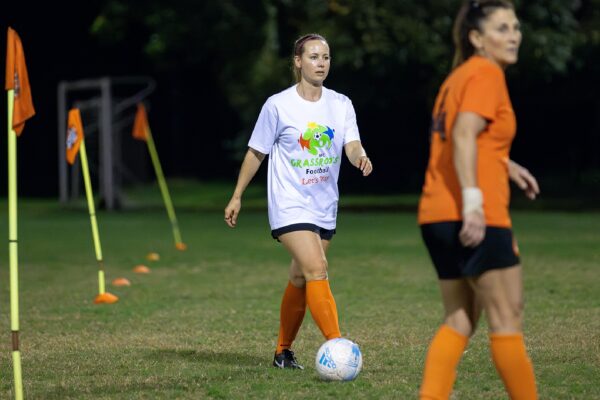




Football NSW has expanded its Flexible Football Initiatives program into six additional associations in 2026, building on a successful pilot year that demonstrated measurable demand for shorter, more accessible formats among women and girls across the state.
The program, a key pillar of the NSW Football Legacy Program funded by the NSW Office of Sport, offers casual tournaments and abbreviated competitions designed to fit around the schedules of women who may not be able to commit to the structure of a traditional 90-minute outdoor winter season. The participation data supports the premise: women currently make up 33 percent of summer football participants compared to 26 percent in outdoor winter football, representing a gap that points directly to the role format flexibility plays in driving female engagement with the game.
First piloted in 2025 in partnership with Football Canterbury, Northern Suburbs Football Association, Macarthur Football Association and Hills Football, the program has now expanded to ten associations across NSW following strong results in its inaugural year.
“Flexible Football gives women more ways to get involved, whether through shorter games or casual competitions,” said Football NSW Female Football Coordinator Emma Griffin. “It’s about making football easier to access and helping more women enjoy playing.”
The structural logic is straightforward. Barriers to participation in women’s sport are rarely about interest, but rather are about time, cost, geography and the degree to which formal competition structures accommodate the realities of women’s lives. A program that removes the requirement to commit to a full winter season lowers the threshold at the point where many women disengage.
The initiative sits within a broader national picture of sustained growth in women’s football, with participation numbers at record levels following the 2023 FIFA Women’s World Cup and the 2026 AFC Women’s Asian Cup currently underway in Australia.