

Tasmanian Liberals commit to $10 million facility investment

A majority Gutwein Liberal Government has promised to invest $10 million towards facility upgrades across four locations.

A majority Gutwein Liberal Government has promised to invest $10 million towards facility upgrades across four locations, promoting increased participation for community sport.

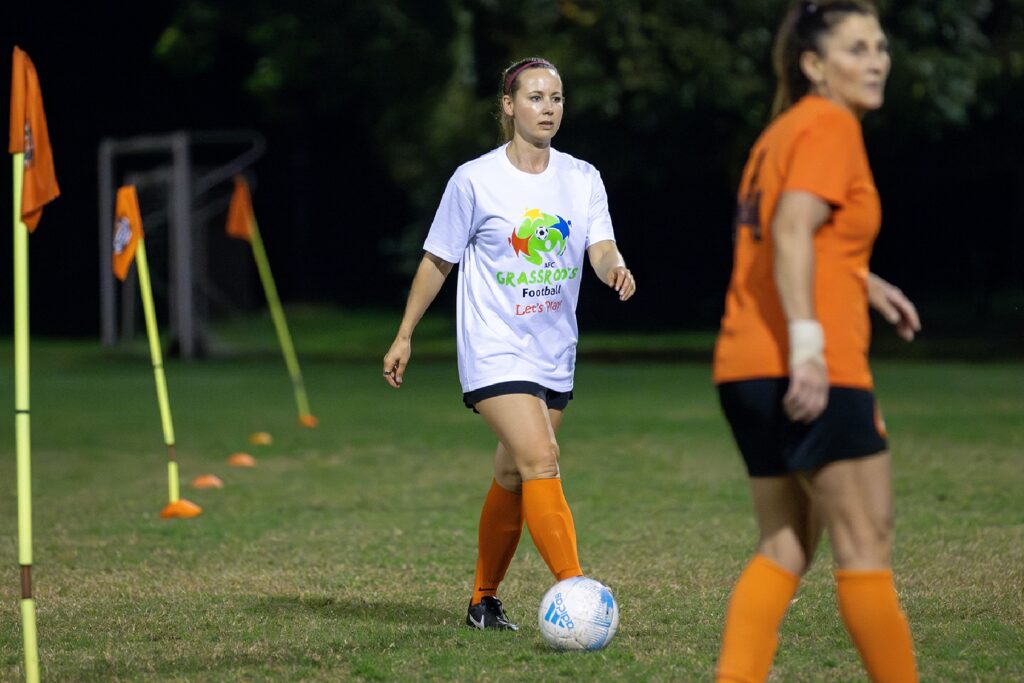
There are over 38,000 Tasmanians participating in football, so facility upgrades are vital for continual growth for the game. Despite Tasmania missing out on holding games for the FIFA Women’s World Cup 2023, the facilities investment would benefit the state’s push to host base camps for international sides coming to Australia.

The following facilities will be part of the investment to reaffirm Tasmania’s commitment to football:

Valley Road, Devonport – The home of Devonport Strikers with 170 registered players will see new funding go towards a new building, additional pitch, new changerooms and lighting.

Birch Avenue, Launceston – The home of Launceston United with 633 registered players is one of the largest clubs in Tasmania. New funding will assist with improved drainage, safety fencing & new and enhanced lighting.

Churchill Park, Launceston – The home of the Northern Tasmanian Junior Soccer Association has 1878 registered players and hosts the annual Launceston Tournament – drawing 1000 junior players to the facility. Funding will deliver new lighting, new changeroom and clubrooms.

Lightwood Park, Kingborough – The home of Kingborough Lions and 552 registered players is the largest club in southern Tasmania. Additional funding will welcome new changerooms and clubrooms.

“Today’s announcement is a huge win for Tasmanian football,” Football Tasmania CEO Matt Bulkeley said.

“We’re extremely grateful to Premier Gutwein and Minister for Sport Jane Howlett for their continued support of the World Game in Tasmania.

“By recognising the magnitude of this opportunity, they have made sure tens of thousands of Tasmanians will benefit from the legacy of the 2023 Women’s World Cup, despite Launceston missing out on hosting tournament matches.

“Football is Tasmania’s most played team sport, and we are proud to lead the nation as the state with the highest proportion of female players in Australia at 28 per cent.

“We know that whenever a Women’s World Cup is played, participation spikes the following year – with the 2023 World Cup being held in Australia we’re expecting this increase to be through the roof, particularly among women and girls.

“In addition to positioning Tasmania to welcome the world’s best players for training, the upgrades to Churchill Park, Birch Avenue, Valley Road and Lightwood Park will also ensure football has the necessary infrastructure to accommodate more growth, and make sure the World Game is Tasmania’s game for many years to come.”

Tasmanians will head to the polls on May 1 for the state election, where a majority Liberal Government will be able to begin the upgrades process.


Previous ArticleNext Article

What does the Federal Budget mean for the Future of Football?

While Canberra spent Budget night arguing about negative gearing, capital gains tax and the politics of broken promises, Australian football was left reading between the lines.

Since ‘Sport’ falls under the jurisdiction of the State level, there was no headline “football package” in Treasurer Jim Chalmers’ 2026–27 Federal Budget, but the Federal budget marks a significant shift in the nation’s economic directive. No billion-dollar infrastructure splash for the world game. No new national facilities program. But for football clubs, players and families, the Budget may still shape the sport more than many realise.

From housing affordability to NDIS reform, fuel prices and women’s participation, football’s ecosystem sits directly in the path of the Government’s economic agenda.

The dominant story of the Budget has been Labor’s overhaul of negative gearing and capital gains tax concessions: reforms that immediately triggered political backlash and dominated national coverage.

Yet beneath the noise, football communities are likely asking a simpler question: what does all this mean for the people who actually play the game?

The answer starts with cost-of-living pressure.

The Budget forecasts inflation hitting five per cent in 2026, largely driven by global fuel shocks linked to conflict in the Middle East. Fuel prices matter enormously to grassroots football, particularly in suburban and regional Australia where families often drive multiple nights a week for training and matches.

The Government’s temporary fuel excise cut which reduced petrol prices by roughly 32 cents per litre may offer short-term relief for clubs travelling long distances and parents already struggling with registration fees.

But the broader economic outlook remains difficult. Slower growth, persistent inflation and rising household pressure could threaten participation rates, especially among lower-income families.

Football Australia and state federations have spent years warning that the game’s biggest barrier is affordability. Boots, rego fees, transport and facility access continue to price players out. A tougher economy only sharpens that problem.

Housing reform may indirectly affect the football workforce too.

The Government argues its negative gearing changes are designed to help younger Australians into home ownership, with Treasury estimating an additional 75,000 first-home buyers over a decade.

That matters in football because the sport’s backbone like coaches, referees, volunteers and young families, is overwhelmingly younger and suburban. If housing affordability improves even marginally, it could stabilise participation in growth corridors where football demand already outstrips infrastructure.

But there are also risks. Critics argue the reforms could reduce investment and tighten rental supply. For many semi-professional players, academy coaches and casual sports workers already locked out of ownership, rising rents would further squeeze disposable income available for sport.

The outlook for differently-abled football

The Budget’s NDIS savings measures may prove even more consequential for football.

The Government says it is “returning the NDIS to its original intent” as part of $63.8 billion in savings and reprioritisations. Disability advocates have already raised concerns about access and participation impacts across community activities.

That includes sport.

Across Australia, football programs have increasingly become entry points for social inclusion and disability participation, from all-abilities leagues to multicultural community initiatives. Any tightening of disability support funding risks flowing directly into reduced participation opportunities for players requiring support workers, transport assistance or specialised programs.

There were, however, some quieter positives for the game.

The Budget continues significant investment into women’s economic participation, childcare and workplace reform. That matters for football at a time when women’s and girls’ participation is booming following the legacy of the 2023 FIFA Women’s World Cup.

Expanded childcare access, stronger paid parental leave and support for women in the workforce may all help sustain female coaching, volunteering and administration pathways that football has historically struggled to retain.

Still, the clearest takeaway for football may be what the Budget did not contain.

Despite football being Australia’s largest participation sport, there was little direct mention of community football infrastructure or long-term sporting investment beyond broader transport and productivity measures.

For a sport preparing for the AFC Women’s Asian Cup 2026 and pushing for future global tournaments, that silence was notable.

Everyone else may be talking about negative gearing. In football circles, the bigger concern is whether families can still afford Saturday mornings at all.

Isabella Mossin awarded Ninja A-League Women Referee of the Year

The youngest recipient since its inception, Mossin will officially receive the award after leading the Ninja A-League Grand Final 2026 on Saturday.


A rapid rise

After debuting in 2023, Mossin has quickly proved quality, composure and confidence as a referee in the Ninja A-League.

As a result of the achievement, Mossin will be the appointed referee for this weekend’s Grand Final between Melbourne City FC and Wellington Phoenix.

After beginning in the North West Sydney Football Association, Mossin then honed her craft with the Football NSW Referee Academy, a journey with foundations truly embedded in youth development and grassroots football.

Thus, Mossin is not just am individual success story, but a symbol of what institutional investment and opportunities can do for young women looking for a pathway to the game.


Celebrating success

The plaudits, unsurprisngly, are arriving from across Australia’s football landscape, with many emphasising the incredible standards set by Mossin since her debut just three years ago.

“This award is testament to Isabella’s hard work and dedication to refereeing, and a great reflection of the next generation of referees coming through the system in Australia,” said A-Leagues CEO, Steve Rosich.

“At just 25 years of age, she has consistently demonstrated composure, leadership, strong decision-making and the ability to perform under pressure in some of the biggest matches in the competition,” highlighted Football Australia Head of Referees, Jon Moss.

“Having someone refereeing their first Ninja A-league Women’s Grand Final at the age of 25 years should inspire all girls and young women referees (and potential referees) and show them that age is not a barrier to talent being recognised within Football Australia refereeing,” said Chair of Football Australia Referee Committee, David Elleray.

Given Mossin’s reputation and experience already at the top level of women’s football in Australia, there is no doubt that she will rise to the occasion this Saturday.

Most Popular Topics

Editor Picks

Send this to a friend