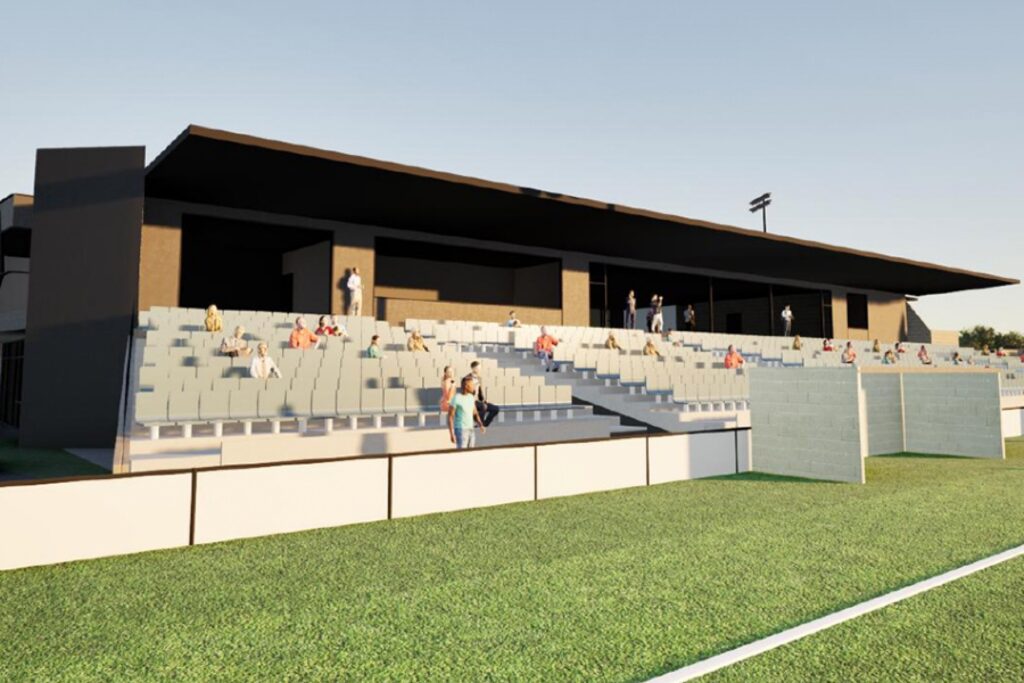


Why Mobile Connectivity is now a critical service in stadiums

As stadiums across the world begin to welcome back crowds, clubs are looking to improve the overall experience for fans in a post COVID-19 world.

Mobile connectivity continues to be an increasingly important utility in stadiums, with fans now somewhat expecting the service at the football grounds they visit.

UK company Wireless Infrastructure Group (WIG) own and operate the nation’s largest selection of indoor mobile networks, serving over 1.25 billion visitors each year.

Working with all UK mobile network operators, WIG have direct experience in designing, installing and operating mobile infrastructure and lead the market in network deployment and management in stadiums and sports venues.

2020 saw the biggest ever growth in the UK for mobile devise usage, with users trying to stay connected whilst offices, businesses and venues were closed due to the pandemic.

These figures are expected to increase again in 2021, with mobile device usage now exceeding time spent watching live TV.

Vijay Sodiwala, Commercial Director at WIG, believes that these increases during the COVID period will impact supporters’ expectations of the matchday experience in stadiums.

“It is inevitable that fan behaviour will have changed significantly in terms of how much they interact with their mobile devices and the quality of connectivity and service they expect as part of their overall stadium experience,” he told fcbusiness.

“Fans will expect dedicated coverage and a high-speed data capability allowing them to access the internet, stream videos, interact on social media, text and make calls to friends and family before, during and after matches.

“They will be less tolerant of a poorer mobile experience, especially in venues that are charging them to attend events.”

Sodiwala explains the best possible way to address poor mobile connectivity in stadiums.

“Outdoor networks (such as masts, towers and rooftop installations) are just not designed to deliver the capacity that is needed when you have stadiums operating at full capacity and it is no longer appropriate to look to the mobile network operators to solve these problems for us,” he said.

“The most efficient solution for enabling properly dimensioned mobile services within a stadium is a distributed digital network approach.

“This is a single network deployed around the stadium that can support all of the mobile network operators and all of their technologies (2G, 3G, 4G and 5G) at the same time. It can also support private network capabilities that stadiums operators and clubs have started to use as a secure, high capacity, flexible and lower-cost alternative to WiFi and traditional wired networks.”

Leading stadium owners and clubs across the UK, including Premier League clubs, have teamed up with WIG to create their own dedicated infrastructure solution.

“Stadium owners and clubs have started to look at investing in their own network infrastructure and partnering with Wireless Infrastructure Group to design, deploy, operate and maintain their stadium networks and provide the interface to the mobile network operators to enable service.”

Sodiwala outlined that because of the rapidly changing behavioural habits of fans, it is an appropriate time for clubs to invest in technology to improve their digital strategic footprint.

“The pandemic has resulted in a seismic shift in consumer behaviour with an increased reliance on mobile devices and adoption of digital technologies,” he said.

“Think of how much our daily interaction has gone digital – from attending meetings to ordering groceries – and stadiums are not exempt. Fans will understandably be relived to return to live events, but their expectations on stadium experience will be markedly different.

“Some of our stadium partners (clubs) have seen the restrictions imposed on us by the pandemic as an opportunity to address this.

“Firstly, to use digital as a more effective way of engaging and connecting with fans through a more immersive and content rich experience. Secondly, clubs are looking at capturing operational efficiencies which have the potential to improve the bottom line – mobile ticketing, in- seat ordering, and mobile payments are the sort of things that come to mind here.

“Underpinning all of this of course is the realisation that high quality mobile service is key to a successful digital strategy.

“A desire to drive fan engagement, improve stadium experience and reduce operational costs certainly feels like a strong response from clubs in a post-pandemic environment. Investing in the right infrastructure approach with the right partner is the first step on that journey.”

More information on the Wireless Infrastructure Group can be found here: https://www.wirelessinfrastructure.co.uk/


Previous ArticleNext Article

LALIGA and EA SPORTS FC collaborate in community pitch project

Part of the EA SPORTS FC FUTURES grassroots initiative, the newly refurbished pitch will provide New York kids with a safe, inclusive space to enjoy the game in their community.


From Europe to US

In the heart of the Bronx, New York, LALIGA and EA SPORTS FC unveiled the new space as the 10th collaboration between the two parties to bring pitches to future generations.

It marks an exciting development not just for community infrastructure, but for representing the global reach and connections made possible through football.

Furthermore, with support from local artist, BG183, The William Lloyd Garrison School, and soccer-inspired education and youth support program, South Bronx United, it stands as a symbol of local pride and grassroots commitment.

“This project in New York is especially meaningful because it brings together access to sport, long-term community impact and a strong local identity,” explained LALIGA’s Executive Director of Business, Jorge de la Vega.

“Together with EA SPORTS FC and our community partners, we want this pitch to become a place where young people can play, grow and find new opportunities.”


Using platforms for wider growth

This is a project which provides aspiring young footballers with the facilities they need to thrive in their personal and sporting development.

And although it carries an emphasis on local values, the global work and vision of EA SPORTS FC and LALIGA is undeniable.

The former now supports similar initiatives across Europe, Asia, Africa, the Americas, and right here in Australia. The Sam Kerr Pitch, unveiled in Sydney in 2023, provides young girls with free access to a high-quality space.

Thus, EA SPORTS FC is showing a unique combination in its community investment strategy: the global name of LALIGA, paired with collaboration from local organisations, ultimately establishing something even bigger.

“While EA SPORTS FC lives in the game, our ambition goes beyond it – working with partners like LALIGA and local communities to create spaces where football can be played and experienced physically,” outlined EA SPORTS FC Senior Director, Partnerships Marketing, James Salmon.

“Projects like this in the South Bronx show how football can bring people together and create lasting impact.”


Small space, big impact

Although this may be one small pitch in the Bronx, its signficance resonates with grassroots communities across the world who know its true value.

Hopefully, EA SPORTS FC will continue to show their commitment to next generations for many years to come.

Football Pro Directory Launches as Australia’s New Digital Hub for the Football Industry

As Australian football continues to expand across grassroots, NPL and professional levels, a new platform is aiming to connect the entire ecosystem in one central place.

Football Pro Directory has officially launched as a dedicated online hub designed to bring together clubs, governing bodies, suppliers, service providers and industry professionals from across the Australian football landscape.

Part of the One-Nil Media family, the platform has been built to simplify how football organisations discover trusted partners, access resources and grow meaningful industry connections.

At a time when clubs are navigating increasing operational demands both on and off the pitch, Football Pro Directory provides a streamlined destination for organisations seeking support across areas such as coaching, technology, media, sponsorship, infrastructure, equipment, medical services and fan engagement.

The platform also offers businesses and organisations the opportunity to elevate their visibility within the football industry through premium listings, tailored campaigns and feature-driven storytelling designed to connect directly with decision-makers across the game.

From grassroots clubs searching for operational support to professional organisations looking for specialist services, Football Pro Directory has been positioned as a practical tool built specifically for the realities of modern football administration.

Backed by Soccerscene’s established football media network, the directory combines industry exposure with educational resources and business opportunities, helping organisations strengthen their presence within Australia’s rapidly evolving football ecosystem.

The platform features categories spanning football clubs, professional services, football technology, media and marketing, photography, medical providers and equipment suppliers, alongside resources focused on grants, facilities, coaching, sponsorship and industry innovation.

As football increasingly embraces digital transformation and interconnected industry networks, Football Pro Directory arrives as a platform designed to make collaboration, visibility and growth more accessible across every level of the game.

To explore the platform or list your organisation, visit Football Pro Directory.

Most Popular Topics

Editor Picks

Send this to a friend