



FA partners with Coca-Cola ahead of FIFA World Cup 2026

The two-year partnership will place the global soft-drink giants as the Official Supplier for Australia’s Men’s and Women’s senior national teams.


Global partner, global stage

As the Socceroos look to deliver performances on the pitch at this summer’s tournament, it is a move off the pitch which will capture the imagination of fans across the country.

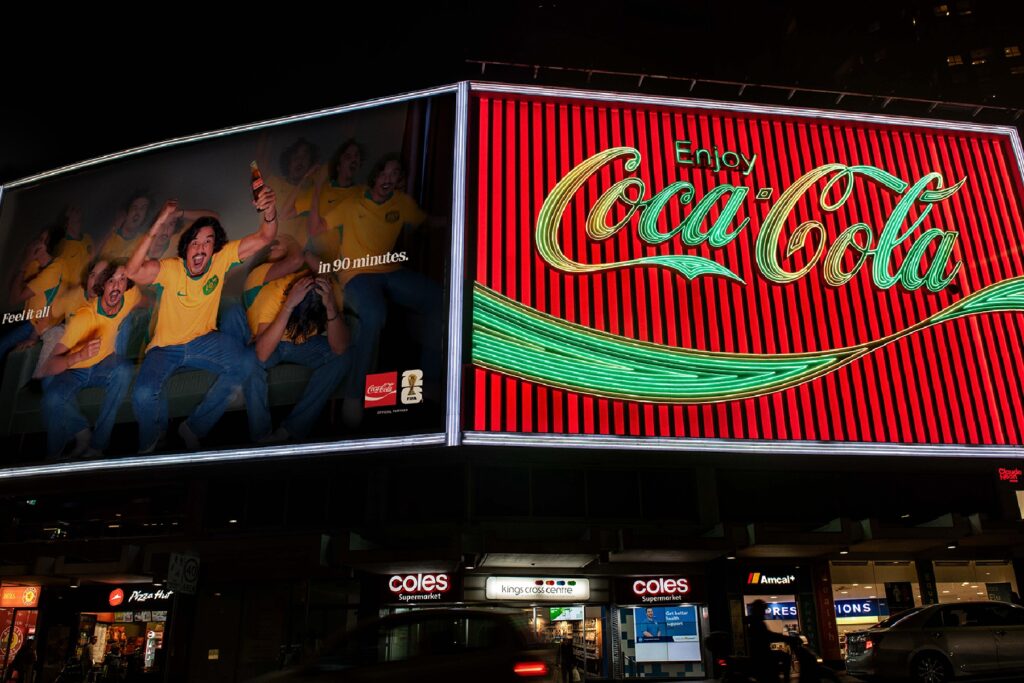
Football Australia announced an exciting deal with Coca-Cola, designed to align the global reach of football – and of the brand itself – to unite and engage fans this summer as well as during the FIFA Women’s World Cup 2027.

Thus, through national campaigns featuring prize draws and the chance to access various rewards, Coca-Cola will help to drive passion and interest in upcoming major tournaments.

“This partnership brings together the global scale of Coca-Cola with the passion and reach of football in Australia, creating new opportunities to connect with fans across the country,” explained FA CEO, Martin Kugeler, via press release.

“The upcoming FIFA World Cup 2026 represents a key moment for the CommBank Socceroos, and the Coca-Cola campaigns will help bring supporters closer to the team through unique and engaging experiences.”

Furthermore, with the FIFA Women’s World Cup 2027 also set to enjoy similar campaigns by Coca-Cola, the partnership’s impact and reach will extend across both the men’s and women’s game.


Marketing power

As football continues to grow – both in financial power and population reach – collaborations with global brands are now an expected aspect of tournament build-ups.

The Royal Spanish Football Federation (RFEF) also struck a deal with fashion brand Loewe, set in place for the next four years. In a similar vein, England’s off-pitch teamwear will feature the marks of both Nike and Palace Skateboards, while France will receieve their prematch jersey from Nike and Jacquemus.

This is the state of the landscape. Aligning global brands and household names with a sport capable of reaching billions at once.

Values, reach and connecting with fans. Three key ingredients to a successful collaboration.

Such alignment is key to the partnership between FA and Coca-Cola, as recognised by Managing Director, Coca-Cola Europacific Partners, Orlando Rodriguez.

“For nearly 90 years, Coca-Cola has been a part of the fabric of Australian life – bring people together through shared moments,” said Rodriguez.

“Partnering with Football Australia reflects our continued commitment to connecting communities through experiences that unite the nation, with the CommBank Socceroos and Matildas at the heart of that.”

Previous ArticleNext Article

What do Football Queensland’s Annual Numbers mean for Australian Football?

Football Queensland has released its 2025 Annual Report, revealing record total revenue of $25.3 million, participation exceeding 296,000 and more than 94,000 female participants across the state, as the organisation positions itself for a decade of growth leading into the Brisbane 2032 Olympic and Paralympic Games.

The report, released following the Annual General Meeting on Friday May 22, documents a year in which Football Queensland recorded a pre-depreciation surplus of $306,599 while maintaining participant registration fees at their lowest level among all Australian member federations for the fifth consecutive year. A statutory deficit of $269,860 after depreciation was recorded following the recognition of a $295,953 impairment against a long-outstanding debt owed by Football Australia, a matter the board and executive indicated they would continue to pursue.

Total revenue grew from $23.9 million in 2024 to $25.3 million in 2025, driven by increases across registration income, community and advanced football programs, and other income streams. Commercial revenue declined slightly from $3.66 million to $3.36 million across the same period.

Growth on and off the field

The participation figures embedded in the report underscore the scale of the challenge and opportunity facing Queensland football. Women’s and girls’ participation reached 94,165 across all programs, with club-based women’s and girls’ participation growing to 37,946. Coles MiniRoos participation climbed seven percent to 46,448, with female MiniRoos participation up ten percent.

Girls United programs welcomed more than 3,500 participants across leagues, social sessions and carnivals statewide, while the Q-League Schools Competition has now delivered playing opportunities to close to 1,000 students since its inception. Walking Football continued to expand, with the 7th Annual QUT Walking Football Cup attracting 39 teams and more than 300 participants.

Digital engagement also reached new heights, with FQTV livestream views climbing to 2.47 million and women’s viewership surging 67 percent across the year, a figure that reflects the growing audience for female football at state competition level and points to the commercial opportunity the women’s game represents for Queensland football governance.

Coach registrations grew 22.9 percent, with Football Queensland delivering courses to close to 3,000 participants across the state including dedicated all-female Foundation of Football, C Diploma and B Diploma programs. Referee registrations grew 6.3 percent, supported by 170 courses delivered to more than 2,100 attendees and a landmark Memorandum of Understanding with three of Queensland’s leading school sport associations to strengthen referee development pathways.

The 2032 dimension

Perhaps the most consequential element of the 2025 report is Football Queensland’s progress on the Brisbane 2032 infrastructure agenda. The organisation submitted a comprehensive proposal to the Queensland Government’s 100-Day Olympic Infrastructure Review, advocating for a purpose-built Tier 2 rectangular stadium, upgrades to Perry Park and the establishment of a Queensland State Home of Community Football at Meakin Park.

The submission secured meaningful outcomes, with Queensland Government contributions toward Perry Park and a State Home of Community Football included in the government’s 2032 Delivery Plan. The infrastructure foundations being laid now will determine whether the Games leave a lasting legacy for football in Queensland or a missed opportunity.

CEO Robert Cavallucci said the year had been defined by investment in the structures that make participation possible.

“Our priority remained the delivery of accessible and inclusive participation opportunities for all Queenslanders as our community and social programs reached thousands of players in every corner of the state,” Cavallucci said.

Geelong Regional Football Hub vision one step closer to reality

A process five years in the making, the Geelong Regional Football Hub (GRFH) will now build its home at Sutcliffe Reserve in Corio.

A major advancement

The project promises to be a major boost for the football community in Victoria’s west.

But the approval isn’t just about addressing the current issues facing players in and around Geelong (with just one football pitch found per 6,971 people), it symbolises an all-important promise to players, coaches and supporters:

A promise to invest, support and grow.

So now, following an extensive process of potential site assessments and council approvals, Football Victoria (FV) will prepare to lay the physical foundations at Sutcliffe Reserve in Corio – ten minutes away from Geelong CBD.

“This is a brilliant result for the sport in Victoria and the start of something truly exciting for football in Geelong and the surrounding area,” said FV CEO, Dan Birrell, via press release.

But despite the obvious anticipation over site approval, there remains one more bridge to cross to bring this project from blueprint to building block: securing funding.


What is the GRFH?

Beyond a mere community football centre, the GRFH will become a world-class hub for playing opportunities, development pathways and venue for several of FV’s most popular competitions.

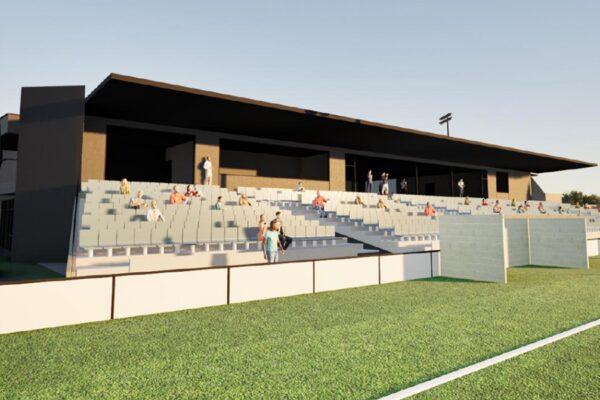
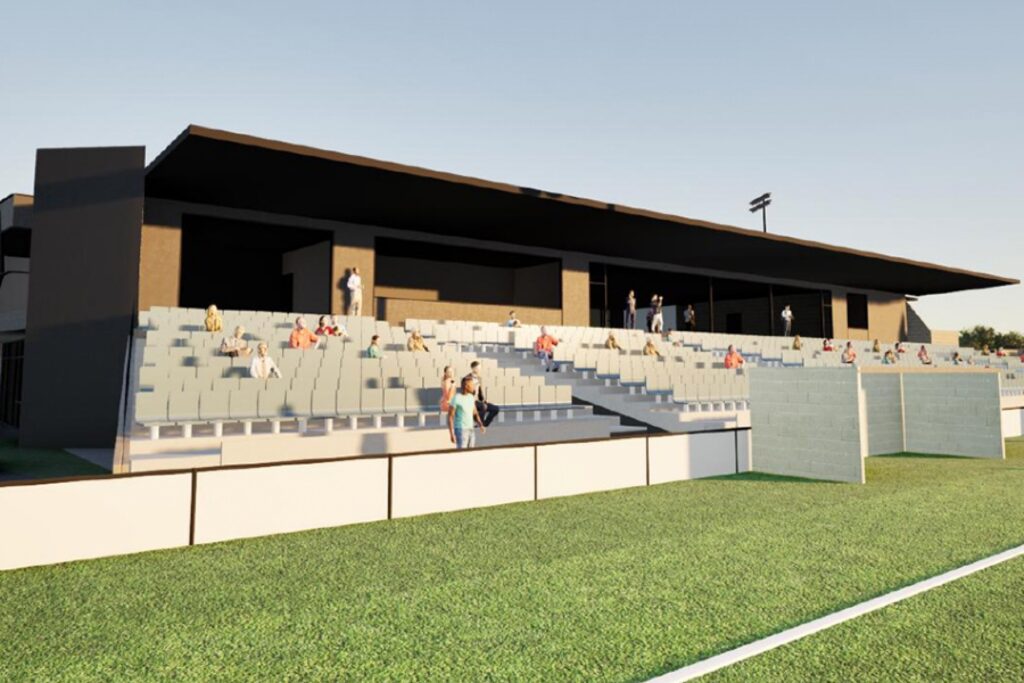
The proposed site will include five pitches, of which two will boast seated stands, as well as two pavilions, social spaces, kitchen and bar areas, media spaces, and facilities for players and match officials.

Such extensive, thorough infrastructure will therefore ensure the site can host an array of competitions for players across the landscape to showcase their talent. From supporting everything from school competitions to NPL VIC Men’s and Women’s games, the GRFH will be a place for player growth, opportunity and community engagement with the beautiful game.

And as Geelong Mayor, Stretch Kontelj, highlighted, the current demand requires investment of this nature as soon as possible.

“With more than 7,370 registered players across the Geelong region, the scale of demand is undeniable. A regional football hub would be genuinely transformational,” Kontelj said via press release.

“It would drive participation across all genders, abilities and levels of the game, strengthen education and development pathways, attract major events and tournaments and deliver lasting social and economic benefits for Geelong and the broader region.

The demand is there. The support is unwavering.

All that remains is the financial backing to bring about real, tangible results for those driving this vision forward.

Most Popular Topics

Editor Picks

Send this to a friend