




Businesses, let alone sports organisations, have to constantly be on the lookout for strategies to enable them to evolve their practices. With fans left uncertain and cautious as a result of the COVID-19 pandemic, Sydney FC identified the need for a cloud-based and more modern, user-friendly customer support system.
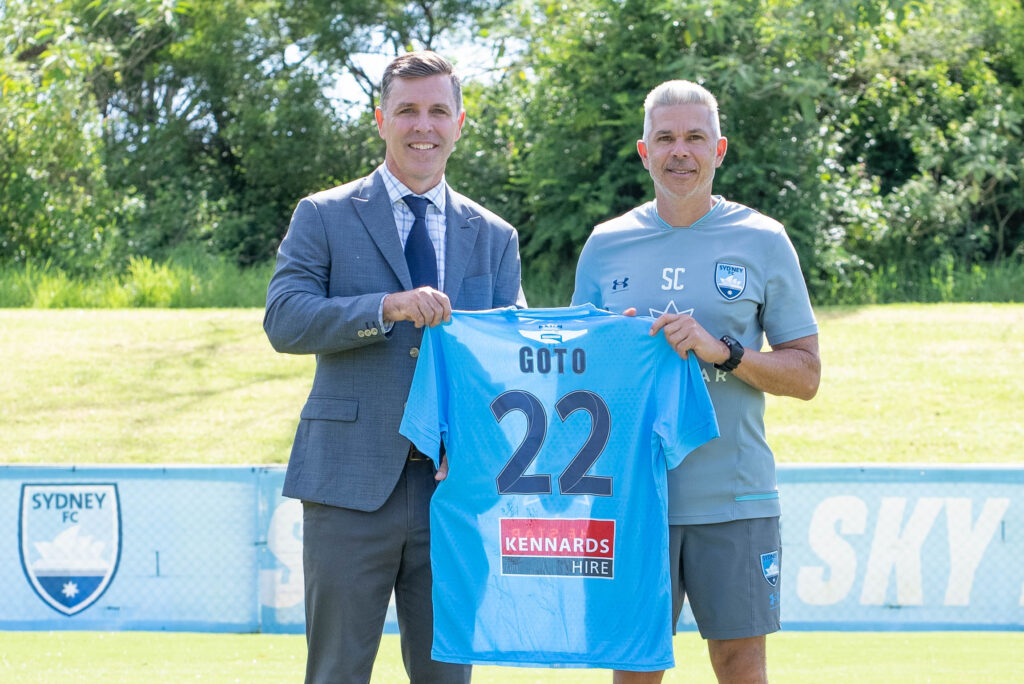
Having been their official communications partner since February 2022, GoTo have provided Sydney FC with the solutions they needed. A flexible-work provider of software as a service (SaaS) and cloud-based remote work tools for collaboration and IT management, GoTo specialise in implementing innovative and easy-to-use cloud phone, video conferencing, virtual event, remote access and IT support products.
In a chat with Soccerscene, Sydney FC’s new Chief Executive Officer Adam Santo and GoTo’s Vice President of APAC Lindsay Brown identified the impact of having a unified technological solution for the club customers and fans.
 Adam Santo:
What spurred Sydney FC to update their customer support phone solutions?
Adam Santo: During COVID lockdown, with all staff working from home and an increased need to manage inbound traffic, we realised the systems we used were antiquated and not adaptable enough for us to continue our operations at the standard we expect. We needed a new modern, cloud-based system that could manage all customer communications together in one platform, constantly improving the experience, but also a system that could provide us insights to manage things behind the scenes. This included call queue and pathways, missed calls, customer journeys and messaging, and call back times which are all things that we could make changes to in real-time to constantly improve the outward facing customer service.
What led you towards GoTo and what was the process like implementing it into the business?
Adam Santo: We came to the GoTo solution through a third-party supplier who helped us map out our customer facing needs, as well as ease of implementation and ongoing administration requirements. Commercial viability was also an important consideration in our transition to GoTo, which was extremely appealing without the burden of additional costs to our business and enabling the Club to realise a faster time to value. It was important for us to have a system we could move onto that would enable flexibility into the future, and enable us to improve our customer experience, as well as look longer term to how we could best run outbound sales campaigns with our upcoming return to Allianz Stadium.
Through the implementation of GoTo, how did it improve Sydney FC’s customer support needs and overall operations?
Adam Santo: We have been using GoTo since the beginning of 2022 and from the start it has been an exceptionally easy system to onboard and use. Initially it was about building benchmarks for our customer service delivery including looking at the number of calls received during peak times, how many handled and missed calls we were servicing, and our overall customer experience. It allowed us to plan staff resourcing and personnel changes effectively.
As we began to plan our return to Allianz Stadium campaign and we onboarded a range of sales staff, we are using the analytics of the system to help us manage sales techniques and benchmarks to help us achieve goals which include inbound and outbound enquiry data, call durations and engagement or listening in on calls and post call coaching. This is where the system will bear the most fruit as it’s going to make us more effective in managing leads, managing customer service and converting a whole range of future clients.
How was GoTo received by Sydney FC customers and fans? Did they feel it better engaged with and satisfied their needs?
Adam Santo: Quite simply the GoTo system works so our members and fans are satisfied with the service.

Lindsay Brown:
What separates GoTo from other customer support phone solutions?
Lindsay Brown: GoTo offers the only unified portfolio of communications and IT support tools and it’s built for SMBs. GoTo provides 99.99% up-time, a zero-trust approach to security, and products that can be deployed in minutes or hours, not days or weeks.
Over one billion people and nearly 800K customers have used GoTo products to thrive in a virtually connected and flexible world. Importantly, we build our solutions with our customers, for our customers.
We believe that SMBs have often been overlooked, but we’re making sure that SMBs have access to simple, affordable and flexible enterprise-grade tools that can help them thrive and run their business from anywhere.
GoTo offers flexible, easy-to-use business communication and IT management tools such as GoTo Connect and GoTo Resolve to keep businesses connected and supported.
GoTo’s flexible, unified communication solution, GoTo Connect, includes the ability to reach a large audience whilst personalising the user experience; improves business productivity with automation of administrative tasks; ease of use for trainers and presenters with very little training required; extensive resource library to help improve adoption and usage; availability of reporting and analytics to help improve and optimise the session delivery for next time; and of course it is reliable, functional, practical and so easy to use.
How did the implementation of GoTo aid Sydney FC as a business in effectively engaging with and satisfying the needs of their fans/customers?
Lindsay Brown: 2022 was going to be a huge year for Sydney FC. They knew the way they communicated with members, fans, club partners and employees would be more critical this year than ever before, especially as they transitioned into two phenomenal pieces of infrastructure for Sydney FC.
Choosing GoTo as their communications solution, Sydney FC found a simple and nimble solution which effectively managed its call centre, providing its fan base and club partners with support they needed. GoTo Connect provided Sydney FC with a modern cloud-based telephony and communication solution that was easy to use, flexible and quick to implement. The flexible cloud solution meant they could quickly adopt the technology in one location and move it seamlessly to their new premises at the time of their choosing, at a suitable rate, without the need to consider carriage service re-location, number porting, hardware installation, testing, verification and project management. The time to value and return on investment by choosing GoTo Connect was definitely a key consideration for Sydney FC, as we believe it would be for any SMB. Commercial viability was key to enabling Sydney FC to transition to GoTo Connect without the burden of additional costs to the business.
GoTo provided all the right solutions for Sydney FC in one place, including complete control of their own customer service interface, easy-to-use system for staff, and from a management perspective, visibility to live call performance and reporting.
GoTo’s comprehensive portfolio of IT tools, including GoTo Connect and GoTo Resolve, will continue to give Sydney FC the perfect platform to succeed in the next stage of the club’s growth.
How does a unified technology solution benefit businesses from an IT and agent/team perspective?
Lindsay Brown: With the growing adoption of flexible working models, the role of IT is just as much about connecting with and communicating with people as it is about solving tech problems. According to a recent Frost and Sullivan study commissioned by communication, collaboration and IT support solutions provider GoTo, 76% of IT professionals said they are experiencing a large increase in workload because of remote and hybrid-work setups. Additionally, 43% say IT has become more difficult overall as a result of these new, flexible ways of working.
Not only has the workload increased but connecting and engaging with employees and customers also remains a major hurdle for dispersed teams. Having the right digital solutions will help. Then ensuring SMBs unify and consolidate communication, collaboration and IT management tools is key to making IT remote-work friendly in the future, while also significantly reducing IT overheads and expenses.
But it isn’t just about fewer tools. It’s about better tools, especially when it comes to simplifying the complexity IT help desks must now manage and support in remote working environments.
According to Frost & Sullivan’s research, a third of small business leaders (33%) plan to upgrade their help desk tools in 2022 and 95% say consolidation of their tech stack is either already underway at their organisations or they plan to start consolidation in 2022.
Just as important as investing in a consolidated tech stack is giving your employees the freedom to choose the flexible work style that works best for them. This will relieve pressure on IT, boost productivity, and help small businesses and their workers do their best work from anywhere. Because at the end of the day, it’s not about the tools, it’s about growing your business. The technology should just get out of your way and allow your business to thrive.
What are the steps businesses can take to identify the right solution for them?
Lindsay Brown: When looking to identify the right unified technology solution for your business, you need to first conduct a full business analysis, identify the key areas which would benefit from the solution, prioritise those needs, optimise your tech stack and, importantly ensure the right technology partners are selected to achieve the best possible outcomes.
Research conducted by Frost & Sullivan – commissioned by communication, collaboration and IT support solutions provider GoTo – revealed that business leaders are prioritising IT needs more than ever to ensure their businesses operate effectively. These are the steps required to identify the right solution for your business:
- Conduct a full business evaluation and digital audit. Analyse all pillars of the business to work out what can be done more efficiently and effectively and how technology can be the enabler. Assess the existing tech stack and see if there are ways to consolidate and optimise for performance.
- Prioritise digital requirements. In Frost & Sullivan’s research with GoTo, the top five selection criteria for businesses choosing a new IT solution were:
- Supporting IT processes automation 28%
- Improving employee productivity 25%
- Ensuring performance & reliability 25%
- Value for money 23%
- Improving IT administration/management 22%
The research also found that one of the most important digital solutions to invest in, is one which ensures businesses can successfully run from anywhere with video conferencing and IT helpdesk tools being the most popular applications:
- Select the right provider/s. Do the research in order to find the right provider/partner for each individual business. Choose the solution that is suitable and cost effective for the size of the business as it stands today, yet with the capability and capacity to grow as the business scales, providing on-demand support as and when required.
- Invest. There’s no time to wait and there’s no reason to, due to the tax benefits available as part of the Australian Government’s digitalisation incentives. The market is constantly transforming, and SMBs cannot afford to be left behind. The bonus deduction applies for qualifying expenditures up to $100,000 per annum incurred between 29 March 2022 until 30 June 2023.