



Northern NSW Football form Premier Youth League to increase pathways

Northern NSW Football

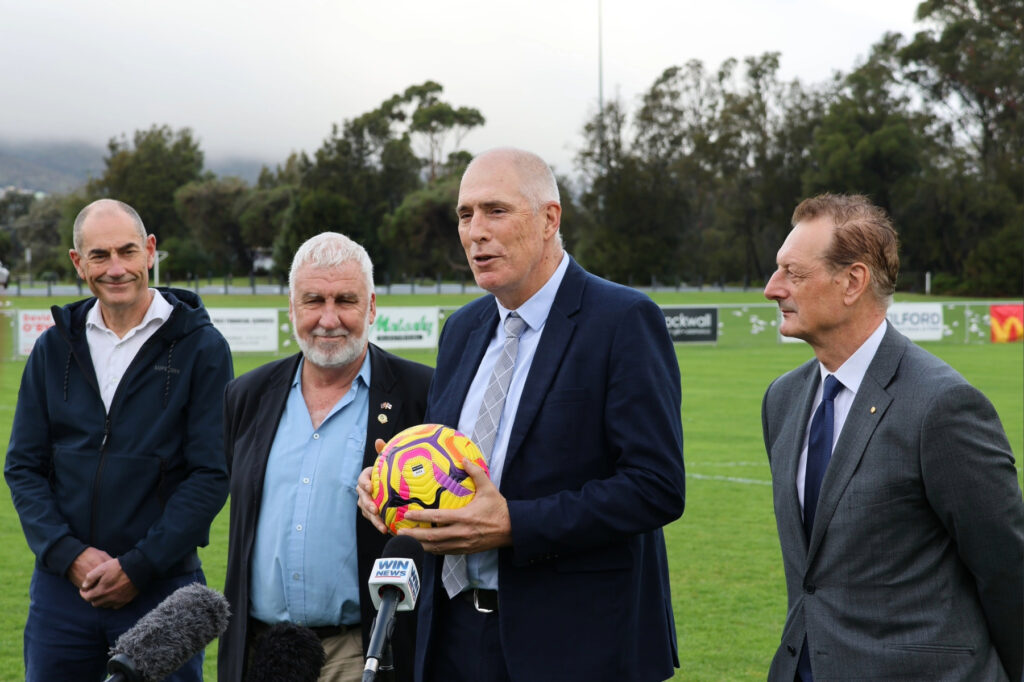
Northern NSW Football has announced the decoupling of its youth football from senior football along with the launch of a new youth competition structure for boys.

The NNSWF Premier Youth League has been designed to enhance the talented player pathway, enabling more competitive football for young players and facilitating more games of best versus best and like versus like.

All Premier Competitions clubs that meet the criteria – including regional football programs Mid Coast FC, North Coast Football and NIAS – will be invited to enter the inaugural competition next season.

  • The PYL will replace the youth components of the NPL NNSW and Northern League One
  • Under-18s will move from the existing senior competition structure to join the PYL
  • Youth players will be involved in more matches and play significantly more match minutes
  • Clubs will be rewarded for the strength of the youth program
  • Decoupling of youth football will allow a review of the senior competition structure

NNSWF General Manager Football Operations Liam Bentley explained the creation of the Premier Youth League was a positive for the region’s talented young players and their clubs.

“More than one in three matches in the NPL NNSW Youth have resulted in a win or loss by four goals or more over the last four years, with one in five ending with a six or more goal difference over the same time period. That is an average of almost 200 matches every season which are not competitive,” Bentley said via NNSWF.

“It is clear that there are too many non-competitive matches and the changes will assist with player development for aspiring future national teams players while also providing a valuable experience to players at the various abilities levels throughout our premier competitions.

“This transition will increase the overall number of matches played and the number of competitive matches for all players, as well as more matches of Best v Best and Like v Like.”

NNSWF CEO David Eland added while the new PYL competition had been created with the specific focus on youth players and their development, the decoupling of youth football from senior football meant discussions could now be had regarding the senior league structure without any negative impacts facing youth programs.

“The NNSWF board have directed management to start consultation regarding the structure of our senior competitions,” Eland said via NNSWF.

“This consultation with key stakeholders will include areas such as league size and structure, promotion and relegation for senior football and the potential to connect local senior competitions to our Premier Competitions.

“The potential creation of a functioning football pyramid in our NNSWF premier competitions is an exciting prospect and something we’re committed to exploring.”

How it works:

The 13 clubs competing in the 2022 NPL Youth NNSW and newly promoted New Lambton FC will start 2023 in Premier Youth League 1, while the 10 clubs competing in NL1 Youth will start in PYL 2.

After playing everyone in their division once, clubs will be divided into three leagues based on the collective results of their five youth teams – under-13s, 14s, 15s, 16s and 18s – in a club championship model.

The top eight performing clubs in PYL 1 will contest PYL A for the remainder of the season.

The bottom six clubs from PYL 1 and the top two clubs from PYL2 will contest PYL B.

The remaining clubs from PYL 2 will form PYL C.

The top four teams in each of the PYL A age divisions will contest a traditional finals series. The top two teams in PYL B and C will play a grand final in their respective leagues.

In 2024:

At the start of the following season, the top four clubs from PYL B will join the eight clubs in PYL A to establish PYL 1.

The bottom four clubs in PYL B will join the eight clubs from PYL C to form PYL 2, prior to splitting into PYL A, B and C again halfway through the season.

This will give NNSWF two 12-team divisions for 2024.
Previous ArticleNext Article

Victory unites with Roasting Warehouse in culture-led partnership

The Melbourne-based anf family-owned business will join the Victory family, uniting two institutions which represent the city’s culture and identity.

A partnership with local roots

As the newest partner of Melbourne Victory, Roasting Warehouse joins forces with a vital part of the city’s sporting landscape.

The club’s Managing Director, Caroline Carnegie, outlined why the partnership bears so much value to both parties.

“We are excited to collaborate with Roasting Warehouse, a community-oriented destination for high-quality coffee, proud of its foundations in Melbourne,” said Carnegie via official media release.

“Football and coffee sit at the epicentre of Melbourne’s culture. The two go hand-in-hand, consistently at the centre of the conversation that stirs Melburnians, which is no different to the conversation sport and Melbourne Victory stir in the State.”

Indeed, this is a partnership which combines the identity, passions and culture of an entire city, therefore giving it the foundations required for long-term, mutual success.

Representing the best of Melbourne

Both Victory and Roasting Warehouse are hugely successful in their respective industries. They are institutions with community-oriented philosphies, who pride themselves on craft and quality.

“We’re incredibly proud to partner with Melbourne Victory, a club that represents the heart, passion, and ambition of Melbourne,” revealed Roasting Warehouse Head of Brand, Alexander Paraskevopoulos.

“As a Melbourne-founded, family-run business, supporting a team that means so much to the local community feels very natural for us.”

Furthermore, through their high-quality blends, Roasting Warehouse will look to prepare Victory’s players and staff for high performances on the pitch as the seasons nears completion.

But this is about far more than just fueling athletes.

This is a partnership which embodies and unites two of Melbourne’s greatest strengths and cultural markers – a connection forged from the city’s very own DNA.


For more information about Roasting Warehouse, click here.

Marie-Louise Eta makes history as new Union Berlin head coach

In an historic appointment, Eta will take over as head coach of Union Berlin until the end of the season.

History in the making

Previously the first female assistant coach in Bundesliga history with Union Berlin, Eta will now take the reigns of the men’s first team on an interim basis.

Currently, the club sit in 11th place in the Bundesliga table, but with only two wins so far in 2026, relegation appears an all-too-real prospect, and one which the club is desperate to avoid.

“Given the points gap in the lower half of the table, our place in the Bundesliga is not yet secure,” said Eta via official media release.

‘I am delighted that the club has entrusted me with this challenging task. One of Union’s strengths has always been, and remains, the ability to pull together in such situations.”

Eta will begin as Union’s new head coach with immediate effect, and will be in the dugout for the club’s matchup against Wolfsburg this weekend.


A step into an equal future

Eta’s appointment signals a major step towards a more level playing field in the football landscape.

Furthermore, Eta joins other coaches including Sabrinna Wittmann, Hannah Dingley and Corinne Diacre who, in recent years, have blazed a trail for female coaches to step into the men’s game.

Wittmann currently manages FC Ingolstadt in Germany’s third division, and was the first female head coach in Germany’s top three divisions.

In 2023, Dingley became caretaker manager of Forest Green Rovers, and thus the first woman to lead a men’s professional team in England.

Diacre, now head coach of France’s women’s national team, managed Ligue 2’s Clerment Foot between 2014 and 2017.


Final thoughts

The impact therefore, is that Eta’s appointment will show future generations of aspiring female coaches that men’s football is an equally viable and possible pathway as the women’s game.

The time is now to level the playing field.

And while it may be a short-term role, its effect on attitudes towards equality and fair opportunities in the game will hopefully resonate long after the season ends.

Most Popular Topics

Editor Picks

Send this to a friend