



Bringing attention to FIFPRO’s Drake Football Study project

Sam Kerr Football and PARK

Initiated in 2019, the Drake Football Study is a decade-long research project dedicated to monitoring the physical and mental well-being of football players. Spanning ten years, this study aims to provide valuable insights into the long-term health impacts of playing football, offering a comprehensive analysis of both physical and psychological aspects as they evolve over time.

The study initially enrolled over 170 male and female players, capturing data from the early stages of their playing careers and continuing to track their journey as they transition into retirement.

Recent findings from the Drake Football Study have uncovered that 20 percent of professional women’s footballers experienced disordered eating within a 12-month timeframe, which is 1 in 5 women. These results highlight a significant concern within women’s football, underscoring the prevalence of disordered eating patterns among athletes.

The most recent sub-study, titled Unmasking Mental Health Symptoms in Female Professional Football Players, also indicates that female footballers are nearly twice as likely to experience sport-related psychological distress following each surgery. These findings shed light on the significant mental health challenges faced by women in professional football, particularly in the aftermath of surgical procedures.

Among the 74 players surveyed in this sub-study, 55 percent reported experiencing sport-related psychological distress within a 12-month period, a rate consistent with findings across other elite sports. Additionally, three percent of these athletes reported engaging in substance misuse during the same timeframe.

These statistics highlight the pervasive mental health struggles within the professional football community, mirroring trends seen in other high-performance sports.

Over the past decade, FIFPRO has taken a leading role in addressing mental health challenges within football. This effort began in 2013 with a pioneering pilot project aimed at assisting member unions in creating and implementing strategies to protect players’ mental well-being. Since then, numerous additional studies and initiatives have been launched, further strengthening the support network for athletes.

“Players are screened pre-season for musculoskeletal injuries, for their level of endurance, strength and speed, for cardiovascular abnormalities, and the same should apply for mental health,” said FIFPRO’s Chief Medical Officer Prof Dr Vincent Gouttebarge via FIFPRO’s website.

“In Australia, for instance, thanks to the work done jointly by FIFPRO and Professional Footballers Australia, mental health screening in pre-season is now embedded in the minimum medical requirements. It’s a big step forward.”

The findings in women’s football align with those observed in other sports but are less prevalent compared to aesthetic or weight-class sports like gymnastics, judo, wrestling, or boxing. Despite this, the results still raise significant concerns regarding player welfare, emphasising the need for continued attention to the well-being of athletes across all disciplines.

The initial findings of the project, derived from studies on male professional footballers, revealed a low prevalence of knee and hip osteoarthritis (the degeneration of joint cartilage). The research also indicated that pain is a reliable symptom for suggesting the presence of osteoarthritis. Additionally, the likelihood of developing knee osteoarthritis was found to increase by 1.5 times with each injury and by just over four times following surgeries. These insights underscore the significant impact of injuries and surgical procedures on the long-term joint health of football players.

Although the 10-year Drake Football Study focuses primarily on joint pain in the ankles, hips, and knees of players and its potential long-term effects on their well-being, it also seeks to investigate mental health symptoms such as anxiety and depression, which are commonly reported by athletes. Additional data from the study is expected to be published in the coming months.

The Drake Football Study is initially funded by The Drake Foundation and receives support from Amsterdam University Medical Centres, Mehiläinen in Finland, and Push Sports in the Netherlands.

Previous ArticleNext Article

Socceroos Make Powerful $15K Play to Back Organ Donation Awareness

The Socceroos have reinforced football’s power beyond the pitch with a $15,000 donation to Transplant Australia Football Club (TAFC). The funding will support its 2026 Transplant World Cup campaign while raising awareness for organ and tissue donation.

The contribution, delivered through Professional Footballers Australia’s (PFA) Community Impact Fund, will assist TAFC’s preparations for the upcoming Transplant Football World Cup in Frankfurt. It is also amplifying the organisation’s broader mission to promote the life-saving impact of organ donation.

Presented during a national team training session, the donation reflects a growing commitment from Australia’s elite players to use their platform for meaningful social impact. Creating a connection between the game and causes that resonate far beyond football.

The initiative builds on an ongoing relationship between the Socceroos and TAFC, following a previous player-led contribution in 2024 that supported the team’s participation in the inaugural tournament in Italy.

More than just financial support, the partnership signals a longer-term collaboration aimed at increasing visibility for organ and tissue donation, leveraging the reach of both the national team and the PFA to drive awareness nationwide.

TAFC provides a unique pathway for transplant recipients, donors, and their families to re-engage with sport—offering not only competitive opportunities but a powerful platform to share stories of resilience, recovery, and second chances.

With the 2026 Transplant Football World Cup on the horizon, the Socceroos’ support will play a crucial role in enabling Australia’s team to compete on the global stage, while championing a message that extends far beyond results: the life-changing impact of donation.

As football continues to grow as both a cultural and social force, initiatives like this highlight the game’s unique ability to unite communities, elevate important causes, and create lasting impact where it matters most.

AFC Women’s Asian Cup: How do we sustain growth and success?

This year’s AFC Women’s Asian Cup 2026 was not just another tournament. It was a momentum shift for women’s football in Australia. Match quality, crowd numbers and national pride have never been higher – but how do we ensure this success continues after the final whistle?

Financial input and output

Ahead of the tournament, the Australian Government demonstrated their support and commitment through a $15 million investment.

With such significant financial backing behind the Matildas’ pursuit of victory on home soil, the tournament seemed poised to be hugely successful – and it didn’t disappoint.

Projections point towards an overall revenue of over $250 million, with over 24,000 international visitors and 1000 jobs created. It proves that when money is invested into the women’s game, the rewards on and off the pitch are undeniable.

Federal Minister for Sport, Anika Wells, was present at the official announcement of the Australian Government’s funding boost.

“The Tillies and the 2023 Women’s World Cup redefined Australian sport and now the Albanese Government is backing the Matildas again with a $15 million investment for the Women’s Asian Cup,” said Wells.

“Women’s sport is not nice to have or a phase, it is brilliant, nation-stopping, and here to stay.”

With huge revenue numbers and contributions to local economies, this year’s AFC Women’s Asian Cup has demonstrated the financial power and potential of the Matildas, and ultimately of women’s football across Australia.

Attendance numbers skyrocket

Beyond finances, however, the standout factor throughout the tournament was the record-breaking crowd sizes.

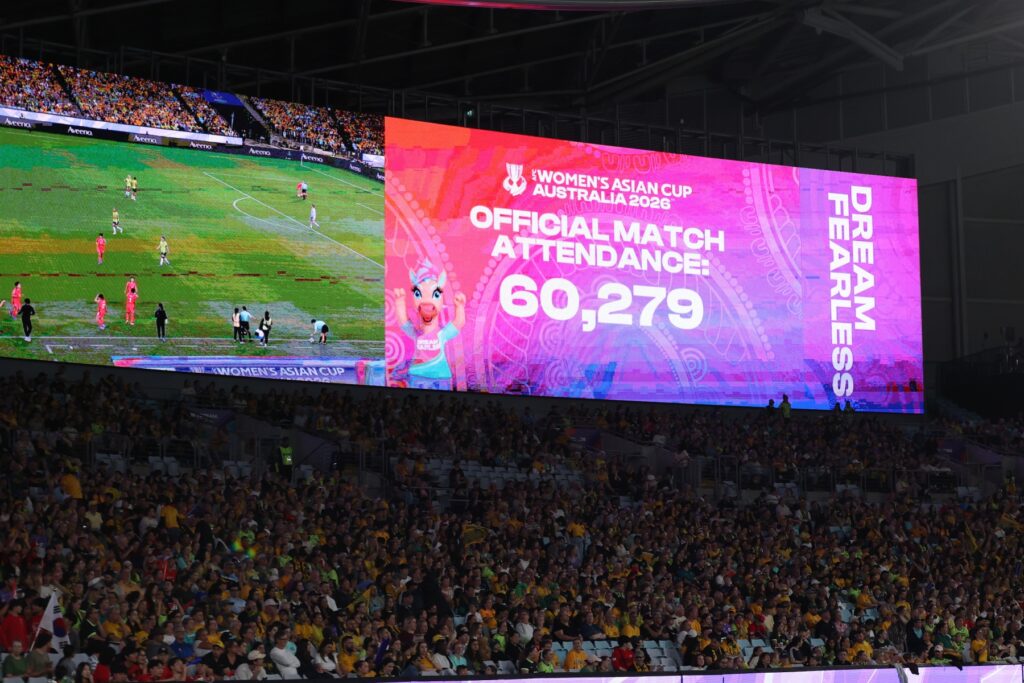
60,279 fans packed into Stadium Australia in Sydney to witness an entertaining 3-3 draw between the Matildas and South Korea, a huge number which was later smashed by Saturday’s final attendance of 74,397.

However, support wasn’t exclusive to the Matildas. At Japan’s semi-final demolition of South Korea, a 17,367 crowd set a record for the highest attendance at a Women’s Asian Cup match between two visiting teams.

Although skeptics will highlight that many games failed to sell out, the crowds attracted during this year’s tournament highlight two decades of immense growth. In 2006, the final brought in little more than 5000 people.

In fact, with 250,000 attendees over three weeks, and ticket sales increasing five-fold from the previous record, the proof of a nationwide buzz is there for all to see.

But creating a buzz is not enough. We must act on it, and sustain it, if we want to see true, long-term development.


Avoiding past mistakes

Following the excitement of the 2023 FIFA Women’s World Cup, women’s football in Australia looked set to launch into a new era of development and expansion.

Although female participation increased in New South Wales by 31% between 2022 and 2025, attendance numbers at ALW matches fell by 26% between the 2023-24 and 2024-25 seasons. The ‘buzz’ – without genuine commitment or backing to sustain it – wore off far too quickly.

This year’s AFC Women’s Asian Cup was a second chance for Australia’s football industry to correct its past mistakes, and ensure that state federations, governments and teams align in their commitment to growing the ALW and women’s football as a whole.

Furthermore, given the on-pitch prowess and off-pitch success over the past few weeks, the Asian Cup could play a major role going forward. It may yet be the catalyst, the long-awaited springboard that can propel women’s football to new heights in years to come, both on the international stage and within Australia.


How do we prolong the buzz?

So, while the success of the Asian Cup can encourage important discussions, the key is to inspire stakeholders and decision makers into taking real action.

On Saturday, Football Australia expressed their commitment to progressing the women’s game in NSW after the tournament ends. Joined by Football NSW and Northern NSW Football, they called upon the NSW government to address facility imbalances over the next decade.

“The growth of women’s football in New South Wales is not a short-term trend – it represents a fundamental shift in participation and expectation across our communities. To sustain this momentum, we must invest in infrastructure that is inclusive, accessible and fit for purpose, ensuring everyone has the opportunity to play, develop and thrive in the game,” said Football NSW CEO, John Tsatsimas.

“We call on the government to invest in the largest participation sport in NSW to bridge the growing facilities gap in NSW which will deliver economic and social long-term benefits through connected communities.”

To this end, a proposed NSW AFC Women’s Asian Cup Australia 2026 Legacy Fund – worth $343 million over a ten-year period – would address several issues at grassroots level. These include:

  • Delivering upgraded community facilities to accommodate growing participation numbers among women and girls
  • Improving accessibility, safety and playing capacity across metro, regional and remote communities
  • Supporting multi-use and multi-sport facilities
  • Strengthening pathways for women and girls across all age groups
  • Continuing the legacy of the AFC Women’s Asian Cup 2026

Should this fund be implemented in NSW over the next ten years, fans and players within the women’s game will be at the heart of a major, long-overdue realignment.

Final thoughts

Despite the bitter disappointment of losing in the final on home soil, there is nevertheless an important reminder to take away: we can’t control results on the field, but we can control intent, attitude and commitment off it.

The AFC Women’s Asian Cup 2026 was a huge success for women’s football in Australia. Matches were of extremely high quality, crowd numbers smashed tournament records, and the nation was united in their support for one of Australia’s most popular sporting outfits.

There may not be silverware to show for it, but the past few weeks have provided something far greater: recognition, respect and a platform to continue growing long after the final whistle. The demand is undeniable, participation and interest is soaring, and the voice of the women’s game can no longer be ignored.

Most Popular Topics

Editor Picks

Send this to a friend