




Western Strikers Nominated FSA Club of the Month for Equity Outcomes

Western Strikers SC has been nominated for Club of the Month after a period of deliberate structural investment in its female program that is already producing measurable outcomes, and offering a model for how community clubs can drive participation growth through equity-focused planning rather than passive goodwill.

The nomination recognises a program that has moved beyond surface-level commitment to women’s football and into the kind of structural change that determines whether female players actually stay. Improved lighting across training and match pitches, equitable scheduling, extended training hours and dedicated pitch allocation have addressed the practical barriers that clubs often overlook. It’s conditions that tell players, implicitly or otherwise, whether the game was built for them.


Leadership as Infrastructure

Central to Western Strikers’ approach is a leadership structure that takes female football seriously as a technical and administrative priority. Women’s Coordinator Michelle Loprete and Technical Director Georgia Iannella, a former Matilda, provide the program with both organisational direction and the kind of visible role modelling that shapes whether younger players can picture themselves progressing through the game.

The presence of a former international player in a technical leadership role at a community level isn’t incidental. It signals to junior players that the pathway from their Friday night training session to elite football is real and navigable, and it gives the club’s coaching staff access to experience and credibility that most community programs cannot offer.

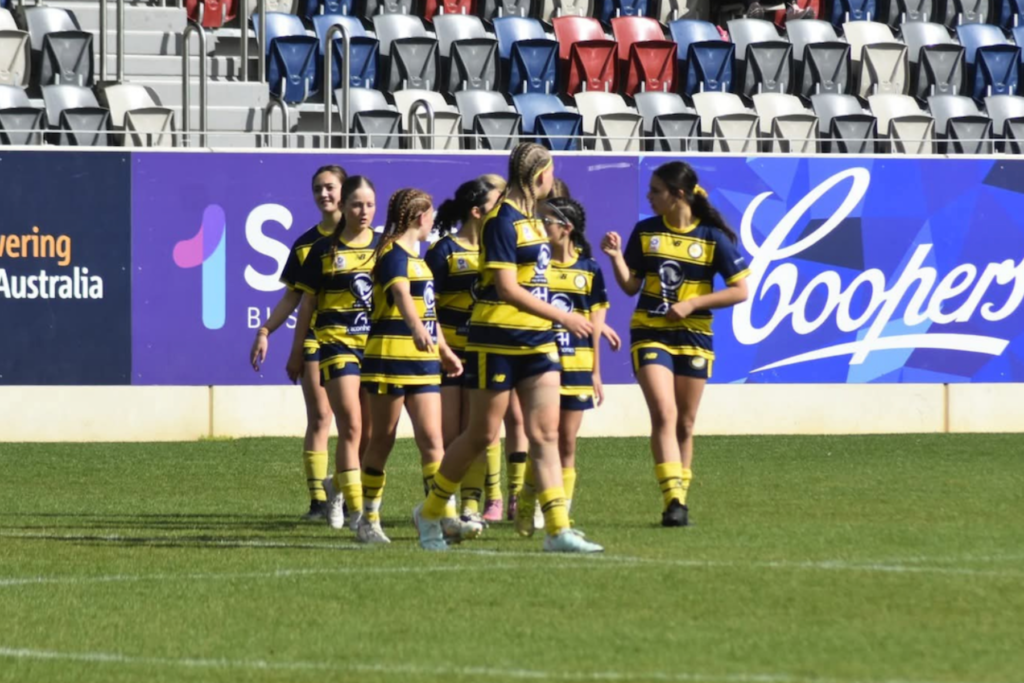
That pipeline is already functioning. Western Strikers’ Under-13 to Under-16 girls teams all qualified for finals in the Youth Premier League this season. Under-15 goalkeeper Sian Schopfer made her debut in the Women’s State League team which is a direct product of a club environment designed to move players upward.


The Friday-night model

One of the more quietly significant initiatives at Western Strikers is the scheduling of Friday night women’s matches, with junior girls training beforehand encouraged to stay and watch senior football. The structure is straightforward but its implications are meaningful. Aspiration in sport is not abstract. It’s built through proximity, through watching players a few years older doing what you want to do, in the same kit, at the same club.

The absence of that experience is one of the more consistent reasons girls disengage from football in their mid-teens. When junior female players cannot see where the game goes after their age group, the logical conclusion is that it goes nowhere. Western Strikers’ scheduling decision addresses that directly, at minimal cost, and whose effects are starting to manifest.


The Club Changer framework

The club’s participation in Football South Australia’s Club Changer Program has provided a structured framework for identifying and addressing barriers that might otherwise go unexamined. Pitch allocation, training structures and safety conditions are the kinds of issues that accumulate quietly in club environments; not because of deliberate exclusion but because the default systems were built around male participation and have never been comprehensively reviewed.

The Club Changer Program creates accountability for that review. Western Strikers’ ability to project an additional 146 female players over the next three years is a product of planning rather than optimism.


Industry implications

Western Strikers’ model matters beyond its own membership. At a time when women’s football in Australia is navigating the challenge of converting a participation surge into sustainable long-term growth, the question of what community clubs actually do with increased interest is among the most consequential in the sport.

Record crowds at the AFC Women’s Asian Cup and sustained national visibility have opened the door. Whether players walk through it and stay depends on whether the club on the other side looks anything like Western Strikers

Previous ArticleNext Article

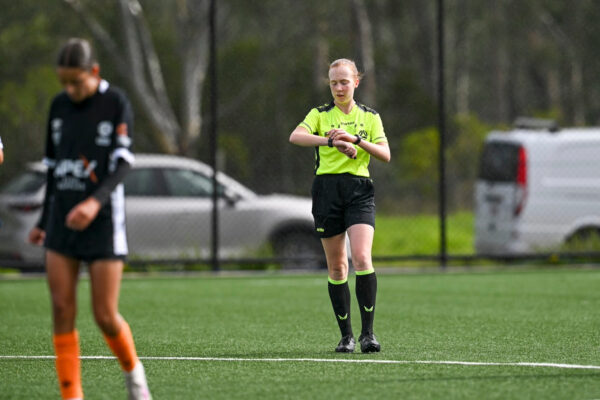
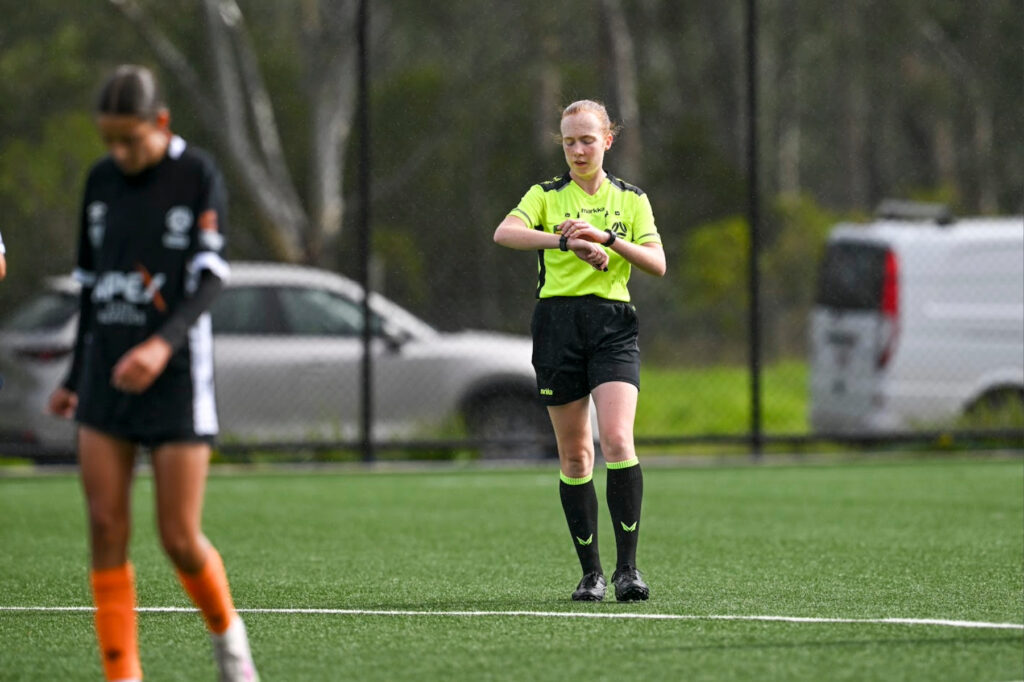
Football Australia Expands Mental Skills Program for Match Officials Amid Sustained Focus on Referee Retention

Football Australia has confirmed a second national webinar for match officials, led by sports psychologist Dr Liam Slack, extending a referee development series introduced after strong engagement with an initial session on managing match-day pressure.

The upcoming session, themed “parking with purpose,” will focus on decision-making strategies designed to help referees process on-field calls and reset attention quickly across a match that can present hundreds of individual decisions. Dr Slack, who also consults with The Football Association and the AFC Referee Academy and previously spent over a decade as a performance psychologist with the Professional Game Match Officials Limited in England, brings substantial elite-level experience to a program open to officials at every level, from grassroots to professional.

The theme builds on work Dr Slack has already delivered within Australian officiating. He recently led a session with Football Australia’s National Referee Academy on the same concept, framing the ability to consciously park a decision and refocus on the next phase of play as a trainable skill rather than an innate trait, one that separates officials who reset quickly under pressure from those who don’t. He has also addressed more than 100 Football Australia elite match officials and staff on developing a stronger match-day mentality, an indication of how embedded this psychological framework has become across the officiating pathway rather than remaining a one-off intervention.

The expansion of the webinar series reflects a broader shift in how football administrators are approaching referee attrition. Rather than treating retention purely as a recruitment or pay problem, the program signals an institutional acknowledgment that the psychological demands of officiating, particularly the compounding pressure of split-second decisions under public scrutiny, are a material factor in whether officials remain in the game.

It rests alongside other measures adopted across Australian football in recent years, including visible identification programs for junior referees and structural reviews of referee departments at state federation level, all aimed at the same underlying issue: a shrinking pool of match officials relative to demand.

Football Australia has not detailed metrics for assessing the program’s impact on referee numbers, though the recurring engagement of an internationally credentialed specialist across multiple tiers of the officiating pathway suggests sustained institutional investment in the approach.

Football Victoria elevates fan enjoyment with Streets partnership

Football Victoria (FV) revealed last week a new partnership with ice cream giants, Streets. The brand will become an exclusive ice cream partner for the next three years.


An iconic brand for joyful experiences

As a well-known and popular ice cream brand with people all around the nation, Streets will now look to support the fan experience in Victoria through its products.

It reflects FV’s commitment to delivering a family-friendly and memorable experience for spectators. Both on and off the pitch, the organisation is striving to elevate the experience for fans and families alike.

“Football Victoria is always looking for ways to elevate the experience at The Home of The Matildas, and this partnership does exactly that,” explained FV Executive Manager of Commercial and Facilities, Chris Speldewinde.

“It’s a fantastic fit for our community and we’re looking forward to what the next three years will bring.”

Furthermore, Senior Brand Manager at Streets, Ryan Katz, emphasised the brand’s role in community sport and in creating memories beyond the action on the pitch.

“Streets is proud to join Football Victoria as its exclusive ice cream partner,” Katz said.

“There’s nothing better than enjoying a great game with a classic ice cream in-hand, and we’re excited to be part of those moments across the state.”


Understanding community football

Community football is all about these moments. Sunny days, the family together, and a sweet treat in-hand while supporting a local team alongside friends and neighbours.

This is why a partnership between FV and Streets is particularly important.

Not for its commercial value, but for what it tells us about both parties’ understanding of what matters to fans. From young fans to experienced matchday-goers, everyone wants to find enjoyment while watching the game.

And while the 90 minutes of action is the focus, the experience of a local matchday is truly defined by interactions with fellow supporters and smaller – but no less significant – moments of happiness during the day.

Most Popular Topics

Editor Picks

Send this to a friend