
A Lesson to be Learned: Ange Postecoglou wins J-League Title

On Saturday, former Socceroos head coach Ange Postecoglou completed the amazing feat of taking the Yokohama F.Marinos to the mountaintop of Japanese football.

The 54-year-old, who also coached the Brisbane Roar and Melbourne Victory, hasn’t had it all his own way in Yokohama.

After a tough 2018 campaign which saw his side finish 12th, the club backed him in to turn it around this season.

He has delivered in spades and following a comprehensive 3-0 win over FC Tokyo, he took Yokohama to an unlikely fourth J-League title.

It is a great story of redemption and perseverance from a man who has had his fair share of doubters over the years.

Postecoglou was responsible for our 2014 World Cup campaign, our qualification for the 2018 tournament and the infamous 2015 Asian Cup success.

Related Articles: Ange Postecoglou’s trail blazing J-League success finally silences the critics

We, as football fans, can very easily forget the good in which has come from coaches and players alike in their pasts.

Ange was thrown straight out of the frying pan at the Victory and into a white-hot fire as Socceroos coach, tasked with a near impossible feat of qualifying for the round of 16 against Chile, Spain and the Netherlands.

The Dutch were inches away from reaching the Final, falling short in a penalty shootout against eventual runners-up Argentina. Spain were the defending champions at the time and despite not reaching the knockout stage, were still a very formidable team.

Chile, perhaps deemed our easiest opponent at the time, were no slouches either. They defeated Spain 2-0 in the group stage and in the coming years, won back-to-back Copa America titles.

When your ‘easiest’ opponent was capable of outstanding achievements such as that, the job of Australia’s head coach was anything but enviable.

For the most part, he did a fine job making us competitive against some of the best in the world, despite three losses.

His finest hour came during our Asian Cup triumph against South Korea. Being the hosts of the tournament, Australia was expected to perform well and maybe even win the entire competition.

That kind of expectation brings about a lot of pressure. Ange coached his boys to perfection, showing his prowess as a manager and he led the Socceroos to a deserved trophy.

But the following few years began to take its toll on Postecoglou, with his resignation coming only a few weeks after leading the Socceroos to a fourth successive World Cup campaign.

In his press conference, Postecoglou spoke of the pressure that came with being an international coach and how it had “taken a toll both personally and professionally”.

Postecoglou was announced as coach of Yokohama one month later.

He reportedly received offers to coach Greece’s national side but instead opted to extend his contract in Japan, with hopes of surging up the table.

As we now know, he did more than just that.

Following his incredible title-winning season at Yokohama, Postecoglou’s name has been thrown into the hat for managerial opportunities in Europe.

Rumours are circling that he will take a job somewhere in Europe, with some of the biggest teams in the continent reportedly considering him.

All of his success following his departure as Socceroos coach goes to show something.

Ange Postecoglou was extremely underappreciated as head coach of our national team.

He faced enough criticism during his tenure to last a lifetime and it came from all angles.

Former players and fans were consistently on his back when things slightly went awry, with little-to-no margin for error as far as some were concerned.

In his athletesvoice.com.au column back in June of 2018, he spoke of how he wanted more out of us as a footballing nation.

He wasn’t going to settle for the Socceroos forever being, what he described as “battlers”. In his eyes, we weren’t going down without a fight.

This was resembled in the way he coached during the 2014 World Cup.

“Let’s now stand up and show that we could conquer that last bastion of our sport.” His own words.
He also claimed that many of those close to him at the FFA lost faith in him for his aggressive and ‘go down swinging’ style of play, believing this to be the catalyst for his eventual departure.
Now, following his successful ventures elsewhere and our forgetful 2018 World Cup and 2019 Asian Cup campaigns, his words need to be heeded now more than ever.
Perhaps he was right on the money, that we often settle for ‘giving it our best’ or ‘being that one step below the best’.
We should all take notes from him because, after all, he could be head coach of a top team in Europe not long from now.


Previous ArticleNext Article

Socceroos Make Powerful $15K Play to Back Organ Donation Awareness

The Socceroos have reinforced football’s power beyond the pitch with a $15,000 donation to Transplant Australia Football Club (TAFC). The funding will support its 2026 Transplant World Cup campaign while raising awareness for organ and tissue donation.

The contribution, delivered through Professional Footballers Australia’s (PFA) Community Impact Fund, will assist TAFC’s preparations for the upcoming Transplant Football World Cup in Frankfurt. It is also amplifying the organisation’s broader mission to promote the life-saving impact of organ donation.

Presented during a national team training session, the donation reflects a growing commitment from Australia’s elite players to use their platform for meaningful social impact. Creating a connection between the game and causes that resonate far beyond football.

The initiative builds on an ongoing relationship between the Socceroos and TAFC, following a previous player-led contribution in 2024 that supported the team’s participation in the inaugural tournament in Italy.

More than just financial support, the partnership signals a longer-term collaboration aimed at increasing visibility for organ and tissue donation, leveraging the reach of both the national team and the PFA to drive awareness nationwide.

TAFC provides a unique pathway for transplant recipients, donors, and their families to re-engage with sport—offering not only competitive opportunities but a powerful platform to share stories of resilience, recovery, and second chances.

With the 2026 Transplant Football World Cup on the horizon, the Socceroos’ support will play a crucial role in enabling Australia’s team to compete on the global stage, while championing a message that extends far beyond results: the life-changing impact of donation.

As football continues to grow as both a cultural and social force, initiatives like this highlight the game’s unique ability to unite communities, elevate important causes, and create lasting impact where it matters most.

AFC Women’s Asian Cup: How do we sustain growth and success?

This year’s AFC Women’s Asian Cup 2026 was not just another tournament. It was a momentum shift for women’s football in Australia. Match quality, crowd numbers and national pride have never been higher – but how do we ensure this success continues after the final whistle?

Financial input and output

Ahead of the tournament, the Australian Government demonstrated their support and commitment through a $15 million investment.

With such significant financial backing behind the Matildas’ pursuit of victory on home soil, the tournament seemed poised to be hugely successful – and it didn’t disappoint.

Projections point towards an overall revenue of over $250 million, with over 24,000 international visitors and 1000 jobs created. It proves that when money is invested into the women’s game, the rewards on and off the pitch are undeniable.

Federal Minister for Sport, Anika Wells, was present at the official announcement of the Australian Government’s funding boost.

“The Tillies and the 2023 Women’s World Cup redefined Australian sport and now the Albanese Government is backing the Matildas again with a $15 million investment for the Women’s Asian Cup,” said Wells.

“Women’s sport is not nice to have or a phase, it is brilliant, nation-stopping, and here to stay.”

With huge revenue numbers and contributions to local economies, this year’s AFC Women’s Asian Cup has demonstrated the financial power and potential of the Matildas, and ultimately of women’s football across Australia.

Attendance numbers skyrocket

Beyond finances, however, the standout factor throughout the tournament was the record-breaking crowd sizes.

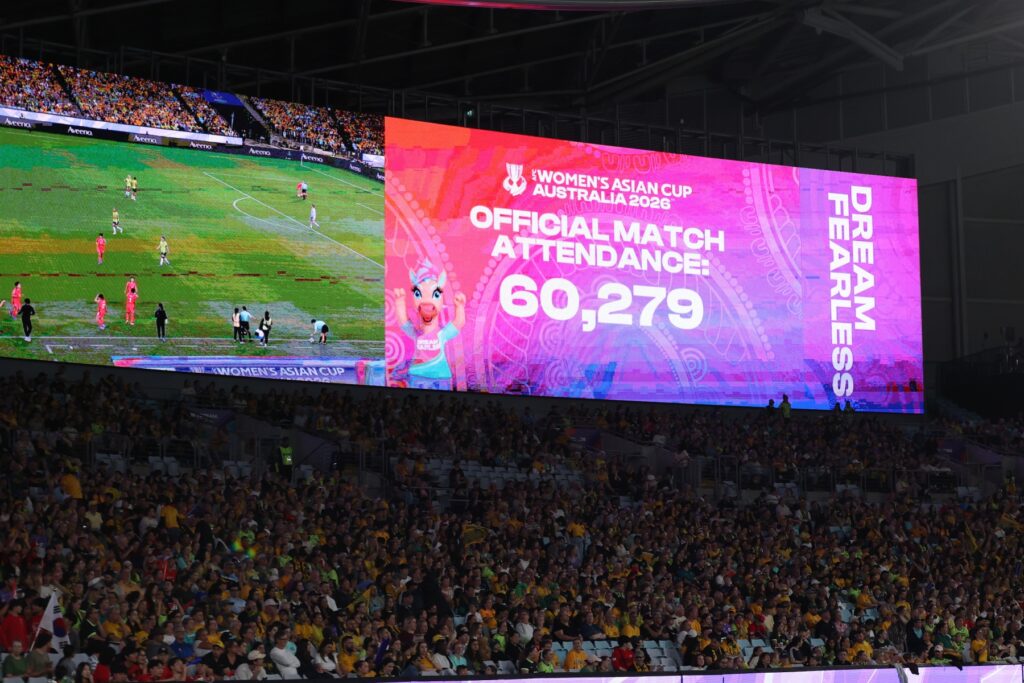
60,279 fans packed into Stadium Australia in Sydney to witness an entertaining 3-3 draw between the Matildas and South Korea, a huge number which was later smashed by Saturday’s final attendance of 74,397.

However, support wasn’t exclusive to the Matildas. At Japan’s semi-final demolition of South Korea, a 17,367 crowd set a record for the highest attendance at a Women’s Asian Cup match between two visiting teams.

Although skeptics will highlight that many games failed to sell out, the crowds attracted during this year’s tournament highlight two decades of immense growth. In 2006, the final brought in little more than 5000 people.

In fact, with 250,000 attendees over three weeks, and ticket sales increasing five-fold from the previous record, the proof of a nationwide buzz is there for all to see.

But creating a buzz is not enough. We must act on it, and sustain it, if we want to see true, long-term development.


Avoiding past mistakes

Following the excitement of the 2023 FIFA Women’s World Cup, women’s football in Australia looked set to launch into a new era of development and expansion.

Although female participation increased in New South Wales by 31% between 2022 and 2025, attendance numbers at ALW matches fell by 26% between the 2023-24 and 2024-25 seasons. The ‘buzz’ – without genuine commitment or backing to sustain it – wore off far too quickly.

This year’s AFC Women’s Asian Cup was a second chance for Australia’s football industry to correct its past mistakes, and ensure that state federations, governments and teams align in their commitment to growing the ALW and women’s football as a whole.

Furthermore, given the on-pitch prowess and off-pitch success over the past few weeks, the Asian Cup could play a major role going forward. It may yet be the catalyst, the long-awaited springboard that can propel women’s football to new heights in years to come, both on the international stage and within Australia.


How do we prolong the buzz?

So, while the success of the Asian Cup can encourage important discussions, the key is to inspire stakeholders and decision makers into taking real action.

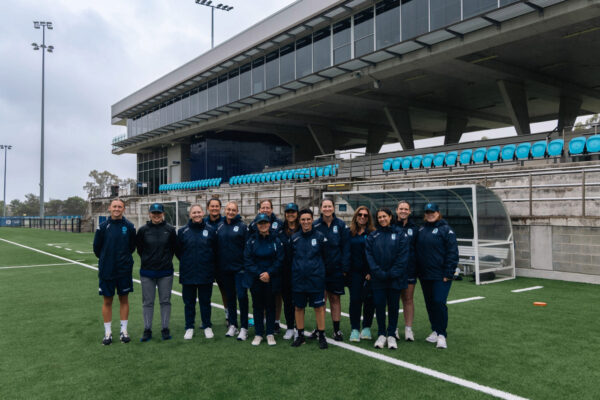
On Saturday, Football Australia expressed their commitment to progressing the women’s game in NSW after the tournament ends. Joined by Football NSW and Northern NSW Football, they called upon the NSW government to address facility imbalances over the next decade.

“The growth of women’s football in New South Wales is not a short-term trend – it represents a fundamental shift in participation and expectation across our communities. To sustain this momentum, we must invest in infrastructure that is inclusive, accessible and fit for purpose, ensuring everyone has the opportunity to play, develop and thrive in the game,” said Football NSW CEO, John Tsatsimas.

“We call on the government to invest in the largest participation sport in NSW to bridge the growing facilities gap in NSW which will deliver economic and social long-term benefits through connected communities.”

To this end, a proposed NSW AFC Women’s Asian Cup Australia 2026 Legacy Fund – worth $343 million over a ten-year period – would address several issues at grassroots level. These include:

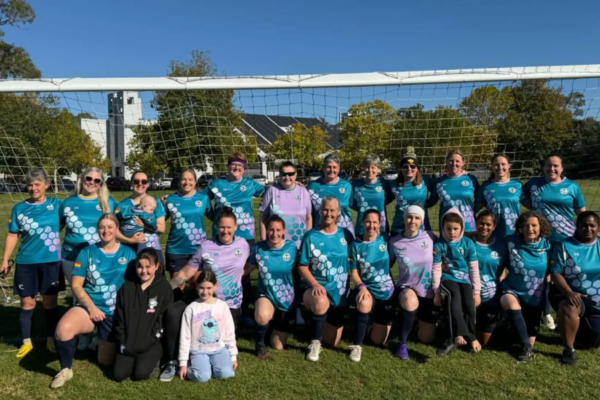
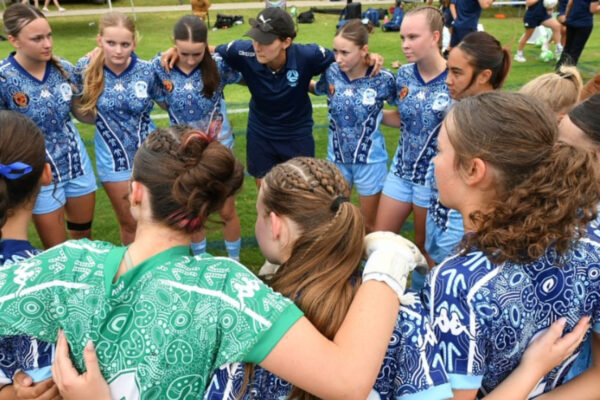
  • Delivering upgraded community facilities to accommodate growing participation numbers among women and girls
  • Improving accessibility, safety and playing capacity across metro, regional and remote communities
  • Supporting multi-use and multi-sport facilities
  • Strengthening pathways for women and girls across all age groups
  • Continuing the legacy of the AFC Women’s Asian Cup 2026

Should this fund be implemented in NSW over the next ten years, fans and players within the women’s game will be at the heart of a major, long-overdue realignment.

Final thoughts

Despite the bitter disappointment of losing in the final on home soil, there is nevertheless an important reminder to take away: we can’t control results on the field, but we can control intent, attitude and commitment off it.

The AFC Women’s Asian Cup 2026 was a huge success for women’s football in Australia. Matches were of extremely high quality, crowd numbers smashed tournament records, and the nation was united in their support for one of Australia’s most popular sporting outfits.

There may not be silverware to show for it, but the past few weeks have provided something far greater: recognition, respect and a platform to continue growing long after the final whistle. The demand is undeniable, participation and interest is soaring, and the voice of the women’s game can no longer be ignored.

Most Popular Topics

Editor Picks

Send this to a friend