Transfer fees and salary cap exempt foreigners in the A-League? Be careful what you wish for

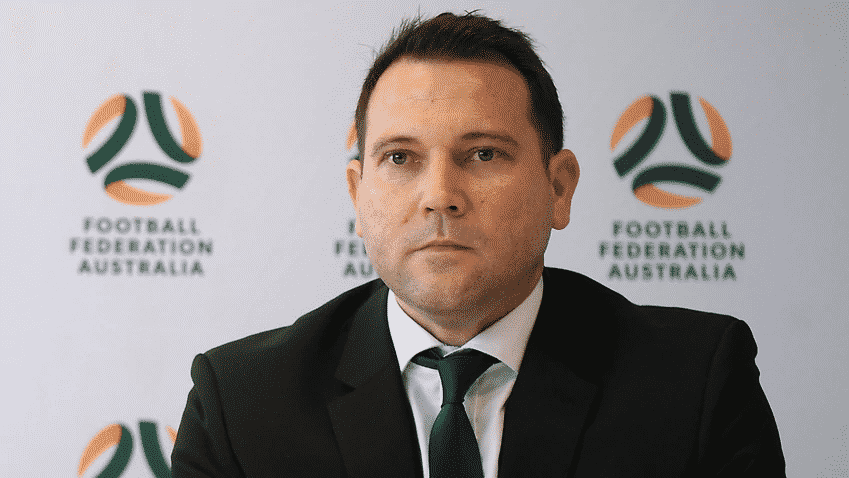
Chief executive of Football Federation Australia James Johnson recently cited a need to re-evaluate the transfer fee system in the domestic game. At the same time, the newly independent A-League owners and the PFA appear determined to implement changes to the rules around marquee and foreign players; allowing clubs to sign up to five whose wages would sit outside the salary cap.

Both are long called for and would have instant and immense ramifications for the A-League.

Johnson’s comments around the transfer system stem from a desire to increase revenue streams for clubs currently bound by regulations that allow no internal A-League transfer fees. In 2019, Australian clubs took in a paltry A$1.9 million; well below the fees gathered by other heavy hitters in the Asian Confederation.

The amount ranks Australia 67th internationally, something that Johnson feels is unacceptable considering the men’s national team sits in 42nd place in the international rankings. Johnson wrote the book on transfer fees and regulations in his role at FIFA and as those changes filter through internationally, his view is that Australia does not have the option to change, but must change, should they wish to keep step with the rest of the globe.

Much of the discussion in the area of transfer fees lies in junior development, with many NPL clubs feeling they remain unrewarded for developing talent. Such talent is often poached by A-League clubs with no reward received for the financial and resource commitment made to the player and their youth structures.

Should the payment of transfer fees in such a situation become a reality, clubs that churn out junior talent will be rewarded with financial compensation. Those funds could be re-invested into the next crop of players and clubs that have traditionally been effective in producing young talent, only for others to swoop and pounce as they reach maturity, could develop a substantial and consistent revenue stream.

Clubs with vast nurseries in major capital cities will surely hold an advantage, however, the process of assigning true value to footballers and ensuring that clubs pay and receive the appropriate sum is a no-brainer when it comes to advancing the Australian game.

Potentially more ground breaking are the discussions between the A-League owners and the PFA in regards to marquee and foreign wages. Currently, each club is permitted two marquee men whose wages fall outside the salary cap.

Of the current eleven clubs, only Perth Glory, Melbourne Victory and Western United have two such marquees. Adelaide United, Brisbane Roar and Newcastle Jets have none whatsoever and the remaining five clubs all have one man on the books whose wages do not impinge on the A$3.2 million salary cap.

The argument for an opening of the purse strings that could see the 12 A-League clubs in 2020/2021 bring up to 60 marquee/foreign men from around the globe into the league is all about quality. The lure is a suggestion that clubs with the financial clout to attract better pedigree from overseas would effectively raise the standard of play across the league.

Moreover, the commercial ramifications of the introduction of big name international players has some salivating at the thought. Many will cite Alessandro Del Piero’s time at Sydney FC as the benchmark and the goal; where the domestic league garnered interest from many fans who had rarely, if ever, attended an A-League match.

Whilst the excitement of each and every A-League club acquiring up to five Del Pierro like players to ignite the competition is an attractive thought, the feasibility of such a boom in spending is questionable. With just 11 of the 22 current A-League marquee spots filled, one wonders how the club’s owners could dare engage in a spending spree that would see their wage bill increase exponentially.

Certainly, ticket sales and corporate interest would generate revenue in the medium term. However, with owners making consistent losses across the league, the chances of wholesale spending with little assurance of return appears low.

More important could be the ramifications of a more open market in terms of marquee and foreign wages, where the spending power of smaller clubs could well see them phased out of competitiveness quite briskly. The Central Coast Mariners function in a region of somewhere between 300,000 and 400,000 people. The club spent just A$2.88 million on wages for the 2019/20 season; the salary floor figure mandated by FFA.

Should Sydney FC, Melbourne City, Melbourne Victory and Perth Glory be afforded the license to acquire up to five foreigners outside the salary cap restrictions, one can only imagine the increased chasm between the playing talent in their squads compared to that of the Mariners.

Natural attrition would almost certainly take place; something that exists across the globe in world football as one team is relegated and another promoted. However, without a current and efficient system of promotion/relegation in the domestic game and a host of clubs with the facilities and finances ready to step into the top tier, the A-League could potentially lose now competitive teams well before the games growth permits an expanded competition of at least 16 teams; something we all hope to see.

Whilst Johnson’s desire to change the Australian transfer fee regulations and the proposed freeing up of the current buying power of the clubs when it comes to marquee/foreign wages sound exciting for the domestic game, there will be casualties.

The question that must be asked and considered carefully is whether the game can afford those causalities right now. The salary cap and the restriction on transfer fees were implemented to protect the A-League in its infancy.

Whether the competition is old enough for such measures to be lifted is, in my opinion, up for debate.

Previous ArticleNext Article

From Broadcast to Betting: Where Australian Football Sits in a $417 Billion Sports Economy

The global sports industry is now worth an estimated $417 billion, but the headline figure only tells part of the story. Beneath it lies a more significant shift that reveals not just how much money sport generates, but where that money is actually coming from?

Globally, the traditional foundations of football’s business model are being overtaken. Sports betting alone accounts for $133 billion, meaning nearly one in every three dollars in the industry is now driven by wagering rather than watching.

For a sport historically built on attendance, broadcast and sponsorship, this marks a profound transformation.


The Rise of Participation Over Viewership

The fastest-growing segment of the global market, which is valued at $177 billion, is now the “gaming” ecosystem: betting, fantasy sports and video games. What unites these platforms is simple: they turn fans from passive viewers into active participants.

This is the new sports economy. Engagement is no longer confined to the 90 minutes on the pitch. Instead, it is continuous, interactive and, most importantly, monetisable.

For football, the opportunity is enormous. But so too is the risk. As betting becomes the dominant financial driver, the sport must confront difficult questions around integrity, regulation and long-term dependence on gambling-linked revenue.


A Global Boom, A Local Reality

While the global industry surges ahead, Australian football presents a more complex picture.

The A-Leagues’ current broadcast deal, reportedly worth around $200 million over five years, is modest when compared to the $61 billion global media rights market. It highlights the gap between Australia and football’s major commercial powerhouses — it also underscores the importance of maximising every available revenue stream.

At the same time, there are clear signs of growth.

The rise of the Matildas has transformed the commercial landscape, with the national team now widely viewed as a central revenue driver through sponsorship, broadcast and matchday demand. Record-breaking audiences — including 2.73 million viewers nationally for key fixtures — demonstrate football’s expanding cultural footprint.

Streaming, too, is reshaping the game locally. Football viewership on Paramount+ has surged by 138%, while the sport has reached nearly 10 million Australians over a 12-month period. These figures mirror the global trend away from traditional television toward digital platforms.


The Disconnect Between Growth and Revenue

Yet, despite rising audiences and renewed interest, financial stability remains a challenge.

The A-Leagues have faced ongoing pressures — from declining distributions to structural reform — revealing a critical tension at the heart of Australian football:

Attention is growing, but revenue is not keeping pace.

This disconnect reflects a broader structural issue. While global sport is rapidly monetising digital and interactive engagement, Australian football is still heavily reliant on more traditional income streams.


Why the Global Shift Matters

The implications of the global $417 billion market are clear.

The IP monetisation pillar ($154 billion), which encompasses media rights, sponsorship, merchandise and matchday, remains vital. But it is no longer enough on its own.

Meanwhile, broadcasting and streaming ($86 billion) is fragmenting. Pay TV still dominates, but streaming is rising fast, changing not just how fans watch football, but how value is captured.

Above all, the dominance of the gaming segment signals a new reality:

The future of sport lies in participation, not just consumption.


A Defining Moment for Australian Football

For Australian football, the challenge is not simply to grow — it is to align with where the global industry is heading.

That means:

  • Building stronger digital ecosystems
  • Leveraging data and fan engagement tools
  • Exploring new commercial models beyond traditional broadcast deals

Because while the global sports market is projected to reach $602 billion by 2030, that growth will not be evenly distributed.

It will favour the sports and leagues that can successfully integrate into a landscape defined by interactivity, personalisation and constant engagement.


More Than a Game

Football in Australia is not short on momentum. Participation is rising, the Matildas have captured national attention, and audiences are increasingly engaged.

But in a $417 billion global industry, momentum alone is not enough.

The question is no longer whether football can grow.

It is whether it can evolve fast enough to capture its share of where the money is going.

AFC Women’s Asian Cup: How do we sustain growth and success?

This year’s AFC Women’s Asian Cup 2026 was not just another tournament. It was a momentum shift for women’s football in Australia. Match quality, crowd numbers and national pride have never been higher – but how do we ensure this success continues after the final whistle?

Financial input and output

Ahead of the tournament, the Australian Government demonstrated their support and commitment through a $15 million investment.

With such significant financial backing behind the Matildas’ pursuit of victory on home soil, the tournament seemed poised to be hugely successful – and it didn’t disappoint.

Projections point towards an overall revenue of over $250 million, with over 24,000 international visitors and 1000 jobs created. It proves that when money is invested into the women’s game, the rewards on and off the pitch are undeniable.

Federal Minister for Sport, Anika Wells, was present at the official announcement of the Australian Government’s funding boost.

“The Tillies and the 2023 Women’s World Cup redefined Australian sport and now the Albanese Government is backing the Matildas again with a $15 million investment for the Women’s Asian Cup,” said Wells.

“Women’s sport is not nice to have or a phase, it is brilliant, nation-stopping, and here to stay.”

With huge revenue numbers and contributions to local economies, this year’s AFC Women’s Asian Cup has demonstrated the financial power and potential of the Matildas, and ultimately of women’s football across Australia.

Attendance numbers skyrocket

Beyond finances, however, the standout factor throughout the tournament was the record-breaking crowd sizes.

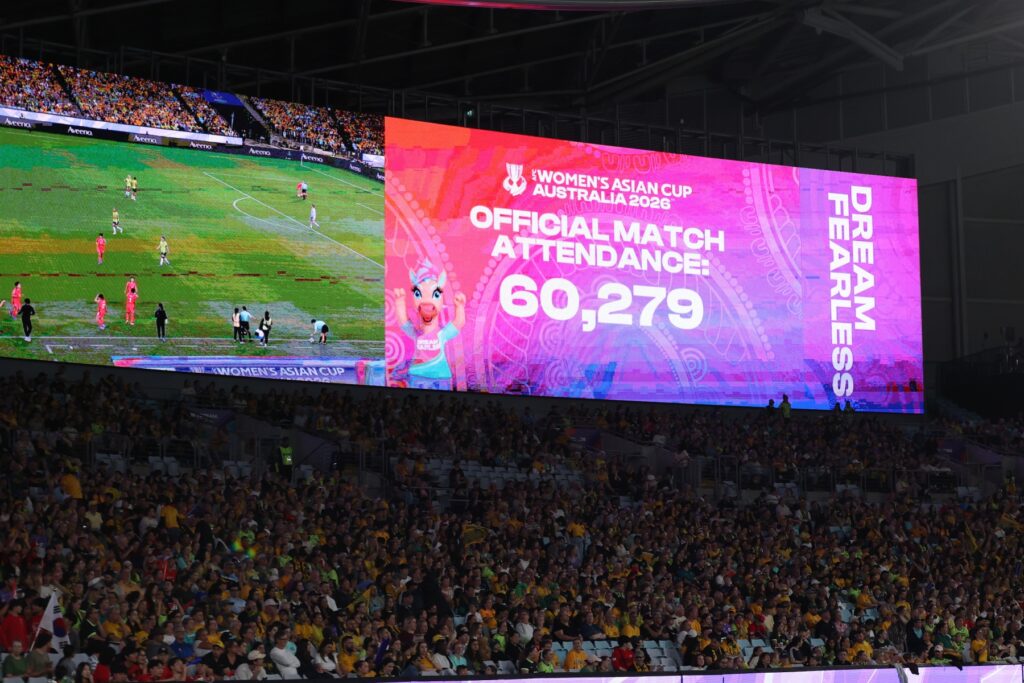
60,279 fans packed into Stadium Australia in Sydney to witness an entertaining 3-3 draw between the Matildas and South Korea, a huge number which was later smashed by Saturday’s final attendance of 74,397.

However, support wasn’t exclusive to the Matildas. At Japan’s semi-final demolition of South Korea, a 17,367 crowd set a record for the highest attendance at a Women’s Asian Cup match between two visiting teams.

Although skeptics will highlight that many games failed to sell out, the crowds attracted during this year’s tournament highlight two decades of immense growth. In 2006, the final brought in little more than 5000 people.

In fact, with 250,000 attendees over three weeks, and ticket sales increasing five-fold from the previous record, the proof of a nationwide buzz is there for all to see.

But creating a buzz is not enough. We must act on it, and sustain it, if we want to see true, long-term development.


Avoiding past mistakes

Following the excitement of the 2023 FIFA Women’s World Cup, women’s football in Australia looked set to launch into a new era of development and expansion.

Although female participation increased in New South Wales by 31% between 2022 and 2025, attendance numbers at ALW matches fell by 26% between the 2023-24 and 2024-25 seasons. The ‘buzz’ – without genuine commitment or backing to sustain it – wore off far too quickly.

This year’s AFC Women’s Asian Cup was a second chance for Australia’s football industry to correct its past mistakes, and ensure that state federations, governments and teams align in their commitment to growing the ALW and women’s football as a whole.

Furthermore, given the on-pitch prowess and off-pitch success over the past few weeks, the Asian Cup could play a major role going forward. It may yet be the catalyst, the long-awaited springboard that can propel women’s football to new heights in years to come, both on the international stage and within Australia.


How do we prolong the buzz?

So, while the success of the Asian Cup can encourage important discussions, the key is to inspire stakeholders and decision makers into taking real action.

On Saturday, Football Australia expressed their commitment to progressing the women’s game in NSW after the tournament ends. Joined by Football NSW and Northern NSW Football, they called upon the NSW government to address facility imbalances over the next decade.

“The growth of women’s football in New South Wales is not a short-term trend – it represents a fundamental shift in participation and expectation across our communities. To sustain this momentum, we must invest in infrastructure that is inclusive, accessible and fit for purpose, ensuring everyone has the opportunity to play, develop and thrive in the game,” said Football NSW CEO, John Tsatsimas.

“We call on the government to invest in the largest participation sport in NSW to bridge the growing facilities gap in NSW which will deliver economic and social long-term benefits through connected communities.”

To this end, a proposed NSW AFC Women’s Asian Cup Australia 2026 Legacy Fund – worth $343 million over a ten-year period – would address several issues at grassroots level. These include:

  • Delivering upgraded community facilities to accommodate growing participation numbers among women and girls
  • Improving accessibility, safety and playing capacity across metro, regional and remote communities
  • Supporting multi-use and multi-sport facilities
  • Strengthening pathways for women and girls across all age groups
  • Continuing the legacy of the AFC Women’s Asian Cup 2026

Should this fund be implemented in NSW over the next ten years, fans and players within the women’s game will be at the heart of a major, long-overdue realignment.

Final thoughts

Despite the bitter disappointment of losing in the final on home soil, there is nevertheless an important reminder to take away: we can’t control results on the field, but we can control intent, attitude and commitment off it.

The AFC Women’s Asian Cup 2026 was a huge success for women’s football in Australia. Matches were of extremely high quality, crowd numbers smashed tournament records, and the nation was united in their support for one of Australia’s most popular sporting outfits.

There may not be silverware to show for it, but the past few weeks have provided something far greater: recognition, respect and a platform to continue growing long after the final whistle. The demand is undeniable, participation and interest is soaring, and the voice of the women’s game can no longer be ignored.

Most Popular Topics

Editor Picks

Send this to a friend