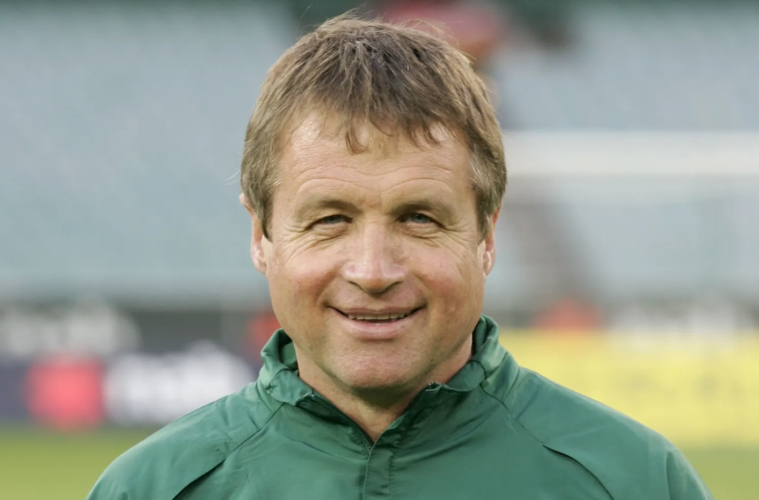





Terry McFlynn played over 200 games for Sydney FC, second only to Alex Brosque. After retiring from the game, he joined the staff at Sydney FC before heading west to be Perth Glory’s football operations manager, and he is also a Executive Committee member of Football Coaches Australia. Terry spoke to Soccerscene about his career, how the A-League has improved and where it can continue to grow.
Q. How did you become involved in football?
McFlynn: “Well, obviously it was back when I was living in Northern Ireland. I was an avid watcher of the game, and my uncle Mark who was a big influence on my career all the way through, I’d go visit him and just play on the street. At the age of 12 or 13, he took me to my first team in the next village to where I lived in Swatragh. So I got involved in the game at an early age.”
Q. How did the opportunity to play for Sydney FC arise?
McFlynn: “I left Northern Ireland when I was 15 to go to QPR, and I was there for 5 years. I dropped out of the Football League into Non-League and conference with a few various clubs and ended up with Morecambe, who had just got promoted up to League 1 now. During that period living in London, I met my wife Emma who is an Australian from Perth. She wanted to come back to Australia after being in England for a few years, at that time the A-League was just starting, so I sent an email to all the clubs asking for a trial and Sydney FC was the only team that replied to me and offered me one, so that’s how it all came about.”
Q. What were your impressions of Australian Football after joining?
McFlynn: “I’d come from the conference so I didn’t know what to expect, to be honest. We had a lot of very good players at Sydney FC in season 1, like Steve Corica, David Zdrilic, Ufuk Talay, Mark Milligan, David Carney, Robert Middleby, and then after some time, we signed Dwight Yorke. We had a lot of very established Australian internationals and the standard was high. The coach at the time was Pierre Littbarski with Ian Crook as his assistant, so the intensity of training was very high. We had a fitness coach named Darren Welsh who previously worked in the AFL so the fitness levels were high too throughout the whole group. It was a really pleasant experience when I first joined the club, because of the professionalism, intensity of training, and quality of players I was training with every day.”
Q. Was the challenge of transitioning into a backroom role a challenge?
McFlynn: “It did have its challenges. I was fortunate because four years before I decided to retire I started studying a master’s of coaching education at Sydney University. I was preparing myself for retirement, and life after football. When I finally did retire I had a few different conversations with Scott Moore, the chairman of Sydney FC, and then had a meeting with Graham Arnold. Frank Farina had left the club and he was coming in as the new coach. We discussed life, football, the A-League, we hit it off and Graham offered me a position in his staff. It was difficult initially to make that transition from getting up for over 20 years to the training ground with a focus on a game on the weekend, to just a normal 9-5 job. Even though in football no job in 9-5. I was very fortunate to have people around me to help with that transition. People at the club helped me a lot.
Q. Do you think the A-League has improved in terms of professionalism since season 1?
McFlynn: “Yeah definitely. If you look back at season 1 of the A-League there were a lot of marquee players and younger players, unknowns. Off the field clubs have made a lot of improvement in terms of facilities, they’ve done a great job with the CBA (Central Bargaining Agreement) negotiations in terms of minimum medical standards, travel, and all the other things that add layers to professionalism in what we are trying to achieve. I think the level of coaching has improved, as the A-league has progressed, and the quality of recruitment has improved. We aren’t seeing older European or South American players coming here for a payday, we are seeing the likes of players like Marcos Flores signing for Adelaide, who was unknown, and they come and lift the league upwards. Melbourne Victory with Fred, Milos Ninkovic, Diego Castro at Perth Glory. In terms of professionalism and recruitment, it has improved since season 1.
Q. Where could it continue to improve?
McFlynn: “I think something that if you ask anyone in around and the Football department of all clubs, its facilities. If we can get to the point where we all have our own stand-alone facilities because I think a lot of the clubs, not just in the A-league but sport in general across Australia, share facilities. I know that is a bugbear for many people in football departments because they don’t have access to gyms, recovery centres, and pitches when you need them. That is something I’d like to see across the board, similar to the MLS, where clubs have access to stand-alone training facilities and stadiums, which contributes to the revenue-raising part of the football business as well.”