


How FWP Group is changing architectural design for the football industry

Mill Farm

The leading architectural, design and master planning practice, FWP Ltd, is a company that works on projects around the UK with the main office based in Preston, Lancashire with additional offices in Manchester and London.

The organisation’s direction is outlined by the examination of new objectives, development and knowledge, as well as the commitment to sustainability.

FWP Ltd offers services in Architecture, M&E Design, Structural Engineering, Interior Design, Building Surveying, Project Management, Quantity Surveying and CDM Consultancy.

In 2014, Blezard joined the FWP Group with their place of business operating out of Preston, it was established in 1960 and provides Building Engineering Services.

Blezard offers a variety of services to meet the needs of the clients such as Consulting Engineering, Services Management, Integrated Building and Energy Services.

By having vast amounts of wealth in experience covering refurbishment projects to the large scale new build developments across all sectors. Blezard is a team who brings knowledge and expertise in experience to the table to be able to align the current legislation and deliver the good practice necessary while demonstrating a firm grasp of the latest technologies, energy efficiency, environmental sustainability and cost management.

They embrace a driven philosophy of the construction process and stand by their belief in early consultation and involvement with the design team who helps achieve the successful delivery of all their projects.

TRP consulting are experts in supporting civil, structural and environmental engineering consultancy services, with a wide variety of knowledge bases and advancing towards a proactive project delivery.

The FWP Group provides an extensive range of skills that include:

  • Feasibility studies
  • Site surveys
  • Sketch, detailed and advanced design
  • Planning and building reg applications
  • Tender application
  • Detailed production information
  • CDM Co-ordination and Health and Safety
  • Interior design and 3D Visualisation

The organisation is a solutions-driven company that has frequently carried through successful outcomes eventuating in lasting and reliable connections with customers, consultants and contractors.

After eight years of work, a project that FWP has been involved in was to deliver a multi-million pound for the home stadium of AFC Fylde, Mill Farm. The impressive North Stand has a capacity of 1,850 and also includes a state-of-the-art fan zone with quality game day food and beverage facilities.

Working with the English club competing in the National League North alongside David Haythornthwaite, the plan was to shape the idea for the mixed-use development and created a special home for the squad and its faithful fans.

Hugely beneficial for the local community and its economy, FWP has worked hand in hand with the club throughout the process to generate a vibrant and exciting development for locals to enjoy.

The evolution of Mill Farm Sports Village was made feasible by the connected enabling projects, which include multiple established and vastly successful, commercial and industrial growth on the site that has already brought more than 200 permanent and 400 provisional jobs to the area.

The home ground of AFC Fylde incorporates a 290-capacity sports bar, 70 seater Italian restaurant that has an al fresco roof terrace, a café with a large conference room as well as facilities for an event and also a five-star hotel.

The architectural and design innovated company has collaborated with a host of football clubs, including non-league sides such as AFC Fylde, Hastings United and FC United of Manchester, the rejuvenation of Championship side Preston North End’s ground consists of income generated and community facilities such as a gym, headquarters of local charities, NHS centre along with educational and conferencing facilities.

One of the notable achievements of the FWP Group has been to successfully deliver $1.73 million refurbishment for Everton’s corporate hospitality facilities at Goodison Park, a significant part of the Merseyside club’s revenue stream. FWP has also carried out work for Manchester United.

The strategic advice and the wealth of knowledge in design as well as the capability to work to budgets have put FWP Group ahead in the industry by demonstrating it is crucial when sports clubs have a short supply of resources for their plans.

The understanding that a football stadium can lay out a variety of income-generated necessities and community uses proceeding with to play a major fragment in assisting clubs to successfully revitalise their grounds.

Previous ArticleNext Article

“20 Years Ahead”: The System Quietly Reshaping Korean Football

For all its consistency, Korean football has long carried an underlying tension.

On paper, it works. The national teams remain competitive, the player pool is technically sound, and the country continues to produce athletes capable of performing on the continental stage. But beneath that surface-level success, a more uncomfortable question has persisted about whether Korea has been simply maintaining its position while others evolve.

That question has driven the Korea Football Association (KFA) toward one of the most ambitious structural overhauls in modern football development: the Made in Korea (MIK) Project. Rather than focusing on short-term gains or isolated improvements, the initiative attempts to do something far more complex. It is rebuilding the foundations of how football is taught, understood and executed across the entire ecosystem.

Internally, the project has been described as having “brought Korean football 20 years ahead.” Whether that claim ultimately proves accurate remains to be seen, but what is already clear is the scale of the shift taking place.

From talent to system

The starting point was not talent, but structure. For years, concerns had been growing within Korean football circles about a lack of uniqueness in players, inconsistencies in long-term planning and an over-reliance on safe, risk-averse styles of play. The system, while producing disciplined and technically capable footballers, was not consistently producing players equipped to thrive in the most demanding environments. Environments such as Europe, where tempo, decision-making speed and adaptability define success.

Rather than attempting to patch these issues, the KFA chose to reimagine the system itself.

At the core of the MIK Project is the idea that high performance is not the result of individual excellence alone, but of an interconnected structure that allows that excellence to emerge consistently. Coaching, sports science, performance analysis, leadership and education are no longer treated as separate pillars, but as components of a single, integrated system designed to evolve continuously.

A new operating model

This philosophy is most clearly expressed through the project’s adoption of a cell-based operating model. In place of traditional hierarchies, the system is organised into small, cross-functional units, called “cells”. These cells are given autonomy over their work while remaining connected through shared frameworks and objectives. Each unit is responsible not only for delivery, but for learning, adapting and refining its approach on a constant cycle.

The intention is to bring decision-making closer to the pitch, allowing those working directly with players to respond faster and more effectively to the realities of the game. In an environment where marginal gains are often decisive, that speed of adaptation can be critical.

Closing the gap

Yet structure alone is not enough. The project is equally shaped by a clear-eyed assessment of where Korean football currently stands in relation to the world’s elite.

Comparative analysis has highlighted several consistent gaps: technical execution under pressure, the ability to operate at higher game speeds and effectiveness in decisive moments such as one-on-one situations. These are not deficiencies of talent, but of context. Korean players, while highly capable, have often developed within systems that prioritise control and precision over risk and spontaneity.

The consequence is a style that can become predictable under pressure.

Training for reality

To address this, the MIK Project has fundamentally shifted training methodology. Sessions are increasingly designed to replicate the intensity and unpredictability of real matches, placing players in situations where decisions must be made quickly, under pressure, and often in confined spaces. The focus is no longer on rehearsing ideal scenarios, but on preparing players for imperfect ones.

This approach reflects a broader philosophical shift that prioritises adaptability over perfection, and decision-making over repetition.

Evolving the Korean identity

Importantly, this evolution does not come at the expense of Korea’s existing strengths. Discipline, work ethic and technical proficiency remain central to the national identity. What the MIK Project seeks to do is build upon those foundations, combining them with the creativity, speed, and tactical awareness required at the highest level of the game.

It is, in many ways, an attempt to reconcile tradition with modernity.

A global ambition

The ambition underpinning the project is unmistakable. The KFA is not simply aiming to remain competitive within Asia, but to re-establish itself among the world’s leading football nations. That means producing players capable of not only reaching Europe, but succeeding there.

More than a project

What makes the MIK Project particularly compelling is that it does not present itself as a finished solution. Instead, it is designed as a system that evolves, adjusts and refines itself over time. In a sport where trends shift rapidly and competitive edges are constantly eroded, that capacity for continuous development may prove more valuable than any single innovation.

For other football nations, Korea’s approach offers an instructive case study. While many federations continue to debate philosophical direction, the KFA has committed to structural transformation, embedding its ideas not only in theory, but in practice.

Whether the project ultimately delivers on its boldest ambitions will depend on time, execution, and the unpredictable nature of the game itself. But one thing is already evident.

Korean football is no longer standing still.

Arsenal x Meta: The Tech-Driven Fan Revolution You Didn’t See Coming

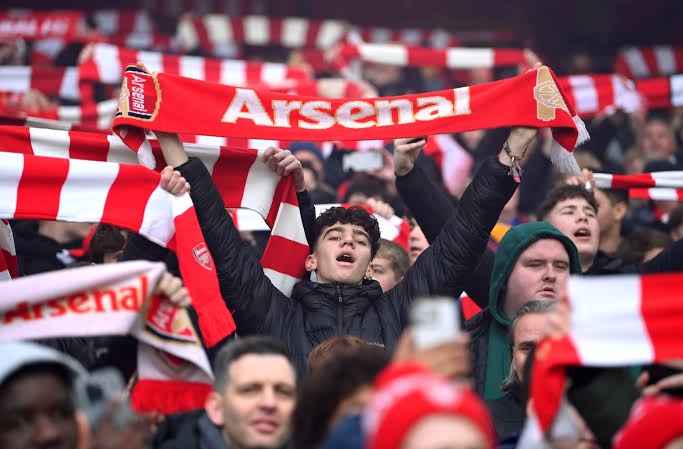
The current Premier League leaders announced last week the start of a new partnership with Meta, which will see WhatsApp and Facebook unite fans across the world.

A global partnership

The partnership between Arsenal and Meta will aim to bring fans together from across the world in digital spaces.

While WhatsApp and Facebook are already popular platforms for football fans to talk, review and connect over the course of a season, the new initiative will build on this existing engagement.

Head of Marketing for Meta Consumer Apps, Vivian Odior, outlined why a partnership with Meta contributes to the overall fan experience.

“We know that being an Arsenal supporter doesn’t start at kick-off and end at the final whistle,” Odior said via Arsenal’s Official Website.

“WhatsApp and Facebook are where that year-round passion lives – the transfer speculation, the tactical debates, the shared memories and hopes for next season.”

Indeed, as Arsenal looks to clinch a first league title since 2004, there will be plenty of discourse and conversation between fans in the coming weeks.


What can fans expect?

The digital space presents endless opportunities for football supporters to connect across continents.

Arsenal fans will be able to access an extensive range of new digital experiences, as well as activations at the Emirates Stadium throughout April.

But beyond the unique offers and experiences the partnership provides, there is a fundamental sense of community and family driving the project. Chief Commercial Officer at Arsenal, Juliet Slot, explained the importance of having digital spaces to allow fans to feel a part of the Arsenal family.

“Our partnership with Meta builds on how our supporters already come together, wherever they are in the world, and will create more ways to feel closer and more connected to our club,” Slot said via Arsenal’s Official Website.

“As we continue to compete to win major trophies, partnerships like this play an important role in supporting that ambition and strengthening our connection with supporters.”


The modern game

Furthermore, the expansion of digital spaces for Arsenal fans highlights a new era for the game as a whole.

As social media grows, the game must keep pace. And with so many fans across the world engaging with digital spaces, establishing a partnership with Meta is a step into the future where football and social media intersect more than ever.

Most Popular Topics

Editor Picks

Send this to a friend