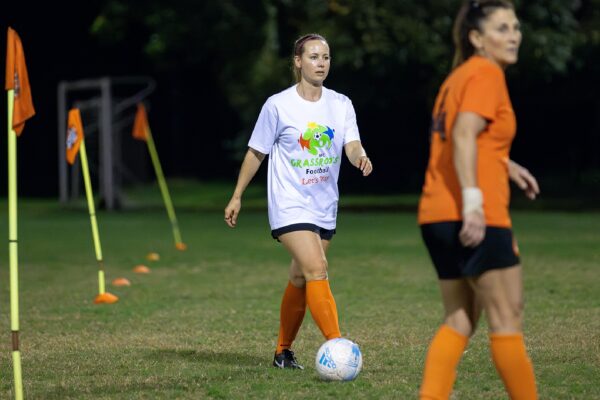




Football Queensland (FQ) have remained busy on the tools in building the framework required to materialize their aspirations, all through the implementation of The 2024-2026 Game Development Strategy.
Acknowledging the popularity of the world’s game within the state, CEO Robert Cavallucci disclosed that the development strategy plan is to make football “the game of choice” amongst Queenslanders.
In correlation with the strategic referee plan released earlier in the month, the Development Strategy plan highlights women’s football, 50/50 parity amongst male and female participants FQ wishes to achieve 128,000 registered football club participants.
The monumental hype that surrounded Australia’s maiden tenure as World Cup hosts has culminated in football governing bodies looking to transcend the sport within their respective states to unprecedented heights.
It is common knowledge that the success and appreciation for the Matilda’s throughout their 2023 Women’s World Cup campaign leaves in its wake a tangible interest within football amongst potential female participants.
FQ are also seeking to achieve 200,000 social participants, while vying to achieve further diversity amongst its existing participants.
But how are FQ going climb the steep mountain?
Pillar One: Recruitment and Opportunity
In order to have a significant percentage increase within the number of official and social participants across the board involves a proactive approach. The fundamental aspect of achieving parity between genders is to amplify the dedicated focus upon fostering inclusivity.
Through events crafted towards a vast variety of varying demographical and geographical communities, the programs created in order to showcase the sport of football, while attempting to attract new participants.
In order to break the barriers FQ will investigate and identify strategic growth areas by conducting a geographical and demographical review.
Upon this, the establishment and implementation of a strategy where football within schools becomes more inclusive will be exercised.
Pillar Two: Delivery and Experience
The pursuit of excellence spearheads the secondary pillar featured within the strategic plan. The experience of every participant is paramount.
Underscored by a pledge to deliver 10/10 experiences enabling its participants in the development of existing skills while garnering new ones.
In order for participants increase and remain active, FQ has dedicated attention towards a coach’s development through upskilling initiatives and creation of a coach’s community.
Regular coaching workshops creating opportunities for professional development of community club coaches, a feedback loop for participants, a reward and recognition program and imperative quality assurance are the aspects in which FQ will exercise in order to fulfil the secondary pillar.
Success within the pillar includes a 90% participation of the coaches attending the regularly offered workshops and development opportunities.
Pillar Three: Retention and Transition
Dedication targeted towards the encouragement of an inclusive football environment, making its participants feel important, valued and satisfied is the framework for the third and final pillar.
Personalized programs offered are created in order to welcome football for everyone. Commitment to developing effective retention and transition strategies all crafted in order to achieve 80% retention rates throughout the state.
With potential participants becoming active then ultimately losing interest and involvement, FQ disclosed their intent to target this issue.
Exit surveys are to be conducted to find patterns relating to player turn over. The creation of a comprehensive player lifecycle engagement plan in order to retain players across whatever stage of their football journey they are experiencing.
Furthermore, the creation of a centralized database tracking participation and engagement will determine areas for improvement.
Increased club capacity, a retention success score of 80% and 60% uptake of educational workshops throughout clubs are the areas of success within the retention and transition pillar.
The measurement of success within the Development Strategy plan undertaken by FQ is across multiple areas. Coaching quality, club participation churn rate, transition Success, demographic diversity, 50/50 parity, and participation retention rate all to culminate towards the primary target.
Overall
128,000 active outdoor players, 200,000 social players. All within the next two years. Quite the mountain FQ are trying to climb. The strategy plans and the roadmap to see their succession plan come to full fruition.
The roadmap for success has been created. It will be a path consisting of commitment, patience and perseverance, all culminating in the greater future success of a football rich state.