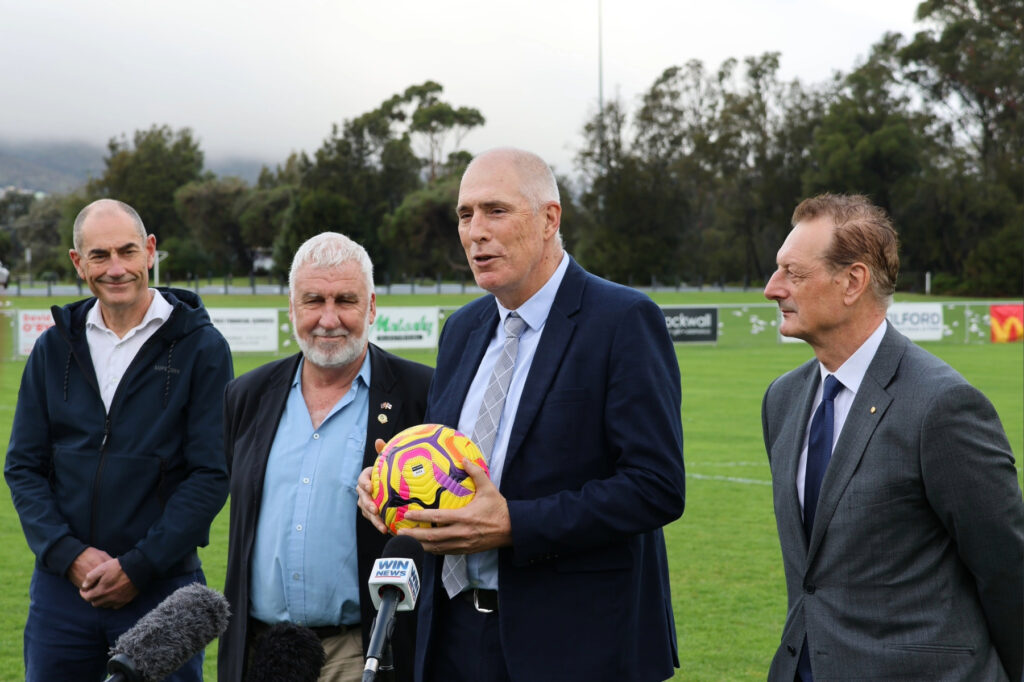



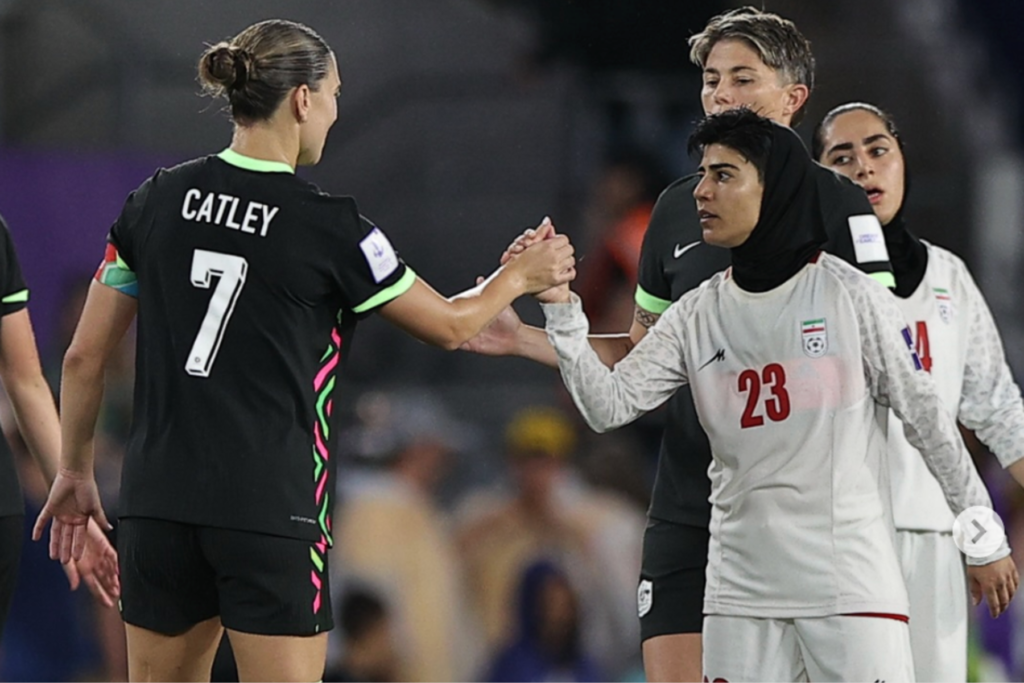
Football Australia has released a statement acknowledging the Iranian Women’s National Team’s participation in the 2026 AFC Women’s Asian Cup, extending friendship and support to all players and officials as the dust settles on one of the most politically charged episodes in the tournament’s history.
“All of these brave women deserve our support and respect, irrespective of the personal choices which have been made under circumstances many of us will never fully understand,” the governing body said.
The statement arrives at the end of a fortnight that tested the boundaries between sport and politics in ways few tournaments ever do, and ultimately demonstrated that those boundaries have limits.
A Tournament Unlike Any Other
The Iranian squad arrived in Australia at one of the most turbulent moments in their country’s modern history. The US and Israel had launched strikes on Iran on February 28, killing Supreme Leader Ayatollah Ali Khamenei and sending shockwaves through the country’s political and civilian infrastructure. The players arrived to compete in a football tournament while their families were at home in a country at war.
They did so, by all accounts, with exactly the kind of resolve Football Australia’s statement describes. They trained. They played. They represented their country in front of crowds that included hundreds of Iranian-Australians waving flags and holding signs, desperately trying to reach women they could not speak to freely.
When five players declined to sing the national anthem before their opening match against South Korea on March 2nd, it was a moment that meant different things to different people. To Iranian state television, it was betrayal. To the Iranian diaspora packed into stadiums across the Gold Coast and Sydney, it was something closer to recognition.
“They can’t speak freely because they are threatened,” said Naz Safavi, who attended all three of Iran’s matches during the tournament. “We are here to show them that we are fully supporting them.”
Asylum and the limits of sport
What followed over the next ten days unfolded at a pace that left even seasoned observers struggling to keep up. Five players slipped away from government-assigned minders at their Gold Coast hotel, were escorted to a secure location by Australian Federal Police, and were granted humanitarian visas by Home Affairs Minister Tony Burke at 1:30am on March 11. Two more sought asylum at Sydney Airport as the remaining delegation prepared to board a flight to Kuala Lumpur, pulled aside individually by Border Force officials and offered a choice without pressure and without minders present.
“We never told anyone it was time to end the meeting,” Burke said. “If people wanted to stay and keep talking and miss that plane, they had agency to do that as well.”
Seven players and staff ultimately received temporary humanitarian visas, valid for twelve months and providing a pathway to permanent residency- visas of the kind previously granted to people fleeing conflict in Ukraine, Afghanistan and Palestine.
One later changed her mind after speaking with departing teammates, choosing to return. Burke confirmed her decision was her own.
For those who stayed, the road ahead is uncertain in different ways. For those who returned, Iran’s Foreign Ministry promised they would be welcomed home “with open arms.” Whether that assurance holds remains to be seen.
Football as a bridge
Football Australia’s statement is careful not to take sides, describing all players and officials as part of “our global football family” and extending equal respect to those who stayed and those who left. It is, in many ways, an accurate reflection of what sport at its best is supposed to do- hold space for people regardless of the circumstances that brought them to it.
And the tournament itself offered evidence that it can. The 2026 AFC Women’s Asian Cup has already surpassed 250,000 tickets sold, shattering every previous attendance record for the competition. When 60,279 people filled Stadium Australia on International Women’s Day, among them were Iranian-Australians who had driven hours to be in the same space as players they had never been able to support on home soil.
That is not nothing. In a year defined by war, displacement and political persecution, the image of a stadium full of people united by a shared love of a game carries a weight that goes beyond sport. It is a reminder that football, at its most basic, asks only that you show up.
Football Australia’s statement acknowledges that courage without flinching. “Their passion for sport,” it concludes, “is something that can unite us all.”
For seven women now building new lives in Australia, and for the many more who watched this tournament from stadiums and living rooms across the country, that unity is not an abstraction. It is, for now, the most solid ground they have.