

Every football match must take place somewhere

Whether it’s a local park that consists of 90% mud or the hallowed turf of Wembley Stadium, all matches have a location.

But for some teams, namely those with strong supporter bases all around the world, sometimes that’s not enough. In our day and age, nearly any team can make a meteoric rise up the football food chain and establish themselves as a ‘big club’.

As an example, let’s look at Manchester City. A club that 20-30 years ago was a relegation battler in the First Division. They would go up and come back like a yo-yo. They weren’t a mainstay in the top flight, and they weren’t even close to the financial powerhouse that they are today.

In fact, let’s fast forward a little bit to the end of the 2007/2008 Premier League season. They weren’t relegation battlers, but they were still hardly world-beaters. It was the last day of the season, nothing was on the line.

Middlesborough had come off a disappointingly uneventful season and also had nothing to play for. With City in managerial turmoil with Sven Goran Eriksson on the way out, City were smashed 8-1 by a Middlesborough side that with respect to players like Mark Schwarzer and Stewart Downing, was nothing special. Boro were relegated last season and have only come back up once since (2016-17).

But soon after that dark day, City were overtaken by Shiekh Mansour and ever since, he and his endless streams of money have turned Manchester City into a dominant football club.

From playing at Maine Road to the jaw-dropping Etihad Stadium, City have come a long way. Maine Road seated 35,000 fans but was consistently under construction, plainly designed and bluntly, nothing spectacular.

Now, they have the magnificent Etihad Stadium. A rich, strong club with 60,000 fans (most weeks anyway). It’s futuristic, sleek and above average for a standard Premier League stadium. It even has world class training facilities right next door for their stars as well as their youth academy players.

The point I’m getting at is this. Your stadium can go a long way to defining your club. If your stadium looks the part and has a fanbase that can back up your players on the pitch, it gives everyone a good idea who you are as a club.

Stadiums are a place where people can come together. It’s a place of unity for thousands of passionate fans. They are all united in the same cause. Bringing together tens of thousands of people to fight for one thing is what makes football unique and it’s what makes stadiums special.

It’s the place where magical moments take place. Etihad Stadium was the location for perhaps the greatest moment in Premier League history. Needing a win to take home the league title, City were 2-1 down to relegation threatened QPR. Manchester United, City’s old foes, were the only challengers and they were leading away at Sunderland.

Edin Dzeko and Sergio Aguero then scored to put City ahead in injury time, derailing United’s title hopes and creating the most iconic piece of commentary in world football. Martin Tyler’s ‘Agueroooooooo!’ call will forever in football folklore, as will City’s title win.

For Australians, it will be where John Aloisi scored the winning penalty against Uruguay in 2005 to send the Socceroos to the World Cup. A moment forever entrenched in the minds of Australian soccer fans.

ANZ Stadium was the location and regardless of what takes place in the future, it will always be associated with that infamous penalty.

As will Wembley Stadium with England’s 1966 World Cup win. Same goes for Ataturk Olympic Stadium in Istanbul for Liverpool fans after their heroic 2005 Champions League victory. Every set of fans will always hold a moment close to their heart.

And they will always remember when, who and most importantly, where.

All these moments are just that. Moments in time that are so significant to so many fans across the world. And they all take place somewhere.

A cauldron. A theatre. A stadium, where extraordinary and unforgettable moments happen all the time.

Previous ArticleNext Article

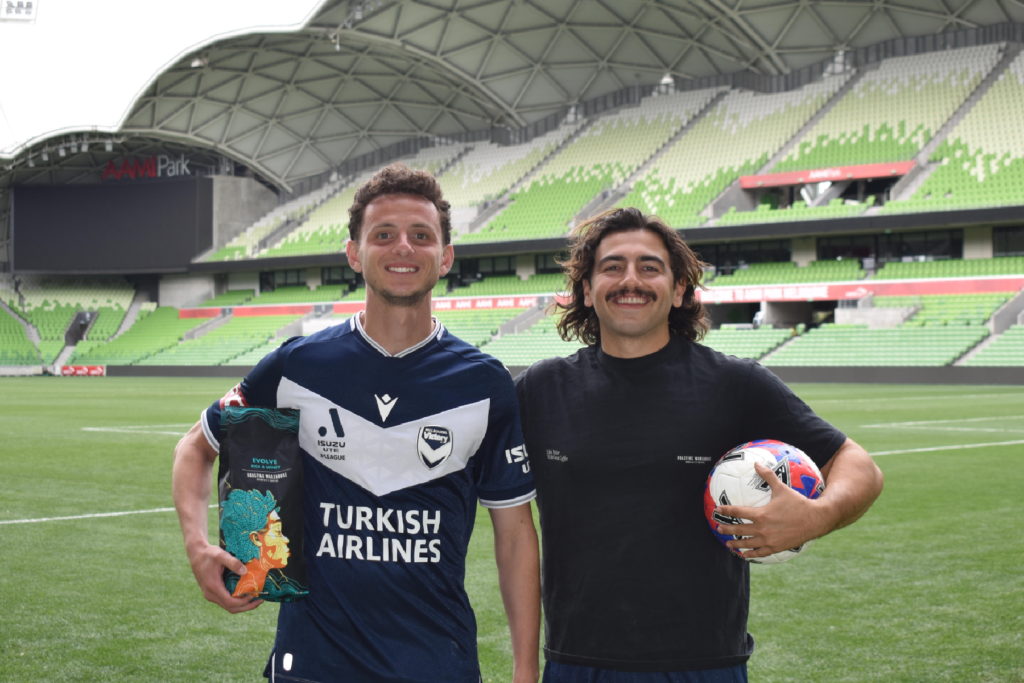
Victory unites with Roasting Warehouse in culture-led partnership

The Melbourne-based anf family-owned business will join the Victory family, uniting two institutions which represent the city’s culture and identity.

A partnership with local roots

As the newest partner of Melbourne Victory, Roasting Warehouse joins forces with a vital part of the city’s sporting landscape.

The club’s Managing Director, Caroline Carnegie, outlined why the partnership bears so much value to both parties.

“We are excited to collaborate with Roasting Warehouse, a community-oriented destination for high-quality coffee, proud of its foundations in Melbourne,” said Carnegie via official media release.

“Football and coffee sit at the epicentre of Melbourne’s culture. The two go hand-in-hand, consistently at the centre of the conversation that stirs Melburnians, which is no different to the conversation sport and Melbourne Victory stir in the State.”

Indeed, this is a partnership which combines the identity, passions and culture of an entire city, therefore giving it the foundations required for long-term, mutual success.

Representing the best of Melbourne

Both Victory and Roasting Warehouse are hugely successful in their respective industries. They are institutions with community-oriented philosphies, who pride themselves on craft and quality.

“We’re incredibly proud to partner with Melbourne Victory, a club that represents the heart, passion, and ambition of Melbourne,” revealed Roasting Warehouse Head of Brand, Alexander Paraskevopoulos.

“As a Melbourne-founded, family-run business, supporting a team that means so much to the local community feels very natural for us.”

Furthermore, through their high-quality blends, Roasting Warehouse will look to prepare Victory’s players and staff for high performances on the pitch as the seasons nears completion.

But this is about far more than just fueling athletes.

This is a partnership which embodies and unites two of Melbourne’s greatest strengths and cultural markers – a connection forged from the city’s very own DNA.


For more information about Roasting Warehouse, click here.

Marie-Louise Eta makes history as new Union Berlin head coach

In an historic appointment, Eta will take over as head coach of Union Berlin until the end of the season.

History in the making

Previously the first female assistant coach in Bundesliga history with Union Berlin, Eta will now take the reigns of the men’s first team on an interim basis.

Currently, the club sit in 11th place in the Bundesliga table, but with only two wins so far in 2026, relegation appears an all-too-real prospect, and one which the club is desperate to avoid.

“Given the points gap in the lower half of the table, our place in the Bundesliga is not yet secure,” said Eta via official media release.

‘I am delighted that the club has entrusted me with this challenging task. One of Union’s strengths has always been, and remains, the ability to pull together in such situations.”

Eta will begin as Union’s new head coach with immediate effect, and will be in the dugout for the club’s matchup against Wolfsburg this weekend.


A step into an equal future

Eta’s appointment signals a major step towards a more level playing field in the football landscape.

Furthermore, Eta joins other coaches including Sabrinna Wittmann, Hannah Dingley and Corinne Diacre who, in recent years, have blazed a trail for female coaches to step into the men’s game.

Wittmann currently manages FC Ingolstadt in Germany’s third division, and was the first female head coach in Germany’s top three divisions.

In 2023, Dingley became caretaker manager of Forest Green Rovers, and thus the first woman to lead a men’s professional team in England.

Diacre, now head coach of France’s women’s national team, managed Ligue 2’s Clerment Foot between 2014 and 2017.


Final thoughts

The impact therefore, is that Eta’s appointment will show future generations of aspiring female coaches that men’s football is an equally viable and possible pathway as the women’s game.

The time is now to level the playing field.

And while it may be a short-term role, its effect on attitudes towards equality and fair opportunities in the game will hopefully resonate long after the season ends.

Most Popular Topics

Editor Picks

Send this to a friend