




Is the FW Regional Girls Training Camp bridging the access gap for talent?

In Western Australia, the tyranny of distance has historically functioned as the primary barrier to talent identification.

For regional footballers, the logistical and financial burden of accessing elite pathways often renders the concept of “equal opportunity” a theoretical ideal rather than an operational reality. However, the recent Regional Girls Training Camp, hosted at the Sam Kerr Football Centre, suggests that Football West is moving to operationalise the structural changes announced in its 2026 academy overhaul.

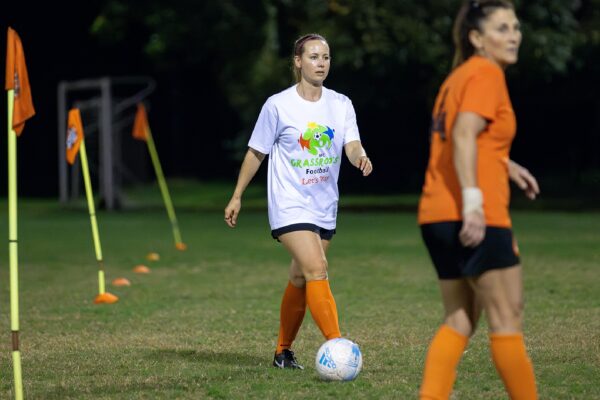
Earlier this week, nearly 100 players aged 10 to 17 converged on the State Centre for Football in Cannington. The three-day camp invited participants from the previous year’s Country Week carnival, represents the first tangible application of the “real-match” and high-performance philosophy outlined by Football West Development Manager Gareth Naven late last year.

While the previous announcement of the Regional Academy model focused on the structural shift from training camps to competitive “State Carnivals,” this current initiative addresses the resource gap. For stakeholders and policymakers, the camp serves as a case study in how centralised infrastructure assets can be leveraged to service a decentralised demographic.

Infrastructure as an equity lever

A lack of high-performance environments defines the economic reality of regional football. The facility gap between metro NPL setups and regional clubs is often vast. Football West uses the Sam Kerr Football Centre to subsidise the “professional experience” for regional talent.

Sarah Carroll, Female Football & Advocacy Manager, notes the purpose extends beyond simple engagement. The curriculum fused on-pitch technical training with athlete development workshops.

Geography usually blocks access to this sport science for a 14-year-old Pilbara or Goldfields player. By centralising this education, the governing body helps standardise the player pool’s knowledge base. Naven’s alignment strategy demands closing the “knowledge gap” alongside the technical one.

The economics of the “Legacy”

Critically, the WA Government funds the camp through the Female Community Legacy Program. This highlights the Legacy Program’s ROI for the Department of Local Government, Sport and Cultural Industries.

A stated aim to “enhance club capability” acknowledges that player development requires an ecosystem. The funding mechanism here is significant. Without state intervention, the cost per head would prohibit many families from attending.

Targeted funding bridges the gap between community participation and elite commercial viability. Regional Lead Tanya Amazzini calls these opportunities “essential” for player growth and confidence.

Strategic alignment with the 2026 pathway

Observers must view this camp alongside the Regional Academy system overhaul. The new “State Carnival” model demands players physically prepared for elite competition. This camp functions as the preparatory phase for that new competitive reality.

Football West uses elite exposure to mitigate the shock of transitioning to state programs. Furthermore, involving players from the Pilbara to the South West keeps the talent net wide. Maintaining sight on remote talent requires constant investment.

The residual challenge

However, the long-term impact warrants caution. The “re-entry” phase remains the primary challenge. Players return to clubs with significantly fewer resources than the Sam Kerr Football Centre.

Success depends on the “trickle-down” effect of the education provided. If players transfer this knowledge locally, the aggregate standard of regional football rises. If isolated, the experience may simply make the regional gap feel more pronounced.

Integrating 100 regional girls into the state’s premier facility executes the strategic plan. It signals that the Centre delivers dividends to the broader ecosystem, not just the elite.


Previous ArticleNext Article

FCA to Host Exclusive Two-Part Goalscoring Workshop Series with Dr Ron Smith

One of Australian football’s most respected coaching minds shares decades of research ahead of the FIFA Men’s World Cup.

Football Coaches Australia (FCA) has announced an exclusive two-part coach education series featuring renowned coach educator and football analyst Dr Ron Smith, offering coaches a rare opportunity to explore the evolving science of goalscoring through the lens of one of Australia’s most influential football thinkers.

The online workshops, scheduled for June 1 and June 8, will examine the historical development, modern trends and future direction of goalscoring in football, drawing on extensive research that formed the foundation of Dr Smith’s doctoral studies.

For FCA, the sessions represent the culmination of more than a year of planning and provide a timely opportunity for coaches to deepen their understanding of attacking play ahead of the FIFA Men’s World Cup.

“Ron’s work on goalscoring has been years in the making and continues to evolve,” FCA President Ian Greener said.

“We felt there was no better time to bring this knowledge to the coaching community than in the lead-up to the World Cup, when coaches around the world will be analysing the game’s best teams and players.”

Across the two sessions, Dr Smith will present findings from his extensive research into goalscoring patterns and trends, examining how the game has changed over time and what coaches can learn from football’s biggest tournaments.

Topics covered throughout the series will include:

  • Historical analysis of goalscoring trends
  • How goalscoring has evolved in the modern game
  • Key patterns identified through Dr Smith’s research
  • Scoring trends across the last six FIFA Men’s World Cups
  • Comparisons between men’s and women’s World Cup tournaments
  • The role of pressing, transition moments and direct play in creating goals
  • Practical coaching implications for improving attacking performance

The two-part structure has been intentionally designed to build upon itself. Session One will focus on the evidence, data and research underpinning Dr Smith’s findings, while Session Two will explore the practical applications and coaching interventions that can emerge from that analysis.

Football Australia has accredited both workshops with one Continuing Professional Development (CPD) hour each, allowing coaches to earn two CPD hours by attending both sessions.

Dr Smith’s coaching and coach education credentials span decades. He has worked extensively with Football Australia, the Australian Institute of Sport and the Socceroos, while also holding coaching roles internationally in Iceland and Malaysia, as well as within the A-League.

His contributions to coach development have helped shape generations of Australian coaches, making this series a valuable opportunity for coaches across all levels of the game.

Event Details

History and Future of Goalscoring – Session One
Date: Monday, June 1, 2026
Time: 7:30pm AEST
Format: Online
CPD: 1 Football Australia-accredited CPD hour

Following the completion of the FIFA Men’s World Cup, FCA is also planning a special panel discussion featuring leading Australian and international coaching voices to analyse the key tactical developments, trends and lessons emerging from the tournament.

Further details regarding that event are expected to be released later this year.

FCA members can attend the workshops free of charge, while guest registrations are available through Eventbrite.

Football NSW calls on clubs to Make It Red for Heart Health Round

Football NSW is calling on clubs and associations across the state to register for the 2026 Make It Red campaign, joining a national awareness movement aimed at reducing heart-related deaths on sporting grounds ahead of Heart Health Round on the weekend of June 5 to 7.

The campaign, developed by the Heartbeat of Football Foundation, asks sporting clubs to wear red, raise funds and build awareness around heart disease and sudden cardiac arrest, which is the leading single cause of disease burden and death in Australia for both men and women, and one that health authorities say is largely preventable through modifiable risk factors.

The call to action comes as the Foundation continues its work to map and register Automated External Defibrillators across NSW sporting facilities, a project that has already engaged twelve football associations and fed data into both the NSW Ambulance GoodSAM registry and NSW Health’s public AED map. The availability of a functioning, registered AED on site is among the most significant determinants of survival following sudden cardiac arrest, with survival rates declining sharply for every minute without defibrillation.

Football NSW is encouraging clubs to engage with the campaign across three areas. Clubs can register for the Make It Red campaign to help fund research, education and prevention programs. Participants, particularly those aged over 35, are encouraged to seek a free heart health screening test from their local GP or enquire about hosting a Heartbeat of Football testing day. Clubs are also urged to ensure their grounds have active, accessible AEDs in place, with guidance available through Football NSW’s Rescue Ready Guide.

The Make It Red campaign runs from June 5 to July 12, with Heart Health Round taking place across the opening weekend. Clubs can register and access participation resources at makeitred.org.

Most Popular Topics

Editor Picks

Send this to a friend