


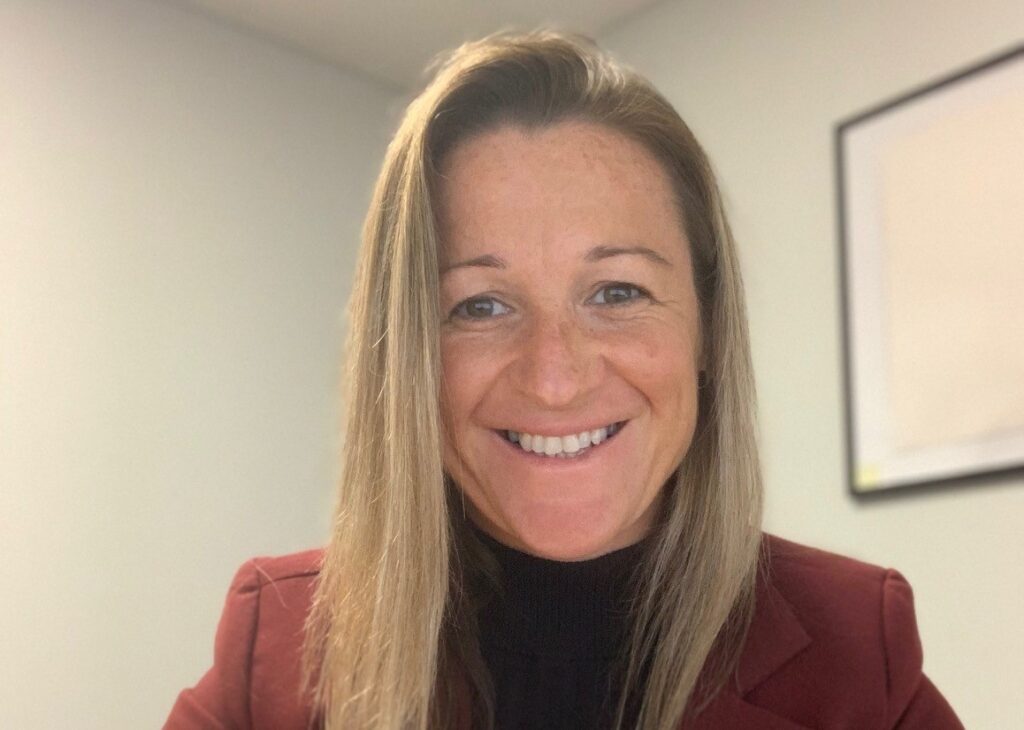
Football Coaches Australia (FCA) CEO Kelly Rourke has certainly had an unorthodox career on her way to taking over this role in December last year, but her wealth of sports administration experience paired with her glaring passion for football promises to help coaches in Australia progress further than ever before.
Off the back of the Matildas World Cup success and after state federation annual reports suggesting a sizeable increase in the number of coaches participating, Australian coaching education and wellbeing has never been more of an integral part of our local game.
In an interview with Soccerscene, Rourke discusses her career journey to the present day, her overall ambition for the future of local coaching in this role and how she will empower female coaches as the game surges in popularity.
About yourself, how was the journey to becoming FCA CEO? What roles have you done and what is your background in football?
My background is in policing believe it or not. Majority of my career to date has been involved in various roles of policing from patrol work to investigations so that’s the big backbone of my career and is what ultimately brought me over to Australia from England. I came out and joined the police here, got recruited whilst I was still in England because they were on the search for specialist skills.
I’ve been involved in sport my entire life. Back in the day when I was a teenager, I played for Bradford City and Huddersfield Town so I’ve been involved in football for as long as I can remember as a player. I eventually got stolen by Rugby League and played for England.
When I got to Australia and left the police, I got into various different jobs including a Management Executive role, one with Tabcorp and ultimately, I ended up becoming an administrator for the NRL which is where I get my sports admin background from.
I’m also a chairwoman for a centre in South Australia called The Marjorie Jackson-Nelson Centre for Women’s Sport which is a government-funded project that will initially go for four years where we are doing a 12-month course for females to try and bridge the gender gap across all sports, all levels and all roles.
It’s not been an obvious career where I’ve worked in sport or football my entire life, but football is by far the first sport that grabbed by attention, and my career background would probably surprise a few people.
Do you have an overall plan or ambition for coaches in Australia as the CEO of FCA?
I think we need to try and offer something like the PFA does, I think a big goal for us this year that we will try to achieve is standardised contracts in the APL and NPL. We need to be securing the futures of our coaches in order to keep the talent in Australia and also to foster coaches from Europe and across the world to come over here, and that only happens with the introduction of standardised coaching contracts across the professional leagues.
That includes formalised grievance procedures, dispute resolution, tribunals. I just think it is long overdue, we really need to be safeguarding the development of our coaches but also their wellbeing. That’s got to be our starting block, we need to secure that and then hopefully we can float it out to the APL and across community football. If we don’t take care of their wellbeing, we are going to lose coaches and without coaches, there is no football.
Working with the A-Leagues and the FA on coach development is one of our most important goals. We’ve got to be driving change forward and offering similar services to the PFA who are a great organisation to learn from.
For the local game, what’s FCA’s role in encouraging a growth in the number of local coaches?
We do a lot of coach education so the FA have moved to the UEFA way of coach development, so it used to be that coaches obtained points in order to retain their licences but now its hours. We’ve been working closely with the FA to understand what it looks like and ensure that we can deliver meaningful coach education to our coaches, and we do that free of charge to our members. We host workshops and webinars with top coaches to help with that.
As a woman in power, are there any moves that you’re making to bridge the gender gap for coaching in Australian football?
I’m not sure when FCA brought me in they had a female in mind, they just wanted fresh eyes and someone enthusiastic, and I do this role because I love it and am passionate about the game, I still play and heavily involved with coaches and community football. They wanted to bring someone who had the knowledge of the game that’s got a lot of sports administration experience behind them which I do have.
The FA have invited me to a Women’s football summit in June and I think that really shows there is progress with the FA for the fact I’ve been invited. Obviously, I want to increase opportunities for our female coaches, we’ve only got two head coaches in the A-Leagues. It was good to see Emily Husband get announced as coach of the year and we’ve got Kat Smith who didn’t have a job until a few weeks out from the season when Western United snapped her up, so we really want to drive and show the female coaches the pathway.
Being a woman does it encourage that? Of course it does for me because I know what it’s like to be an athlete or a coach and not have those opportunities so a big part of my role will involve creating more stabilised roles for our coaches but also creating the pathway for women to nurture the talent we’ve got.
We need to see more female coaches in NPL teams and in the A-Leagues for sure and I think Emily [Husband] winning coach of the year is a great start, I can’t celebrate that enough.