

Football Coaches Australia unveil Football Coaching Life expansion

Gary Cole FCA

Football Coaches Australia (FCA) have announced that The Football Coaching Life Podcast will make the exciting transition into video format and be available via YouTube from this week.

Since February 2021, The Football Coaching Life Podcast has steadily grown into one of the strongest sources of insight and information for professional, semi-professional, grassroots and aspiring coaches in Australia.

The Football Coaching Life Podcast reflects not just the range of Australian coaches located across the world, but also the variety of talented male and female coaches involved in the men’s and women’s game both domestically and abroad.

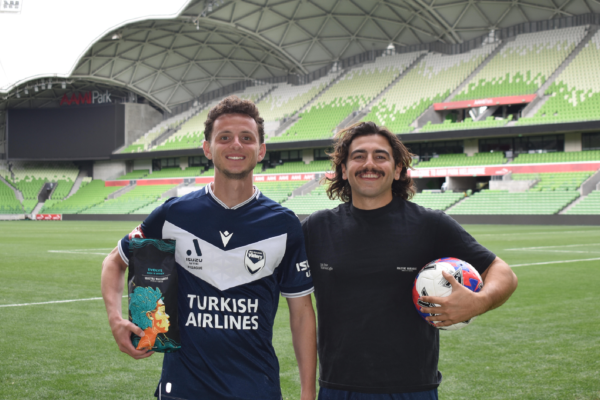
Hosted by legend of Australian football and recent inductee into the Football Victoria Hall of Fame, Gary Cole, the podcast has sought to give a platform to some of Australia’s most successful and brightest up-and-coming coaches, with guests including Tanya Oxtoby, Ange Postecoglou and Alen Stajcic.

“The podcast has been running for just over a year now thanks to the significant help of MAKING MEDIA, the podcast professionals. From day one we recorded them initially via Zoom because our intent was always that we would find a home for them. We’ve captured around 25 episodes now and have reviewed what we’ve been doing on an ongoing basis, and we’ve got well over 16,000 listens of the podcast now,” Cole says.

“I think the whole purpose of moving it to video is that it will touch more people – more people will watch and more people will listen. It’s a fantastic opportunity for coaches of any sport to learn because there’s so much knowledge and wisdom about leadership and culture being shared. There’s so much of the coaches telling their story, and we all have different stories. And the reason we started was because most of the stories haven’t been told.

“We believe that there’s not a ‘one size fits all’ for coaching, it’s something that is very personal and you’ve got to find your way. And across that journey, their coaching and approach to coaching changes. Now we have the opportunity to watch and listen, not just listen.

“At the end of the day, FCA was setup to help coaches at all different levels. That includes supporting their mental health, representing them and helping them with their ongoing education.”

Sarah West, Vice President of FCA and Assistant Coach/Analyst for Canberra United, expressed her excitement at being able to effectively reflect the values of FCA through amplifying the podcast’s reach with the new video format.

“One of our goals is to enhance the profile of Australian coaches, and the other is to provide Australian coaches with resources; whether that be educational, professional development and opportunities to have positive conversations about football.

“Effectively, through the work that we’re doing with MAKING MEDIA and Ralph Barba, packaging up those podcasts and having them delivered to our audio channels has been hugely successful.

“The diversity of FCA’s modern media and coach education platforms for coaches is not matched by any other Australian football coaching provider.”

Karen Grega FCA Executive Committee member and podcast editor stated:

“‘The Coaching Life’ provides an insight into the personalities of the coaches, as well as their own journeys (sometimes warts and all). This is something which obviously comes from them being in a comfortable environment. This makes for great viewing and listening for coaches at all levels and the football-loving public generally.  

The calibre of Australian female coaches making their mark (in often challenging circumstances) in the game both locally and oversees is impressive. It’s certainly a far cry from my days as a player and referee. I’m sure the content in ‘The Coaching life’ will resonate with coaches from many other sports as well.”

There are many ‘take-aways’ for those in the corporate sector as coaches share their views and experiences on topics such as Resilience, Leadership, Mentoring and even the impact of social media.

Gary’s own invaluable contribution to both the questions he poses and the coaches responses comes from his own football and teaching experience, empathy and of course, passion for the game and adds to the valuable lessons learned from each episode.

The Football Coaching Life Podcasts and YouTube videos are available now.

Previous ArticleNext Article

Marie-Louise Eta makes history as new Union Berlin head coach

In an historic appointment, Eta will take over as head coach of Union Berlin until the end of the season.

History in the making

Previously the first female assistant coach in Bundesliga history with Union Berlin, Eta will now take the reigns of the men’s first team on an interim basis.

Currently, the club sit in 11th place in the Bundesliga table, but with only two wins so far in 2026, relegation appears an all-too-real prospect, and one which the club is desperate to avoid.

“Given the points gap in the lower half of the table, our place in the Bundesliga is not yet secure,” said Eta via official media release.

‘I am delighted that the club has entrusted me with this challenging task. One of Union’s strengths has always been, and remains, the ability to pull together in such situations.”

Eta will begin as Union’s new head coach with immediate effect, and will be in the dugout for the club’s matchup against Wolfsburg this weekend.


A step into an equal future

Eta’s appointment signals a major step towards a more level playing field in the football landscape.

Furthermore, Eta joins other coaches including Sabrinna Wittmann, Hannah Dingley and Corinne Diacre who, in recent years, have blazed a trail for female coaches to step into the men’s game.

Wittmann currently manages FC Ingolstadt in Germany’s third division, and was the first female head coach in Germany’s top three divisions.

In 2023, Dingley became caretaker manager of Forest Green Rovers, and thus the first woman to lead a men’s professional team in England.

Diacre, now head coach of France’s women’s national team, managed Ligue 2’s Clerment Foot between 2014 and 2017.


Final thoughts

The impact therefore, is that Eta’s appointment will show future generations of aspiring female coaches that men’s football is an equally viable and possible pathway as the women’s game.

The time is now to level the playing field.

And while it may be a short-term role, its effect on attitudes towards equality and fair opportunities in the game will hopefully resonate long after the season ends.

“20 Years Ahead”: The System Quietly Reshaping Korean Football

For all its consistency, Korean football has long carried an underlying tension.

On paper, it works. The national teams remain competitive, the player pool is technically sound, and the country continues to produce athletes capable of performing on the continental stage. But beneath that surface-level success, a more uncomfortable question has persisted about whether Korea has been simply maintaining its position while others evolve.

That question has driven the Korea Football Association (KFA) toward one of the most ambitious structural overhauls in modern football development: the Made in Korea (MIK) Project. Rather than focusing on short-term gains or isolated improvements, the initiative attempts to do something far more complex. It is rebuilding the foundations of how football is taught, understood and executed across the entire ecosystem.

Internally, the project has been described as having “brought Korean football 20 years ahead.” Whether that claim ultimately proves accurate remains to be seen, but what is already clear is the scale of the shift taking place.

From talent to system

The starting point was not talent, but structure. For years, concerns had been growing within Korean football circles about a lack of uniqueness in players, inconsistencies in long-term planning and an over-reliance on safe, risk-averse styles of play. The system, while producing disciplined and technically capable footballers, was not consistently producing players equipped to thrive in the most demanding environments. Environments such as Europe, where tempo, decision-making speed and adaptability define success.

Rather than attempting to patch these issues, the KFA chose to reimagine the system itself.

At the core of the MIK Project is the idea that high performance is not the result of individual excellence alone, but of an interconnected structure that allows that excellence to emerge consistently. Coaching, sports science, performance analysis, leadership and education are no longer treated as separate pillars, but as components of a single, integrated system designed to evolve continuously.

A new operating model

This philosophy is most clearly expressed through the project’s adoption of a cell-based operating model. In place of traditional hierarchies, the system is organised into small, cross-functional units, called “cells”. These cells are given autonomy over their work while remaining connected through shared frameworks and objectives. Each unit is responsible not only for delivery, but for learning, adapting and refining its approach on a constant cycle.

The intention is to bring decision-making closer to the pitch, allowing those working directly with players to respond faster and more effectively to the realities of the game. In an environment where marginal gains are often decisive, that speed of adaptation can be critical.

Closing the gap

Yet structure alone is not enough. The project is equally shaped by a clear-eyed assessment of where Korean football currently stands in relation to the world’s elite.

Comparative analysis has highlighted several consistent gaps: technical execution under pressure, the ability to operate at higher game speeds and effectiveness in decisive moments such as one-on-one situations. These are not deficiencies of talent, but of context. Korean players, while highly capable, have often developed within systems that prioritise control and precision over risk and spontaneity.

The consequence is a style that can become predictable under pressure.

Training for reality

To address this, the MIK Project has fundamentally shifted training methodology. Sessions are increasingly designed to replicate the intensity and unpredictability of real matches, placing players in situations where decisions must be made quickly, under pressure, and often in confined spaces. The focus is no longer on rehearsing ideal scenarios, but on preparing players for imperfect ones.

This approach reflects a broader philosophical shift that prioritises adaptability over perfection, and decision-making over repetition.

Evolving the Korean identity

Importantly, this evolution does not come at the expense of Korea’s existing strengths. Discipline, work ethic and technical proficiency remain central to the national identity. What the MIK Project seeks to do is build upon those foundations, combining them with the creativity, speed, and tactical awareness required at the highest level of the game.

It is, in many ways, an attempt to reconcile tradition with modernity.

A global ambition

The ambition underpinning the project is unmistakable. The KFA is not simply aiming to remain competitive within Asia, but to re-establish itself among the world’s leading football nations. That means producing players capable of not only reaching Europe, but succeeding there.

More than a project

What makes the MIK Project particularly compelling is that it does not present itself as a finished solution. Instead, it is designed as a system that evolves, adjusts and refines itself over time. In a sport where trends shift rapidly and competitive edges are constantly eroded, that capacity for continuous development may prove more valuable than any single innovation.

For other football nations, Korea’s approach offers an instructive case study. While many federations continue to debate philosophical direction, the KFA has committed to structural transformation, embedding its ideas not only in theory, but in practice.

Whether the project ultimately delivers on its boldest ambitions will depend on time, execution, and the unpredictable nature of the game itself. But one thing is already evident.

Korean football is no longer standing still.

Most Popular Topics

Editor Picks

Send this to a friend