




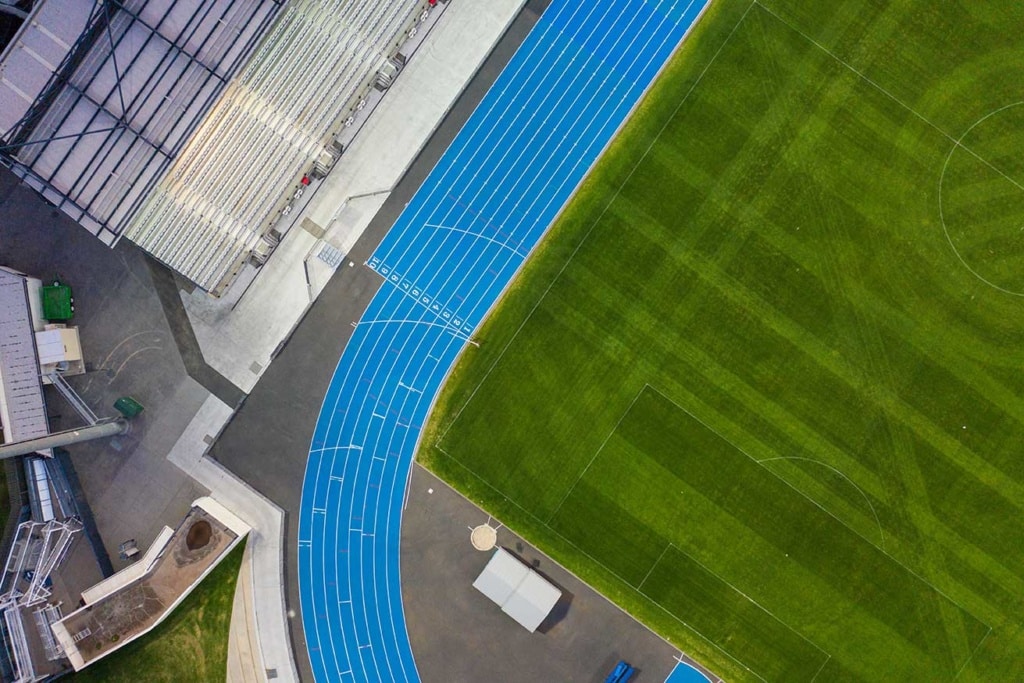
Western United FC has announced that they will play home fixtures out of Lakeside Stadium in season 2021/22, only for South Melbourne FC to challenge the announcement hours later.
United, which made a long-awaited update on the construction of its new stadium yesterday, released a statement this morning confirming that Lakeside Stadium – home of NPL outfit and unsuccessful A-League licence bidder South Melbourne – will be included in its rotation of home games this season.
The club announced that Lakeside will host seven home games for the A-League side in 2021/22 season, the first of which will come against Perth Glory on Friday, November 26 in Round 2.
However, South Melbourne has moved quickly to challenge the announcement.
Western United had revealed Lakeside Stadium as one of its home grounds for the 2021/22 season, with a written statement on the club’s website.
“United had limited options for the season due to the lack of rectangular stadiums in Melbourne, and the requirement that stadiums must meet the minimum A-League venue standards,” the statement reads.
“Several other options were investigated during the process but did not materialise as viable. This included Knights Stadium in Sunshine which unfortunately required significant infrastructure investment to meet A-League standards.
“United was keen to continue playing at AAMI Park as per the 2020/21 season, but this option was heavily opposed by cross-town rivals Melbourne Victory and Melbourne City, despite being the only rectangular stadium in Melbourne that meets all requirements to host an A-League game.
“Lakeside Stadium was selected for several reasons including being easily accessible both on public transport and on road networks with ample parking for United fans based in the west of Melbourne. It is also a purpose-built football stadium that can be adapted to meet to A-League standards, which was a critical factor in the decision-making process.”
South Melbourne has since directly challenged that any agreement is in place at all.
“South Melbourne FC notes the announcement by Western United FC of its intention to use Lakeside Stadium for a select number of games in the 2021/22 A-League Season,” the NPL club noted in a statement.
“Lakeside Stadium and Albert Park is the home of South Melbourne FC and has been for over 60 years. Our licencing arrangements with Lakeside Stadium and the State Government ensures it will remain this way for decades to come.
“South Melbourne FC has a stadium, we have a home and we are proud to call it our own.
“Executives at Lakeside Stadium and Melbourne Sports Centres have advised South Melbourne FC that contrary to the announcement made by Western United FC, there is no written or signed agreement in place with Western United FC or the Australian Professional Leagues to allow Western United FC access to Lakeside Stadium for the 2021/22 A-League Season.
“South Melbourne considers Western United to be a direct competitor in the Melbourne, Victorian and Australian football market. Their acceptance to the A-League was based largely on the commitment to having a purpose-built football stadium constructed in Melbourne’s west. It is approaching three years since the A-League expansion clubs were announced and construction works have still not commenced. Western United’s use of Lakeside Stadium is not acceptable and South Melbourne FC will vigorously oppose any such plans.
“South Melbourne can confirm that it will be exercising all rights to prevent Western United FC from playing A-League matches at Lakeside Stadium.
“The club will provide its members, players, parents and supporters with further updates as information is available.”
Whilst the South Melbourne statement alleges that “Executives at Lakeside Stadium and Melbourne Sports Centres have advised South Melbourne FC that contrary to the announcement made by Western United FC, there is no written or signed agreement in place with Western United FC or the Australian Professional Leagues to allow Western United FC access to Lakeside Stadium for the 2021/22 A-League Season”, the official Melbourne Sports Centres account did retweet the Western United announcement earlier in the day.
The tweet has since been deleted.
In a written statement released earlier in the day, Western United confirmed that the club considered a range of alternative venues but was met with a wide range of challenges, including from AAMI Park anchor tenants and cross-town rivals, Melbourne City and Melbourne Victory.
Western United CEO Chris Pehlivanis explained the ill-fated search for a suitable rectangular stadium west of Melbourne’s CBD was a vital reminder of the importance of the club’s stadium and precinct project in Wyndham.
“We’ve been working hard to find the best home ground for us, which is not a simple process in a complex sporting environment topped with a global pandemic,” he said.
“Unfortunately, what we want and what our members tell us they want – a rectangular pitch to A-League standard located in the west of Melbourne – doesn’t exist. That’s why we are building Wyndham City Stadium.
“For this season, we wanted to build a home ground advantage that would not only benefit us on the pitch but provide the best solution for a great fan experience for our loyal members and fans that have been with us from the beginning.
“We’re really lucky as a club, we have tough, relentless and dedicated fans that I know will stick on this journey with us through the tough times as we build towards being a great club for the west for generations to come.”