
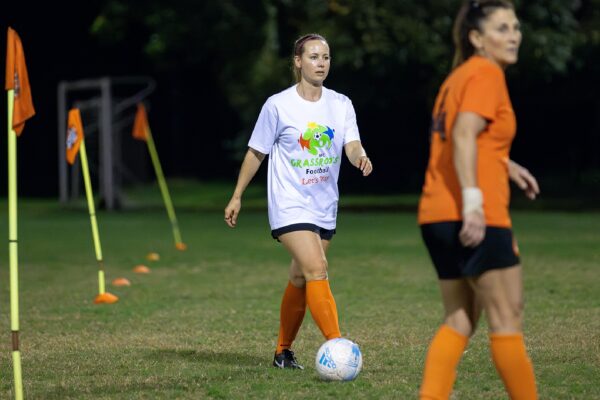




For decades, women in Victoria were prohibited from participating in organised football, thereby being pushed aside as the men’s game dominated the field. The tide, however, has turned. What was previously a sport confined to half of the population is being changed by girls lacing up their boots and women leading from the front.
Over 21,000 women and girls started playing football in 2024, fuelled by the FIFA Women’s World Cup 2023™ and the Matildas’ semi-final success. Football, with over 221,000 female players registered countrywide, is not only Australia’s most popular team sport, but also one of its fastest growing.
This past week, Female Football Week 2025 (FFW) highlighted the movement that is restructuring the game. The nationwide initiative, which runs from May 2 to 11, is more than a celebration. It is a catalyst for sustained change.
A Nationwide Celebration with Local Impact
Organised by Football Australia in collaboration with member federations and clubs, FFW 2025 includes leadership panels, grassroots clinics, gala days, and coaching masterclasses to empower women at all levels of the sport.
Football Queensland’s Senior Manager – Game Development, Kate Lawson, anticipated an action-packed agenda that would capture the imaginations of both returning and new competitors.
“There are going to be more eyes on football in Australia than ever before. The increased representation of women in our game has everyone buzzing this year, which is why this Female Football Week is set to be the biggest and most exciting yet,” she said via press release.
Across the country, similar initiatives are igniting change. Football Queensland presented the FFW Awards to recognise local women’s football legends, while Football Victoria continued its all-female commentary round in the NPLW, bringing women’s voices to the forefront of the game.
At the grassroots level, activities such as The Gap FC’s Mother’s Day celebration and FFW gala in Brisbane highlight the important role that families play in developing the next generation of players.
Behind the Data: Real Growth, Real Stories
The statistics tell one story. Football participation across Australia has increased 11% to 1.91 million participants by 2024, with female participation up 16%. Queensland alone had a 44% increase in women and girls playing the game throughout its ten regions. Female involvement in Football NSW increased by 17% throughout the winter season.
However, behind these numbers are the individuals who are transforming the game.
The increase in female football involvement is more than just a statistic; it’s a tapestry of personal experiences that illustrate the movement’s depth and variety.
In the ACT, Tina McLeary serves as secretary of Brindabella Blues FC, a club with approximately 1,000 members. Her football adventure began with her children, but she rapidly became a significant driver of change, taking on management duties and guiding inclusive club strategy.
“We were able to get the boys there and show that these 10 and 11-year-old boys don’t care, there’s no gender relationship there. They just want to be a part of this. They just want to go kick the ball and see the game,” she shared, reflecting on the shifting culture in football.
In Western Sydney, Katelyn Smith is making her mark with CommBank ParaMatildas. After health issues halted her early football dreams, she discovered her calling with CP Football. Katelyn, a Golden Glove winner and national team striker, is not only scoring goals but also coaching the next generation of footballers with disabilities, demonstrating what is possible.
Women are also excelling in roles off the pitch. Jessica Jensen (Football QLD), Daphne Gounaris (Football Victoria), and Alana Zic (Football NSW) are three female referees breaking down boundaries in refereeing. Refereeing for the women allows them to improve themselves, connect with others, and lead with integrity and confidence.
In Tasmania, Jess Woodroffe of Launceston City FC has contributed to shaping her club’s infrastructure and culture. The club has recently added gender-friendly changing rooms, in addition to increasing the number of female board members and players, primarily from their campaigning and inclusive community forums.
Challenges Ahead—and a Bold Vision for the Future
Despite the momentum, obstacles remain. Numerous clubs are operating above their capacity, putting a strain on coaching resources, infrastructure, and equipment. As more girls get involved with the sport, retention becomes crucial, especially throughout adolescence, when many abandon it due to a lack of clear paths or mentors.
Football Australia has set an ambitious goal: gender parity in community football by 2027.
Interim CEO of Football Australia, Heather Garriock, believes Female Football Week 2025 has highlighted just how vital women’s football has become.
“Female Football Week 2025 has underscored the critical importance of women’s football to the future of our game. The growth we’re seeing at every level, from grassroots to the elite, is not only remarkable, but also reshaping the landscape of Australian sport,” she said via press release.
Conclusion: From Moment to Movement
FFW 2025 is about more than simply celebrating progress—it’s about maintaining it. Women’s football is no longer an afterthought, through community-led events, national investment, and strong representation.
It’s at the centre of the conversation.