

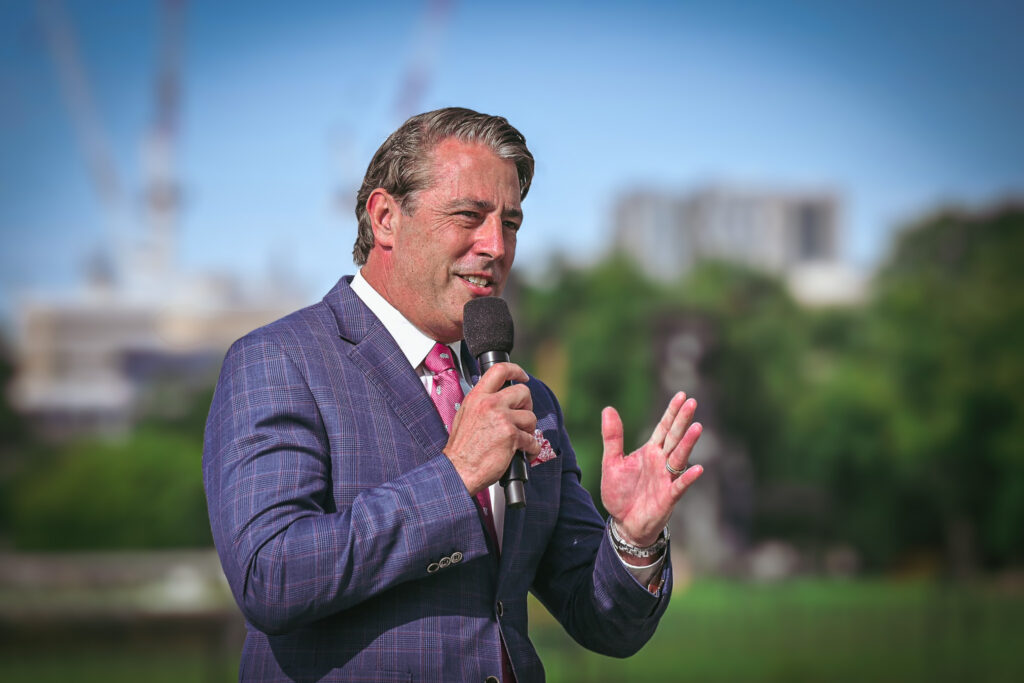
When the Australian Professional Leagues confirmed Steve Rosich as the new CEO of the A-Leagues, the football community couldn’t help but ask: Is this the mover and shaker who can finally kickstart the next chapter of our game? Curiosity, cautious optimism, and genuine hope are natural reactions. But after examining his résumé, leadership pedigree, and proven ability to transform sporting organisations into commercial powerhouses, one thing is clear: Steve Rosich has the potential to be exactly what Australian football needs right now.
If we are honest with ourselves, the A-Leagues are not short of passion. They are short of penetration. Football has the numbers, the multicultural breadth, the participation base and the long-term demographic wind behind it. What it has lacked is commercial conviction. This role requires a central figure who can mobilise investment, convince networks, and turn football from the ‘nearly product’ into a genuine entertainment powerhouse.
That is why Rosich’s appointment matters.
A Leader Forged in High Pressure Environments
Rosich does not arrive at the A-Leagues as an experimental project. His leadership record is built across three different elite sporting sectors, each requiring different forms of authority and strategic thinking.
At the Fremantle Dockers, he spent 11 years steering cultural shifts, long-term commercial planning, and stakeholder management in one of the most pressured environments in Australian sport, the AFL. You do not last a decade in that seat unless you can manage ego, media, board tensions, and commercial growth simultaneously.
Then came the Victoria Racing Club, custodian of the Melbourne Cup Carnival, The Race That Stops a Nation. That event is not a sporting fixture. It is a cultural institution. Rosich guided that organisation through pandemic disruption, shrinking tourism, shifting public sentiment, and operational uncertainty. Yet the Melbourne Cup retained its brand, its commercial partners and its relevance. That alone suggests a steady hand and a strategic head.
People forget he also stepped briefly into the medical technology sector with BrainEye, an unusual move but one that shows intellectual range, not a narrow sporting silo. Now he returns to football as CEO of the APL, stepping into the role officially in January 2026.
None of this is theory. It is hard-earned leadership.
The Commercial Rolodex That Matters
Elite sport grows on broadcast relevance, corporate investment, and scalable storytelling. It requires deal-making, not hope.
Rosich brings a corporate phonebook that can activate capital quickly. His longstanding relationships with brands such as Lexus (Toyota Australia), Crown, Kirin Beer, TCL and Howden are not superficial handshakes. They are built on years of commercial execution. If the A-Leagues are serious about revitalising sponsorship, broadcast engagement and experiential entertainment, then having a CEO capable of making the right calls to the right people is half the battle won.
Football does not just need ‘partners.’ It needs investors, activators and cultural amplifiers. Rosich has dealt with those brands before. He understands their expectations. He knows how to pitch ambition in commercial language, not sporting desperation.
If he can even convert a fraction of those relationships into aligned investment, the A-Leagues’ commercial landscape changes overnight.
Professional Discipline Not Just Passion
There is another aspect of Rosich’s appointment that deserves attention: his professional discipline. Rosich is a Chartered Accountant and at Soccerscene, we take that qualification seriously. We have been vocal in calling for Australian football administrators to adopt structured CPD frameworks, including professional standards and continuing education.
He is not a practising accountant, but he continues to uphold his membership by completing his CPD requirements and ongoing training. That signals accountability, standards, governance literacy and a commitment to continuous improvement.
We cannot demand a more professional football industry while accepting outdated administrative habits. Rosich represents the opposite, someone who keeps sharpening the tools rather than dining out on old achievements.
This is what modern sport requires.
The Strategic Assignment Waiting for Him
The football landscape Rosich inherits is not broken, but it is underleveraged.
The next two to three years must focus on:
• Commercial rebirth
• Fan-first narrative building
• Broadcast evolution
• International relevance
• Club alignment and industry unity
This requires a CEO who can think beyond short-term firefighting. Rosich has overseen environments where stakeholder diplomacy decides survival. He knows how to run a league as both an economic organism and a cultural asset.
And importantly, he understands that football cannot win hearts without winning the market.
A-League Football Needs a Catalyst Not a Caretaker
For too long, we have accepted incrementalism in football. Growth that is “good enough.” Strategic plans that tick boxes rather than punch holes through barriers.
The next chapter requires a catalyst, someone comfortable being a lightning rod for change.
Rosich does not need to pretend to be a lifelong football romantic. What he needs to be, and what his track record suggests he is, is a sports entertainment strategist. A deal-maker. A leader who knows how to change the expectation curve.
If he digs deep into his contact book, leverages his credibility and builds a unifying narrative around the game, then investment can return, broadcast value can lift, and the A-Leagues can finally behave like the entertainment product Australia keeps saying it wants.
A Final Assessment
Steve Rosich arrives with pressure on his shoulders. Great leaders need pressure.
He arrives with expectations. Football has waited long enough.
Most importantly, he arrives with the capacity to change the commercial gravity of the code.
If Australian football is serious about unlocking its next era, then we should back a leader who has already turned major sporting properties into economic brands.
In short, Rosich might be the right person at exactly the right time, and for a code that has spent decades asking for belief, that is a very encouraging starting point.