

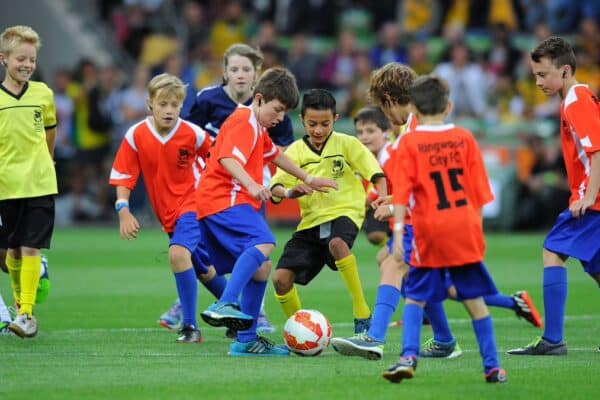
SportAus release new Trans and Gender Diverse Inclusion guidelines

Yesterday, Sport Australia released a 50+ page booklet detailing new guidelines for trans and gender diversity inclusion in sport, with the overarching goal of making sport more readily accessible to anyone.

With more and more transgender people playing sport, now is as good a time as any to raise awareness on an issue that has needed addressing for some time.

The main message from the booklet is that Australia needs to take a stand and try to set an example by being as inclusive as necessary. That we all need to work together to achieve a standard where we could perhaps be a world leader.

Any deviation from this directive should and won’t be tolerated, so long as everyone works together to, again, allow anyone of any background, gender or otherwise, play any sports.

The full set of guidelines can be found from this link:

https://origin.sportaus.gov.au/integrity_in_sport/transgender_and_gender_diverse_people_in_sport

We here at Soccerscene support the integration of these guidelines and the idea that sport is for everyone, regardless of age, gender or cultural background.


 

Previous ArticleNext Article

Female Football Week kicks off across Northern NSW

Female Football Week has officially begun across Northern NSW, with a program of gala days, networking events and awards ceremonies running until Sunday May 17, marking a ten-day celebration that organisers say reflects both the growth of women’s football in the region and the work still required to sustain it.

The national initiative, now a fixture on the football calendar, provides a dedicated period of visibility for female participants across all levels of the game from players, coaches, referees to volunteers, whose contributions have historically received less recognition than their male counterparts.

NNSWF Participation and Women’s Football Officer Serena Carter said the week offered something for everyone connected to women’s football in the region.

“Female Football Week provides a fantastic chance to highlight the dedication and skill of female players, coaches, referees and volunteers across the northern NSW community,” Carter said. “There’s something for everyone to enjoy, from grassroots participants to elite competitors.”

Women’s football in northern NSW spans remote and regional communities where clubs operate on limited resources, alongside more established metropolitan programs with clearer development pathways. Female Football Week creates a moment of shared recognition across that spectrum and acknowledges the role volunteers play, from running the canteen to progressing through the pathway.

Northern NSW Football has recorded some of its strongest participation numbers in women’s and girls’ football in recent seasons, a trend that has placed increasing pressure on clubs and facilities to keep pace. The week’s events offer clubs an opportunity to showcase their commitment to diversity and inclusion at a time when that commitment is being tested by growth.

Football NNSW Releases Infrastructure Strategies as Participation Growth Outpaces Facilities

Northern NSW Football has unveiled bespoke infrastructure strategies for each of its seven member zones, providing an evidence-based roadmap for facility investment across the region as continued participation growth exposes critical gaps in the sporting infrastructure available to support it.

The Member Zone Infrastructure Strategies draw on data across participation rates, population growth and existing facility conditions to map what each zone has, what it needs and where investment will have the greatest impact. Identified gaps include drainage, lighting and inclusive changerooms – the foundational infrastructure that determines whether facilities are functional, safe and accessible year-round.

NNSWF Government Relations Manager Gary Fisher said the strategies represented a significant step toward smarter, more targeted investment across the region.

“By bringing together key data on participation, population growth and existing infrastructure, these strategies give us a stronger understanding of where the needs are greatest and where investment will have the most impact,” Fisher said. “Ultimately we want to create more inclusive and accessible environments for everyone involved in the game while building stronger, more sustainable clubs and communities for the future.”

Northern NSW Football has previously noted that participation across the region is at record levels and still rising, with women’s and girls’ football a significant driver of that growth. Infrastructure that was built for a smaller and less diverse participation base is increasingly unable to meet current demand, let alone accommodate future growth.

The strategies are also designed to strengthen NNSWF’s alignment with government funding priorities, providing the evidence base needed to support grant applications and long-term facility planning across all seven zones.

Most Popular Topics

Editor Picks

Send this to a friend