



ReSpo.Vision: AI and AR/VR that revolutionises data tracking

ReSpo.Vision is an AI & Computer Vision-based optical tracking system which automatically collects player skeletal tracking data from any single camera recording of a sporting event.

Using immersive 3D visuals, the system allows the audience to unlock performance data and insights that weren’t before available like tactical or scouting insights with AR/VR.

Respo.Vision – a Polish-based start-up founded in early 2020 started by four founders – Pawel Osterreicher, Mateusz Szala, Wojciech Rosiński, and Łukasz Grad.

These four individuals have had combined experiences in data science, consulting and machine learning engineering, and believe AI can unlock a wealth of possibilities by capturing previously uncapturable player tracking data.

The company’s mission is to bring a new depth of analytics to sports using Computer Vision.

The product merges the immersive AR/VR world with the deep analytical environment that sports is, and the company specifically specialises in football.

They leverage bleeding-edge deep learning algorithms to automatically generate 3D skeletal tracking data from sporting events and analyse it with an unprecedented level of insight.

The technology system detects 3D positions of the ball and 50+ body parts of every player, in every video frame, using a single-camera video input (which can be any recording, present or past, a TV broadcast, or a training session recording). Fully automatically, for any game, with accuracy measured in centimetres, and without any wearable sensors or expensive pre-installed cameras.

The company are scaling up their clientele (among them clubs, leagues, federations, media, or sports data companies) and are doing so by offering an unmatched depth of knowledge in a scalable, and cost-effective way.

ReSpo.Vision Head of Product Mateusz Dłużniewski presenting at the GSIC powered by Microsoft Summit APAC in Singapore.

The technology is split into two different products: Data & Stats as well as Visuals which allow the audience a chance to choose how they want to experience the game.

This is how each work:

Data and Stats

– 2D & 3D Tracking data: Uses coordinates of players’ body parts & the ball generated from any match recording, even TV broadcasts with the option to view the game in either 2D or 3D.

– Physical data: Tracks accurate physical measurements, including speed, acceleration, body orientation, or motion types

– Game reports: 3D tracking-derived analytical summary of any game. Revealing unique metrics, including player zones of control, Team Compactness, Open Passing Lanes, Pressing performance, and more – all to power better tactical decisions

Visuals

3D Digital twin of football: Recreate any real-life game in a realistic, VR-ready 3D environment with unlimited camera perspectives and full immersion.

Matchday in the metaverse: Open the gates to the virtual stadium and use VR technology to teleport fans directly into the heart of the action for an incredible immersive experience.

Data visualisations & AR Add-Ons: Enhance the fan experience or aid the player coaching process with visualized stats & insights (e.g. tactical view, pitch control overlay).

ReSpo.Vision Body Keypoints Detection.

How this technology can be used in Australia

Specifically in Australia, technology like this is severely underutilised at the top level and will be part of football in the near future, where Australia can get ahead of other Asian countries in this field.

An example to look upon is Melbourne Knights and their recent partnership with advanced data tracking system ProTrainUp who aren’t currently connected to any other club in the country.

More clubs in the country should follow in these footsteps and invest in immersive and analytical systems that give them a deeper understanding of the game, where the top European clubs first flagged as a big importance on improving on the pitch.

The founders in a recent interview with SportsPro also suggested that the system can be used by broadcast media companies to give their audience an enhanced viewing experience by allowing them to view advanced metrics, a feature that Australian football also lacks on its A-League broadcasts.

The company is truly revolutionising the AI sports realm with fans, clubs and the media being the target audience for this technology to shape the way we view and analyse football.

Previous ArticleNext Article

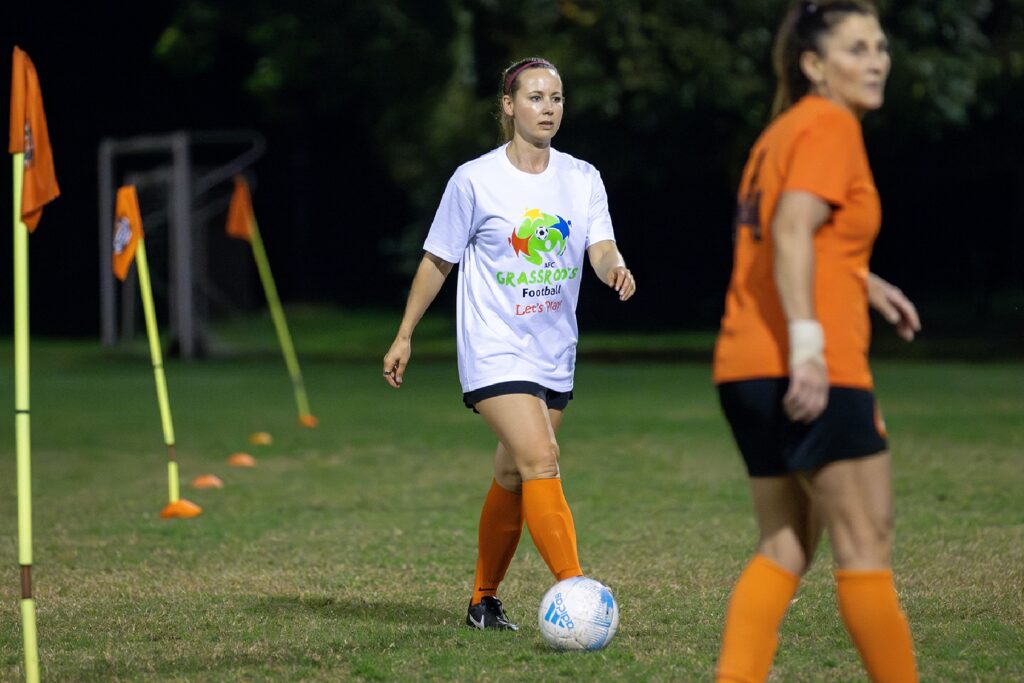
Community Spirit Shines on AFC Grassroots Football Day 2026

This week, Football Australia (FA) celebrated AFC Grassroots Football Day 2026, championing the people and communities who continue to hold up a safe, inclusive and supportive environment in the football landscape.

‘For all, for life’

In collaboration with Football NSW, Canterbury Football Association and community club, Balmain & District Football Club, the day reflected the very best of what football provides.

The event brought in participants of all ages – from 4-74 years-old – and reached a total of 400 people. Girls-only programs, all-abilities sessions and over-age football ensured all were catered for.

Such a diverse range of participants builds on a wider drive during FIFA World Football Week, which seeks to promote the sport not just as the dazzling lights of 100,000-seater stadiums, but as a way to foster community spirit and social development.

Furthermore, FA support through its Club Changer program was a welcome addition to the action, emphasising the organisation’s commitment to nurture a real love for the game across communities in Australia.

“Through Club Changer we support our clubs to provide a safe, fun and enjoyable environment where everyone is welcome; whether that be as a player, volunteer, referee or supporter,” explained National Program Manager Club Development at FA, Grace Lambourne.

“Everyone should feel they belong and are welcome to play, stay, and love the game.”


A welcome celebration

While the upcoming FIFA World Cup will no doubt inspire millions of future Socceroos and Matildas, events like the AFC Grassroots Football Day represent something beyond just inspiration.

It is a platform. An opportunity to express a love for football and to connect with others while doing so.

And connections between the professional and grassroots game is more important than ever if Australia is to nurture the next generation of talent.

This is particularly clear in the rise of women’s football across the nation. Since the FIFA Women’s World Cup, female participation rose by 32%, and registrations for the MiniTillies Program skyrocketed from 264 in 2023, to 1223 in 2024.

The professionals spark passion. But communities turn that passion into playing time.

That is why celebrating grassroots football – and the volunteers and families who sustain it – is a vital part of Australia’s football future. Together, FA and the AFC are creating strong foundations built on positivity, engagement, and inclusivity for all with a love for the beautiful game.

FA partners with Coca-Cola ahead of FIFA World Cup 2026

The two-year partnership will place the global soft-drink giants as the Official Supplier for Australia’s Men’s and Women’s senior national teams.


Global partner, global stage

As the Socceroos look to deliver performances on the pitch at this summer’s tournament, it is a move off the pitch which will capture the imagination of fans across the country.

Football Australia announced an exciting deal with Coca-Cola, designed to align the global reach of football – and of the brand itself – to unite and engage fans this summer as well as during the FIFA Women’s World Cup 2027.

Thus, through national campaigns featuring prize draws and the chance to access various rewards, Coca-Cola will help to drive passion and interest in upcoming major tournaments.

“This partnership brings together the global scale of Coca-Cola with the passion and reach of football in Australia, creating new opportunities to connect with fans across the country,” explained FA CEO, Martin Kugeler, via press release.

“The upcoming FIFA World Cup 2026 represents a key moment for the CommBank Socceroos, and the Coca-Cola campaigns will help bring supporters closer to the team through unique and engaging experiences.”

Furthermore, with the FIFA Women’s World Cup 2027 also set to enjoy similar campaigns by Coca-Cola, the partnership’s impact and reach will extend across both the men’s and women’s game.


Marketing power

As football continues to grow – both in financial power and population reach – collaborations with global brands are now an expected aspect of tournament build-ups.

The Royal Spanish Football Federation (RFEF) also struck a deal with fashion brand Loewe, set in place for the next four years. In a similar vein, England’s off-pitch teamwear will feature the marks of both Nike and Palace Skateboards, while France will receieve their prematch jersey from Nike and Jacquemus.

This is the state of the landscape. Aligning global brands and household names with a sport capable of reaching billions at once.

Values, reach and connecting with fans. Three key ingredients to a successful collaboration.

Such alignment is key to the partnership between FA and Coca-Cola, as recognised by Managing Director, Coca-Cola Europacific Partners, Orlando Rodriguez.

“For nearly 90 years, Coca-Cola has been a part of the fabric of Australian life – bring people together through shared moments,” said Rodriguez.

“Partnering with Football Australia reflects our continued commitment to connecting communities through experiences that unite the nation, with the CommBank Socceroos and Matildas at the heart of that.”

Most Popular Topics

Editor Picks

Send this to a friend