
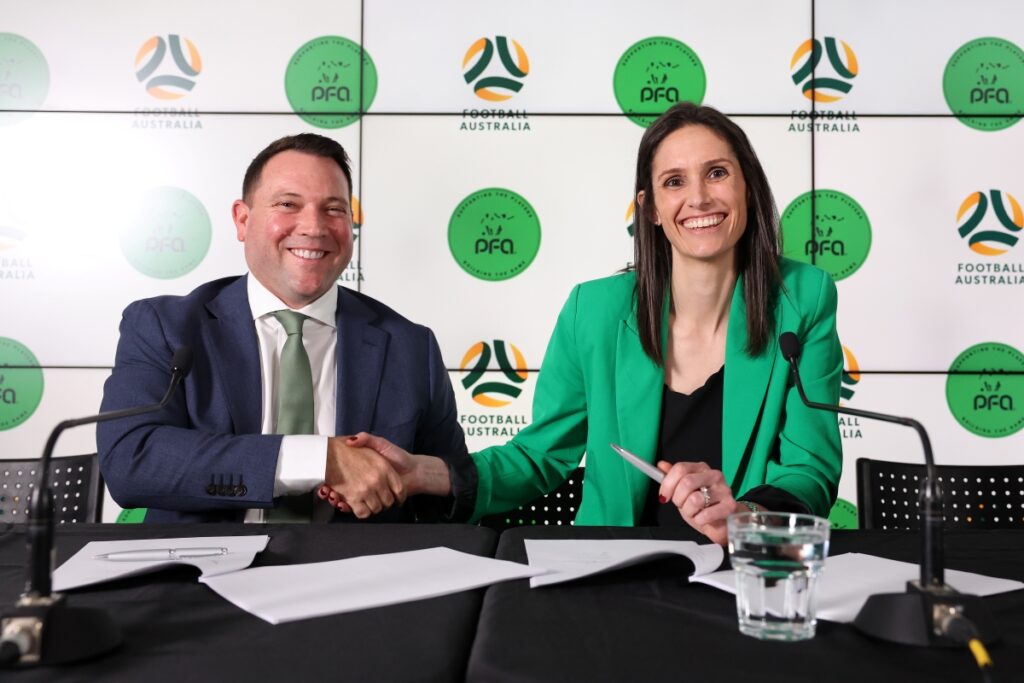
PFA Co-Chief Executive Kathryn Gill on the discussions leading up to Collective Bargaining Agreement

Kathryn Gill

The Collective Bargaining Agreement (CBA) between Football Australia and Professional Footballers Australia (PFA) was recently formed for 2023-2027, bolstering the future for the Socceroos and Matildas.

The CBA will put a number of key changes and initiatives in place – namely payments, commercial partnerships, gender equality, work-life balance and life after football.

As a former Matildas captain, PFA Co-Chief Executive Kathryn Gill has been the perfect role model for those rising up through the ranks, and also in her leadership to turn this CBA into reality.

She spoke with Soccerscene to outline the key milestones achieved for the new CBA and what we can look forward to over the four-year duration.

The path towards the 50:50 payments and the key conversations that made it happen:

Kathryn Gill: Women’s football has undergone a global explosion over the past four to five years. When we signed the previous collective bargaining agreement in 2019, the women’s game was threatening to reach new heights, and our gender equal model reflected that trend.

In 2023, we needed the new agreement to reflect this new reality, and most players were comfortable moving away from a centralised contract structure to a meritocratic payment model, mirroring the Socceroos’ match payments.

Players provided direct feedback in player meetings, steering committee meetings, and in the negotiations with FA to share their views.

The outcome was that the players now have a payment model that incentivises performances, creates competitive tension within the team, and is a fit-for-purpose gender-equal payment structure in line with the Socceroos.

There is still work to do to increase player salaries in club football, but we are hopeful that it will continue to grow in line with global trends.

How revenues will benefit the Australian football community with programs for current and former players:

Kathryn Gill: Under the CBA, a percentage of the players’ share of revenue is redirected into player development support programs and services, which are vital to the ongoing support of players and ensure that football remains a sport of choice for Australian athletes. That money is to support the current national team players. However, for the first time, the CBA guarantees investment in our past players via legacy funding from the 2023 FIFA Women’s World Cup.

That funding will ensure our players can stay in their careers longer, help them to prepare for life after football, and enable the PFA and FA to invest in areas that will allow us to support our retired and former professional players better.

The importance of giving back towards the PFA Footballers’ Trust:

Kathryn Gill: Players are deeply passionate about many issues within football and society, from reducing the cost of football to climate change and human rights. Their aim is to make the Footballers’ Trust the most impactful sports charity in Australia. The CBA is a great vehicle to foster the players’ commitment by building a deeper level of impact on many existing and new initiatives across the next four years of the agreement.

There were 40 players in the negotiation process, was there anyone in particular that stood out in discussions?

Kathryn Gill: The CBA is the players’ agreement, so as many players as possible in and around the national teams provided their input into their deal.

The players were constantly at the table and in the negotiations, even though many had to join from overseas at various hours of the morning or evening.

Our Executive Committee Members in particular – Andrew Redmayne, Lydia Williams, Tameka Yallop, Elise Kellond-Knight, Jackson Irvine and Mat Ryan – were deeply involved given their representative roles with the union.

Previous ArticleNext Article

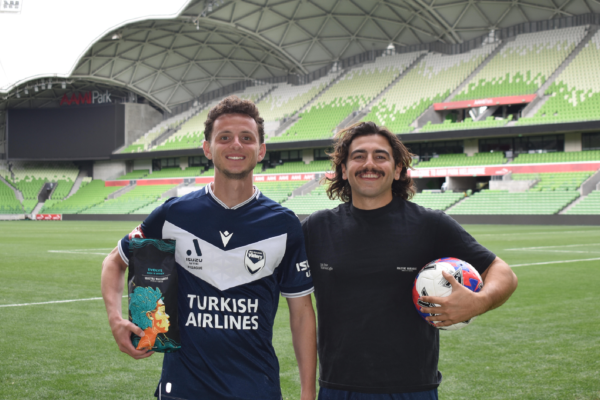
Socceroos Make Powerful $15K Play to Back Organ Donation Awareness

The Socceroos have reinforced football’s power beyond the pitch with a $15,000 donation to Transplant Australia Football Club (TAFC). The funding will support its 2026 Transplant World Cup campaign while raising awareness for organ and tissue donation.

The contribution, delivered through Professional Footballers Australia’s (PFA) Community Impact Fund, will assist TAFC’s preparations for the upcoming Transplant Football World Cup in Frankfurt. It is also amplifying the organisation’s broader mission to promote the life-saving impact of organ donation.

Presented during a national team training session, the donation reflects a growing commitment from Australia’s elite players to use their platform for meaningful social impact. Creating a connection between the game and causes that resonate far beyond football.

The initiative builds on an ongoing relationship between the Socceroos and TAFC, following a previous player-led contribution in 2024 that supported the team’s participation in the inaugural tournament in Italy.

More than just financial support, the partnership signals a longer-term collaboration aimed at increasing visibility for organ and tissue donation, leveraging the reach of both the national team and the PFA to drive awareness nationwide.

TAFC provides a unique pathway for transplant recipients, donors, and their families to re-engage with sport—offering not only competitive opportunities but a powerful platform to share stories of resilience, recovery, and second chances.

With the 2026 Transplant Football World Cup on the horizon, the Socceroos’ support will play a crucial role in enabling Australia’s team to compete on the global stage, while championing a message that extends far beyond results: the life-changing impact of donation.

As football continues to grow as both a cultural and social force, initiatives like this highlight the game’s unique ability to unite communities, elevate important causes, and create lasting impact where it matters most.

How Sunbury United Is Defying the Odds to Keep Grassroots Football Alive

Sunbury United stands as a cornerstone of the local community in Melbourne’s outer northwest. But for all the hard work given by local families and volunteers, the lack of funding continues to prohibit a level of growth which matches both ambition and potential.


Consolidating growth across the club

Soccerscene recently spoke to Club President, Sherridan Long, about the club’s ambitions going forward, the family-oriented culture, and the challenges of operating at grassroots level in Australia.

“It’s gone really well in retention of players from 2025, [and] recruiting some players who have been really keen to come to the club and are really contending over just a small handful of spots,” explained Long.

“That’s been really rewarding to see the popularity of our programme and what the team is trying to develop in terms of culture and performance, to be somewhere that people want to go to.”

Furthermore, Sunbury United’s reputation in the community continues to inspire waves of prospective junior players, who are lining up for squad vacancies.

“We’ve got waitlists for almost every age group,” Long continued.

“We’ve seen a growth in interest coming into the club and girls wanting to play football, but also lots of families wanting to move to Sunbury and join our club, or move from other clubs.”

Sunbury United is ensuring that its culture and matchday atmosphere remains a safe, welcoming place for those who matter most in grassroots football: families, players and volunteers who sustain it every week.

Planning for success on and off the pitch

Despite solidifying a successful culture off the pitch, Sunbury United are refusing to slow down. From the senior men’s team to junior age groups, high-performance remains a key objective.

“Everyone is trying to win leagues – this is something we’ve been working towards for a few years,” said Long.

“Each little milestone across the year means we’re getting closer to a senior men’s promotion or championship – it’s been over ten years since a promotion or championship at the club.”

Although several years have passed since Sunbury United saw success in the form of silverware, the club’s progress in recent seasons may yet lead to a trophy in the very near future.

But reaching this goal requires not only a cohesive effort from players and coaches, but from all stakeholders and participants within the club space. To this end, Sunbury United underwent a strategic plan set-up to align their operations with the ambitions and thoughts of everyone involved.

“We undertook some survey and stakeholder analysis through our members to understand what it is they love about Sunbury United, why they participate, where they see the club going and how they can be a part of that.”

“It was nice to hear exactly what they wanted, what they thought of and what they felt by being part of United. So that shaped our strategic plan in terms of performance, community and working together as a team.”

Ultimately, it is this balance of performance, teamwork and trust in the community which can set clubs up for success. Whether at grassroots or professional level, if everyone involved operates under shared values and vision, the silverware becomes a question of when, not if.


Challenges of the grassroots game

As with any club or organisation in sport, progress inevitably encounters barriers, hiccups and challenges along the way. Facility access, infrastructure quality and investment are common issues not just for Sunbury, but for all in the grassroots space.

“Most places share winter and summer sports so you can only use your space a certain amount of months a year before it turns to the summer sport,” Long outlined.

“It means that there’s no space for juniors to conduct a proper pre-season, so they’re doing it at other reserves in Hume Council and not actually at our home.”

Indeed, we have seen already the lack of investment directed towards the football community. Soccerscene recently looked into The City of Hume’s current budget, which revealed a 10:1 funding imbalance between AFL and the beautiful game. For Sunbury United, and many other clubs, the impact is undeniable.

“We can’t fill the second or third women’s team because there’s no infrastructure to facilitate changing between boys and girls changing room on the flick of a dime. You’re not only balancing access between two squads and gendered safe spaces, but also junior and senior spaces,” Long explained.

“We’re limited by aspirations being within the lines and being within the physical building that we have. Investment in football infrastructure would be a game-changer.”

It’s a common theme in Australia’s grassroots landscape. Clubs with loyal supporters, interested players and a desire to develop, continue to be restricted by the boundaries of their facilities.

It is not about demand. It’s about necessity. If clubs like Sunbury United are to continue working towards player development and squad expansion, external investment is a must-have.


Fighting for the future

As Sunbury United continues to strengthen bonds with the surrounding community and within the club, the foundations are ready for the seasons to come. From youth teams to seniors, the club continues to emphasise connection as a fundamental principle.

“We sit under one umbrella. We’re not two separate committees or two clubs,” Long revealed, expressing the idea behind a connected senior’s and junior’s set-up.

“It’s important to the long-term sustainability and longevity of our club, not just to the performance side, that everyone’s invested and feels a part of something, and that they can be involved.”

One club, one philosophy and one family. Grassroots football will continue to throw its challenges for years to come, but Sunbury are, and will be, more united than ever.

Most Popular Topics

Editor Picks

Send this to a friend