


NSW Government pledges more than $4 million to community sport

Community soccer

The NSW Government’s Local Sport Grants Program is set to provide over $4 million to more than 700 community organisations across the state.

The Local Sport Grants Program comes as a fantastic development for the state’s community sporting organisations who have faced immense obstacles as a result of the Covid-19 pandemic.

The program provides sporting organisations with the necessary funding to increase and remove barriers for potential participants, purchase sporting equipment and to improve infrastructure with 831 grants awarded to a total of 728 sporting organisations representing 58 unique sports.

The Local Sport Grants Program grants sporting organisations with up to $20,000 for projects which are focused on sport development, sport access and facility development. It reaffirms the NSW Government’s commitment to ensuring that grassroots and community sport can once again thrive in the wake of what was a formidable year prior.

The NSW Government’s Minister for Sport, Geoff Lee, acknowledged the welcome reprieve that the Local Sport Grants Program will provide for communities across NSW as they move to overcome the challenges of the Covid-19 pandemic.

“The pandemic, bushfires and floods have created significant uncertainty for local communities across NSW,” he said.

“Sport is the glue which keeps local communities together, and these grants acknowledge the importance of sport within our local communities, plus recognise the considerable contribution our army of sporting volunteers make on a daily basis.

“The Local Sport Grant Program is structured to help increase participation, improve facilities and increase investment, particularly in women’s sport, enabling more women and girls to participate.

“Whether it’s providing opportunities for people with a disability to play football at Randwick Football Club, purchasing jerseys and equipment for the Wiradjuri Warrior’s women’s rugby league teams or buying uniforms and equipment for multicultural kids at Rockdale City Raiders Football Club, these grants play a vital role in giving everyone the opportunity to enjoy the benefits of sport.”

For further information on the Local Sport Grants Program, you can find it here.
Previous ArticleNext Article

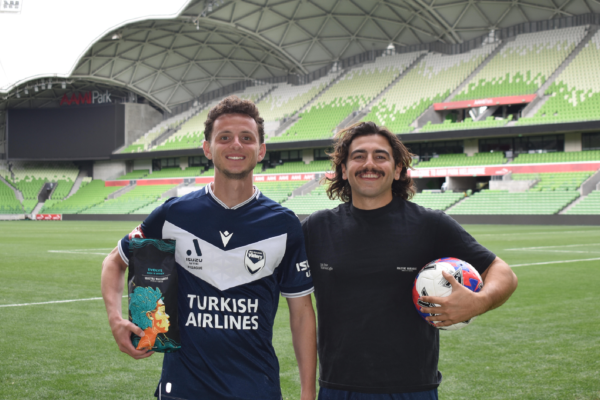
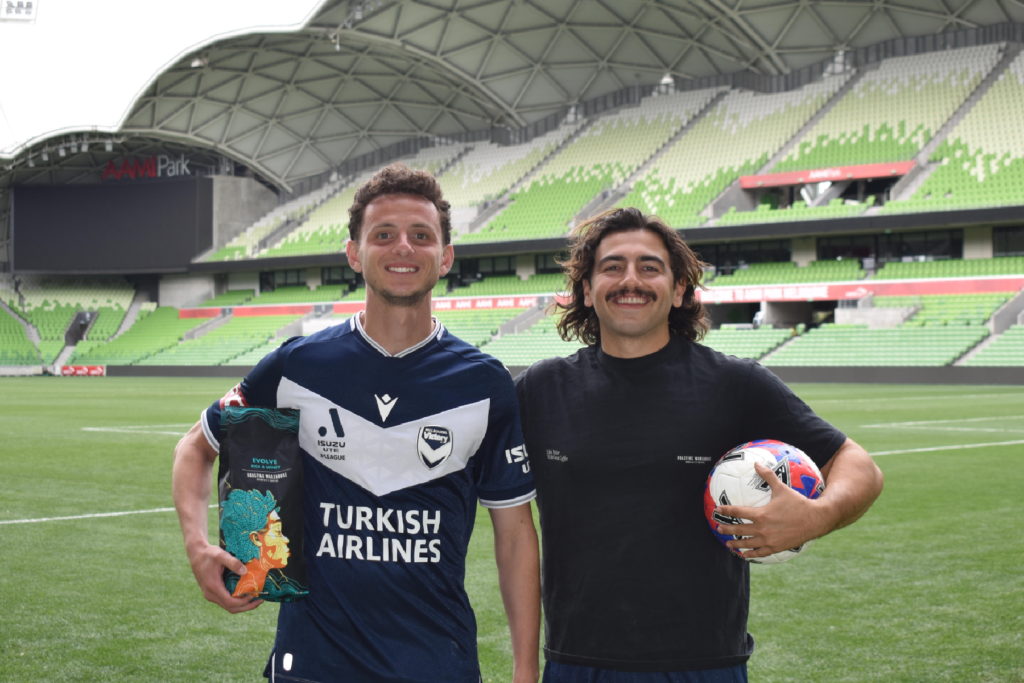
Victory unites with Roasting Warehouse in culture-led partnership

The Melbourne-based anf family-owned business will join the Victory family, uniting two institutions which represent the city’s culture and identity.

A partnership with local roots

As the newest partner of Melbourne Victory, Roasting Warehouse joins forces with a vital part of the city’s sporting landscape.

The club’s Managing Director, Caroline Carnegie, outlined why the partnership bears so much value to both parties.

“We are excited to collaborate with Roasting Warehouse, a community-oriented destination for high-quality coffee, proud of its foundations in Melbourne,” said Carnegie via official media release.

“Football and coffee sit at the epicentre of Melbourne’s culture. The two go hand-in-hand, consistently at the centre of the conversation that stirs Melburnians, which is no different to the conversation sport and Melbourne Victory stir in the State.”

Indeed, this is a partnership which combines the identity, passions and culture of an entire city, therefore giving it the foundations required for long-term, mutual success.

Representing the best of Melbourne

Both Victory and Roasting Warehouse are hugely successful in their respective industries. They are institutions with community-oriented philosphies, who pride themselves on craft and quality.

“We’re incredibly proud to partner with Melbourne Victory, a club that represents the heart, passion, and ambition of Melbourne,” revealed Roasting Warehouse Head of Brand, Alexander Paraskevopoulos.

“As a Melbourne-founded, family-run business, supporting a team that means so much to the local community feels very natural for us.”

Furthermore, through their high-quality blends, Roasting Warehouse will look to prepare Victory’s players and staff for high performances on the pitch as the seasons nears completion.

But this is about far more than just fueling athletes.

This is a partnership which embodies and unites two of Melbourne’s greatest strengths and cultural markers – a connection forged from the city’s very own DNA.


For more information about Roasting Warehouse, click here.

Football NSW supports Female Coaches CPD as Women’s Football Surges

Football NSW has used the platform of the AFC Women’s Asian Cup to deliver a targeted professional development workshop for female coaches, bringing together scholarship recipients for an evening of structured learning and direct engagement with elite women’s football.

Held at ACPE last month, the session was open to female coaches who received C or B Diploma scholarships through Football NSW in 2025. Coaching accreditation carries a financial cost that disproportionately affects women, who are less likely to have their development subsidised by clubs or associations operating in underfunded community football environments. Scholarship access changes that equation at the point where many women exit the pathway.

Facilitated by Football NSW Coach Development Coordinator Bronwyn Kiceec, the workshop focused on goal scoring trends from the tournament’s group stage, with coaches analysing attacking patterns and exploring how those insights could translate into their own environments. The group then attended the quarter-final between South Korea and Uzbekistan at Stadium Australia.

The structure of the evening mattered as much as its content. Female coaches in community football rarely have access to elite competition environments as a professional resource. The gap between the level at which most women coach and the level at which the game is analysed and discussed tends to reinforce itself. Placing scholarship recipients inside a major tournament, as participants rather than spectators, closes that gap in a way that a classroom session cannot.

Female coaches remain significantly underrepresented across all levels of the game in Australia. The pipeline that will change that depends not only on accreditation access but on the professional networks, peer relationships and exposure to elite environments that male coaches have historically taken for granted.

The workshop forms part of Football NSW’s ongoing commitment to developing female coaches through scholarships and structured learning opportunities.

Most Popular Topics

Editor Picks

Send this to a friend