


New women’s cup competition set to drive participation in Sydney

Australia’s hosting of the FIFA Women’s World Cup in 2023 has exercised a tremendous influence upon female football within the nation.

With female football week on the horizon, Western Sydney Wanderers (WSW) have confirmed their involvement with the newly established Kama Umoja Women’s Cup.

The Kama Umoja Women’s Cup will be competed against eight teams within a tournament format with the centre-focus of the event to drive participation within football for females of all ages who are from culturally and linguistically diverse communities.

WSW have offered the use of Wanderers Football Park for the event scheduled to commence on the final weekend of October.

The grand nationwide occasion showcased a spotlight upon football and the extravagant female talent our nation has to offer within it.

Furthermore, it has allowed for females to have a vested interest within the sport, creating opportunities with participation culminating to an all-time high.

WSW have already quite the household name within Australian Football, synonymous within the state of Sydney, it is quite hard to ignore a club whom within their first two years of operations, had won the most coveted prize within Asian Football.

The business incentive undertaken throughout their latest hosting venture in partnership with the Kama Umoja Women’s Cup showcases the club giving back to its passionate community.

From a Sierra Leonean heritage – Kama Umoja Incorporated President, Philicia Kabia, expressed her excitement and why she decided to create this tournament.

“Watching the FIFA Women’s World Cup last year in Australia, I was able to see up close the celebration of women in sport, but it was much more than that,” she said in a statement.

“It also ignited a deeper fire in me to create those spaces for women and girls from African heritage here in Australia. Spaces and opportunities that I didn’t have when I arrived in this country and that I want to ensure the next generation have full access to.”

By hosting the tournament, the club are able to engage and create involvement within diverse communities.

The creation of meaningful and tangible relationships amongst these diverse communities can culminate in further club support and participation, while also growing the newly founded event.

Western Sydney is renowned for its diversity, as a club that embodies diversity in which it is mirrored by their decision to act as hosts for the tournament.

The tournament allows for the club to identify potential within the diverse talent pool of participants, coaches and staff, all contributing to the enhancement of the clubs long-term competitiveness.

The Kama Umoja Women’s Cup with the backing of WSW are at an formalized advantage given the nature of the Wanderers established culture. It is forecasted that the tournament will be a success, given there is a high ceiling surrounding its prosperity in becoming a key fixture on the Football calendar across NSW.
Previous ArticleNext Article

Victory unites with Roasting Warehouse in culture-led partnership

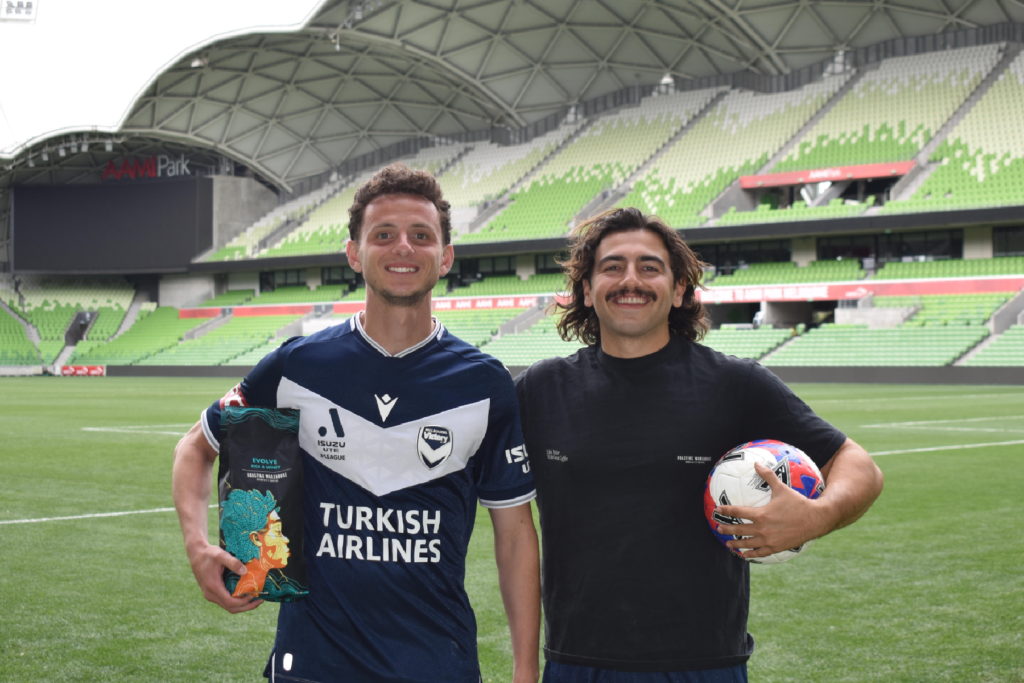
The Melbourne-based anf family-owned business will join the Victory family, uniting two institutions which represent the city’s culture and identity.

A partnership with local roots

As the newest partner of Melbourne Victory, Roasting Warehouse joins forces with a vital part of the city’s sporting landscape.

The club’s Managing Director, Caroline Carnegie, outlined why the partnership bears so much value to both parties.

“We are excited to collaborate with Roasting Warehouse, a community-oriented destination for high-quality coffee, proud of its foundations in Melbourne,” said Carnegie via official media release.

“Football and coffee sit at the epicentre of Melbourne’s culture. The two go hand-in-hand, consistently at the centre of the conversation that stirs Melburnians, which is no different to the conversation sport and Melbourne Victory stir in the State.”

Indeed, this is a partnership which combines the identity, passions and culture of an entire city, therefore giving it the foundations required for long-term, mutual success.

Representing the best of Melbourne

Both Victory and Roasting Warehouse are hugely successful in their respective industries. They are institutions with community-oriented philosphies, who pride themselves on craft and quality.

“We’re incredibly proud to partner with Melbourne Victory, a club that represents the heart, passion, and ambition of Melbourne,” revealed Roasting Warehouse Head of Brand, Alexander Paraskevopoulos.

“As a Melbourne-founded, family-run business, supporting a team that means so much to the local community feels very natural for us.”

Furthermore, through their high-quality blends, Roasting Warehouse will look to prepare Victory’s players and staff for high performances on the pitch as the seasons nears completion.

But this is about far more than just fueling athletes.

This is a partnership which embodies and unites two of Melbourne’s greatest strengths and cultural markers – a connection forged from the city’s very own DNA.


For more information about Roasting Warehouse, click here.

Football NSW supports Female Coaches CPD as Women’s Football Surges

Football NSW has used the platform of the AFC Women’s Asian Cup to deliver a targeted professional development workshop for female coaches, bringing together scholarship recipients for an evening of structured learning and direct engagement with elite women’s football.

Held at ACPE last month, the session was open to female coaches who received C or B Diploma scholarships through Football NSW in 2025. Coaching accreditation carries a financial cost that disproportionately affects women, who are less likely to have their development subsidised by clubs or associations operating in underfunded community football environments. Scholarship access changes that equation at the point where many women exit the pathway.

Facilitated by Football NSW Coach Development Coordinator Bronwyn Kiceec, the workshop focused on goal scoring trends from the tournament’s group stage, with coaches analysing attacking patterns and exploring how those insights could translate into their own environments. The group then attended the quarter-final between South Korea and Uzbekistan at Stadium Australia.

The structure of the evening mattered as much as its content. Female coaches in community football rarely have access to elite competition environments as a professional resource. The gap between the level at which most women coach and the level at which the game is analysed and discussed tends to reinforce itself. Placing scholarship recipients inside a major tournament, as participants rather than spectators, closes that gap in a way that a classroom session cannot.

Female coaches remain significantly underrepresented across all levels of the game in Australia. The pipeline that will change that depends not only on accreditation access but on the professional networks, peer relationships and exposure to elite environments that male coaches have historically taken for granted.

The workshop forms part of Football NSW’s ongoing commitment to developing female coaches through scholarships and structured learning opportunities.

Most Popular Topics

Editor Picks

Send this to a friend