

Mayamantharra theme drives Indigenous Football Week 2022

John Moriarty Football

In the seventh year of John Moriarty Football’s (JMF) delivery of its Indigenous Football Week initiative, the transformative organisation has embraced a theme of ‘Mayamantharra’ to honour the community support that has allowed the JMF program to run consistently.

Translating to ‘collaboration’ in the Yanyuwa language – which is spoken by families in Borroloola, Northern Territory, John Moriarty’s birthplace – Mayamantharra is intimately tied into the Moriarty Foundation’s delivery of the JMF program in remote and regional Indigenous communities around Australia.

Having grown from 120 children in Borroloola to now delivering to 2,000+ Indigenous children in 19 communities and 23 public schools across three states, the JMF program has both nurtured budding Indigenous footballers and assisted in areas of education, health, mental health and community engagement.

Soccerscene sat down with JMF Program Director Jamie Morriss and Wailwan woman and JMF Dubbo Community Coach Jorja Fuller, to discuss the significance of and opportunities that arise from Indigenous Football Week.

Jamie Morriss

The theme for this year’s edition of Indigenous Football Week is “Mayamantharra: Partnerships for Success”. What is the intention behind this theme?

Jamie Morriss: Mayamantharra translates to ‘collaboration’ in the Yanyuwa language, spoken by families in Borroloola, NT, John Moriarty’s birthplace and where John Moriarty Football (JMF) was established in 2012.

The continued delivery of JMF is made possible by the partnerships we have at the community, national and international level.

JMF is embedded in the local communities we deliver in. As such, we work closely with local community groups, councils, schools, businesses and local health organisations. For instance, throughout the year our JMF Select team in Borroloola, NT is invited to play in Katherine, the closest town with an organised football club. Katherine is a 7-hour drive and we have to stay overnight when the team goes to play. These trips are made possible by the support of organisations like MacArthur River Mine Community Benefits Trust, Roper River Council as well as local businesses.

Earlier this year, Indigenous Football Australia (IFA), which oversees the delivery and expansion of JMF, formed a partnership with adidas. The partnership will see adidas sponsor JMF scholarships and provide high quality football equipment, including footballs, boots, and bags; as well as custom uniforms.

When we talk about success, we don’t just talk about the successful delivery of JMF, it also refers to the successful transformation outcomes JMF has. JMF is achieving proven progress in 13 of the 17 Closing the Gap targets and we have a track record of improving school attendance and achieving resilient, healthier outcomes for some of Australia’s most remote Indigenous communities.

What initiatives will the Australian Professional be delivering and promoting as a part of Indigenous Football Week? 

Jamie Morriss: We are very proud to have A-Leagues as a partner for IFW22. IFW22 will be the centerpiece of the Round 4 of the Isuzu UTE A-League Men 2022/23 season. Each match will include a Welcome to Country ceremony, a celebration of Indigenous culture and the opportunity for fans to join our story and donate to further the work of JMF. Expect to see a lot of Indigenous Football Week artwork at the games, plus lots of coverage about our story across A-Leagues’ channels, plus on Channel 10.

A-Leagues and Paramount+ (Channel 10) are also taking part in our IFW22 Charity Football Tournament on 25 October at Allianz Stadium in Sydney. They are part of 10 teams that are competing and raising money for JMF.

From starting with 120 children in Borroloola, to now delivering the John Moriarty Football program to over 2,000 Indigenous children across three states, why has JMF been so successful?

Jamie Morriss: We succeed because we are Indigenous-founded, Indigenous-delivered, embedded, holistic and authentic. JMF is co-designed and community-led. In each of the communities we deliver in we work closely with a Community Advisory Group made up of community Stakeholders, Elders, and Traditional Custodians, to guide and advocate for JMF.

We are deeply embedded in the communities we deliver in and have a permanent presence, we are not a fly-in, fly-out program with a sporadic presence. Our coaches come from the local community, they often know the children and families we deliver to, they understand the challenges, they are trusted.

Jorja Fuller: JMF has only been running in Dubbo for three years, but in that time it has become a trusted community organisation. We often participate in community events to help out because we are embedded in the community and highly respected by children and families.

Gala Day JMF

How important is the continued embracing of initiatives supporting Indigenous communities to the growth of Indigenous football?

Jamie Morriss: There is enormous football talent in the communities we deliver to and for the most part, football as a sport is not well represented in these areas. The predominant sport tends to be AFL or rugby. Programs like JMF provide pathways for Indigenous players, through our grassroots delivery, Scholarship program and the coaching career opportunities we provide in local communities. These can be pathways to a better future through health and education, or through the game itself.

Right now, we have 14 players in our Scholarships program. Some based in their local community getting support with mentoring, advanced coaching, school tutoring, equipment, club fees and more. A number are studying in top sport high schools in Sydney. They are a talented bunch and we are confident we have some future stars of the game in the group.

Jorja Fuller: In the Dubbo region we’ve seen a growth in the uptake of football thanks to JMF. A lot of this is because of our school programs, the kids love it and so do the teachers. After a JMF session they focus more on their school work and they are more likely to come to school on the days JMF is running. We even see small clubs are having more junior registrations.

Jamie Morriss: For around 20 years the Peak Hill local football club had no junior teams due to a lack of participation. However, after JMF began delivering our in-school program to the local public school, interest began increasing and the club entered a junior team for the first time in 20 years.

What are the next steps for John Moriarty Football in the coming years?

Jamie Morriss: Under the guidance of our Indigenous Football Australia Council we’d definitely like to grow our program to reach more communities and Indigenous children. We’d also like to guide more aspiring young Indigenous footballers into pathways to advanced and elite football, like our Inaugural JMF Scholarship holder Marra women Shadeene Evans, former Young Matilda who will be playing in the upcoming A-Leagues Women season for Sydney FC.

We get asked all the time by schools and communities around Australia to bring JMF to their children as they see the success we are having at building health, wellbeing and resilience, as well as promoting education. We’d love to be able to answer the call, it really comes down to funding which is why Indigenous Football Week is so important. This year we are asking football fans to make donations to support our work.

John Moriarty

Previous ArticleNext Article

How Sunbury United Is Defying the Odds to Keep Grassroots Football Alive

Sunbury United stands as a cornerstone of the local community in Melbourne’s outer northwest. But for all the hard work given by local families and volunteers, the lack of funding continues to prohibit a level of growth which matches both ambition and potential.


Consolidating growth across the club

Soccerscene recently spoke to Club President, Sherridan Long, about the club’s ambitions going forward, the family-oriented culture, and the challenges of operating at grassroots level in Australia.

“It’s gone really well in retention of players from 2025, [and] recruiting some players who have been really keen to come to the club and are really contending over just a small handful of spots,” explained Long.

“That’s been really rewarding to see the popularity of our programme and what the team is trying to develop in terms of culture and performance, to be somewhere that people want to go to.”

Furthermore, Sunbury United’s reputation in the community continues to inspire waves of prospective junior players, who are lining up for squad vacancies.

“We’ve got waitlists for almost every age group,” Long continued.

“We’ve seen a growth in interest coming into the club and girls wanting to play football, but also lots of families wanting to move to Sunbury and join our club, or move from other clubs.”

Sunbury United is ensuring that its culture and matchday atmosphere remains a safe, welcoming place for those who matter most in grassroots football: families, players and volunteers who sustain it every week.

Planning for success on and off the pitch

Despite solidifying a successful culture off the pitch, Sunbury United are refusing to slow down. From the senior men’s team to junior age groups, high-performance remains a key objective.

“Everyone is trying to win leagues – this is something we’ve been working towards for a few years,” said Long.

“Each little milestone across the year means we’re getting closer to a senior men’s promotion or championship – it’s been over ten years since a promotion or championship at the club.”

Although several years have passed since Sunbury United saw success in the form of silverware, the club’s progress in recent seasons may yet lead to a trophy in the very near future.

But reaching this goal requires not only a cohesive effort from players and coaches, but from all stakeholders and participants within the club space. To this end, Sunbury United underwent a strategic plan set-up to align their operations with the ambitions and thoughts of everyone involved.

“We undertook some survey and stakeholder analysis through our members to understand what it is they love about Sunbury United, why they participate, where they see the club going and how they can be a part of that.”

“It was nice to hear exactly what they wanted, what they thought of and what they felt by being part of United. So that shaped our strategic plan in terms of performance, community and working together as a team.”

Ultimately, it is this balance of performance, teamwork and trust in the community which can set clubs up for success. Whether at grassroots or professional level, if everyone involved operates under shared values and vision, the silverware becomes a question of when, not if.


Challenges of the grassroots game

As with any club or organisation in sport, progress inevitably encounters barriers, hiccups and challenges along the way. Facility access, infrastructure quality and investment are common issues not just for Sunbury, but for all in the grassroots space.

“Most places share winter and summer sports so you can only use your space a certain amount of months a year before it turns to the summer sport,” Long outlined.

“It means that there’s no space for juniors to conduct a proper pre-season, so they’re doing it at other reserves in Hume Council and not actually at our home.”

Indeed, we have seen already the lack of investment directed towards the football community. Soccerscene recently looked into The City of Hume’s current budget, which revealed a 10:1 funding imbalance between AFL and the beautiful game. For Sunbury United, and many other clubs, the impact is undeniable.

“We can’t fill the second or third women’s team because there’s no infrastructure to facilitate changing between boys and girls changing room on the flick of a dime. You’re not only balancing access between two squads and gendered safe spaces, but also junior and senior spaces,” Long explained.

“We’re limited by aspirations being within the lines and being within the physical building that we have. Investment in football infrastructure would be a game-changer.”

It’s a common theme in Australia’s grassroots landscape. Clubs with loyal supporters, interested players and a desire to develop, continue to be restricted by the boundaries of their facilities.

It is not about demand. It’s about necessity. If clubs like Sunbury United are to continue working towards player development and squad expansion, external investment is a must-have.


Fighting for the future

As Sunbury United continues to strengthen bonds with the surrounding community and within the club, the foundations are ready for the seasons to come. From youth teams to seniors, the club continues to emphasise connection as a fundamental principle.

“We sit under one umbrella. We’re not two separate committees or two clubs,” Long revealed, expressing the idea behind a connected senior’s and junior’s set-up.

“It’s important to the long-term sustainability and longevity of our club, not just to the performance side, that everyone’s invested and feels a part of something, and that they can be involved.”

One club, one philosophy and one family. Grassroots football will continue to throw its challenges for years to come, but Sunbury are, and will be, more united than ever.

Filopoulos: Football Must Move Beyond Campaigns to Win Fans for Good

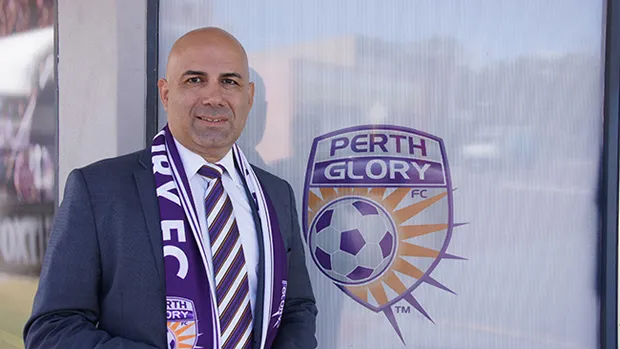
Global marketing and advisory firm Bastion has strengthened its leadership team with the appointment of Peter Filopoulos as Managing Director, Experience. This decision brings one of Australian football’s most influential administrators into a new phase of the sports business landscape.

Filopoulos, who has held senior roles across Football Australia, Football Victoria and Perth Glory, will lead Bastion’s experiential and partnerships division, applying a football-informed lens to brand engagement.

Drawing on his time in the game, Filopoulos emphasised the importance of cohesion in building meaningful fan connections.

“For me, the biggest lesson is that fans don’t see brand, content and experience as individual silos, they experience it all as one connected ecosystem,” he said.

“At Football Australia, the work resonated most when everything was aligned; the team, the narrative, the partners and the matchday experience all working together to feel cohesive and authentic. That’s when engagement moves beyond interaction and becomes something far more meaningful.”

He added that too many organisations still treat fan engagement as short-term.

“Where a lot of organisations fall short is treating fan engagement as a campaign. It’s not, it’s an always-on system.”

Filopoulos’ move reflects a broader shift within football, where commercial growth is increasingly driven by experience-led strategy.

“At Bastion, we put experience at the centre—because it’s where the brand comes to life, where partners integrate in a way that adds real value and where fans genuinely connect,” he said.

“Our focus is on building platforms that bring fans closer to the brand… Get that right, and you’re creating something people actively want to be part of.”

Most Popular Topics

Editor Picks

Send this to a friend