

Mark Torcaso on life as Philippines women’s national team head coach

Mark Torcaso weighed in on his current tenure as an international head coach, with the Melbournian currently in command of the Philippines women’s national team.


His rise to coaching acclaim has been quite the journey. As a former player across Victoria, his first off-field role eventuated in 2001, becoming the Director of Football at St. Monica’s College Epping. His first senior position arrived in 2009, where he would manage the women’s team at Bundoora United FC. The late 2000s and early 2010s mirror the current busy schedule that the Monacan possesses.

Between 2009-2012 Torcaso managed the FFA Futsal Championship Youth Girls side. Within a similar timeframe, Torcaso also acted as a goalkeeper coach for both Melbourne Victory, and the Australian international women’s.

Calder United acquired his services in 2016 as their Senior Director of Football. Throughout his ongoing tenure, the Keilor-based contingent has basked in success. They won their maiden NPL Women’s title in 2016 while claiming its first Nike F.C. Cup the year later. Since their initial cup win in 2017, United went on to retain the trophy in five consecutive editions of the competition. The fruitful spell influenced by Torcaso did not go unnoticed as he would land his first major coaching contract with Western United’s Women’s side in 2020.

Attributing his current position to his past, Torcaso provided insight to the moment he found out he was becoming an international coach.

“It was a phone call late on a Friday evening, that I honestly didn’t believe was real. I sat there and said to my wife that I had just been offered the Philippines National team job,” he said.

“We were speechless. I returned the phone call and within a few days I was on a plane to Sydney to finalise the contract.”

Since being in the driver’s seat for the Philippines national side, Torcaso delved into his greatest recent memories.

“So far in our short time we have been lucky enough to play and compete in some brilliant games of football,” he said.

“I would say making the quarter finals in the Asian games was a huge moment, as well as playing in front of 60,000 people in Perth for an Olympic qualifier – although the result wasn’t great.

“Another really pleasing thing is seeing this team constantly grow. Each window we have, we are constantly getting better and better with how we want to play and want we want out of it.”

Furthermore, Torcaso opened up on the perception of football in the Philippines.

“Having been born and raised in a country like Australia where our number one sport isn’t a worldwide one, and then seeing how sports like football and basketball are massive in a country like Philippines makes me see that our game, the world game, is truly global,” he said.

“The Philippines is a highly populated country and has so many more around the world. The game is always evolving and with so many Filipinos migrating abroad, they are still so proud of their motherland, or their connection to it from a parent or grandparent. They are passionate people, but are also very understanding.

“They are peaceful, and very connected to their culture and religion. The game can grow, and needs to grow, which should be the case in every country.

“No country in the world should stay stagnant, especially in football. Everything around us is moving too quickly, and if you don’t keep up or stay on top of it, you will fall behind.”

Finally, when asked if Australia could perhaps take a leaf out of the Philippines book in terms of gaining an advantage within the sport, Torcaso described that every country should learn from others as much as possible.

“Not any country is perfect, but many have ways that can help each other,” he said.

“The one thing I can say about the Philippines and football as a whole is that there are many places to play and opportunities for it.

“As the Philippines have such a huge population abroad, they take full advantage of that. It doesn’t matter if you’re half or not born there – if you have it in your blood, then you’re Filipino. That is so powerful. Filipinos are very proud of their country, no matter what.”

Previous ArticleNext Article

How Sunbury United Is Defying the Odds to Keep Grassroots Football Alive

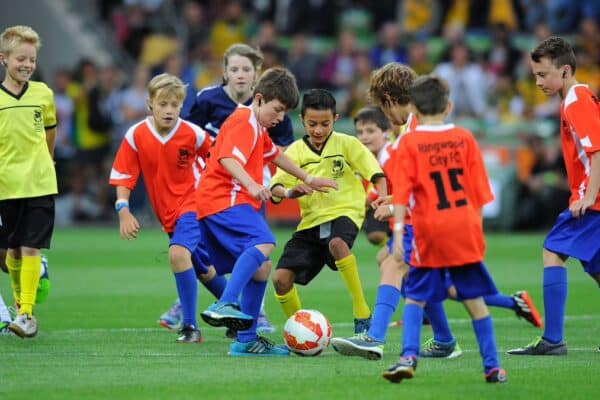
Sunbury United stands as a cornerstone of the local community in Melbourne’s outer northwest. But for all the hard work given by local families and volunteers, the lack of funding continues to prohibit a level of growth which matches both ambition and potential.


Consolidating growth across the club

Soccerscene recently spoke to Club President, Sherridan Long, about the club’s ambitions going forward, the family-oriented culture, and the challenges of operating at grassroots level in Australia.

“It’s gone really well in retention of players from 2025, [and] recruiting some players who have been really keen to come to the club and are really contending over just a small handful of spots,” explained Long.

“That’s been really rewarding to see the popularity of our programme and what the team is trying to develop in terms of culture and performance, to be somewhere that people want to go to.”

Furthermore, Sunbury United’s reputation in the community continues to inspire waves of prospective junior players, who are lining up for squad vacancies.

“We’ve got waitlists for almost every age group,” Long continued.

“We’ve seen a growth in interest coming into the club and girls wanting to play football, but also lots of families wanting to move to Sunbury and join our club, or move from other clubs.”

Sunbury United is ensuring that its culture and matchday atmosphere remains a safe, welcoming place for those who matter most in grassroots football: families, players and volunteers who sustain it every week.

Planning for success on and off the pitch

Despite solidifying a successful culture off the pitch, Sunbury United are refusing to slow down. From the senior men’s team to junior age groups, high-performance remains a key objective.

“Everyone is trying to win leagues – this is something we’ve been working towards for a few years,” said Long.

“Each little milestone across the year means we’re getting closer to a senior men’s promotion or championship – it’s been over ten years since a promotion or championship at the club.”

Although several years have passed since Sunbury United saw success in the form of silverware, the club’s progress in recent seasons may yet lead to a trophy in the very near future.

But reaching this goal requires not only a cohesive effort from players and coaches, but from all stakeholders and participants within the club space. To this end, Sunbury United underwent a strategic plan set-up to align their operations with the ambitions and thoughts of everyone involved.

“We undertook some survey and stakeholder analysis through our members to understand what it is they love about Sunbury United, why they participate, where they see the club going and how they can be a part of that.”

“It was nice to hear exactly what they wanted, what they thought of and what they felt by being part of United. So that shaped our strategic plan in terms of performance, community and working together as a team.”

Ultimately, it is this balance of performance, teamwork and trust in the community which can set clubs up for success. Whether at grassroots or professional level, if everyone involved operates under shared values and vision, the silverware becomes a question of when, not if.


Challenges of the grassroots game

As with any club or organisation in sport, progress inevitably encounters barriers, hiccups and challenges along the way. Facility access, infrastructure quality and investment are common issues not just for Sunbury, but for all in the grassroots space.

“Most places share winter and summer sports so you can only use your space a certain amount of months a year before it turns to the summer sport,” Long outlined.

“It means that there’s no space for juniors to conduct a proper pre-season, so they’re doing it at other reserves in Hume Council and not actually at our home.”

Indeed, we have seen already the lack of investment directed towards the football community. Soccerscene recently looked into The City of Hume’s current budget, which revealed a 10:1 funding imbalance between AFL and the beautiful game. For Sunbury United, and many other clubs, the impact is undeniable.

“We can’t fill the second or third women’s team because there’s no infrastructure to facilitate changing between boys and girls changing room on the flick of a dime. You’re not only balancing access between two squads and gendered safe spaces, but also junior and senior spaces,” Long explained.

“We’re limited by aspirations being within the lines and being within the physical building that we have. Investment in football infrastructure would be a game-changer.”

It’s a common theme in Australia’s grassroots landscape. Clubs with loyal supporters, interested players and a desire to develop, continue to be restricted by the boundaries of their facilities.

It is not about demand. It’s about necessity. If clubs like Sunbury United are to continue working towards player development and squad expansion, external investment is a must-have.


Fighting for the future

As Sunbury United continues to strengthen bonds with the surrounding community and within the club, the foundations are ready for the seasons to come. From youth teams to seniors, the club continues to emphasise connection as a fundamental principle.

“We sit under one umbrella. We’re not two separate committees or two clubs,” Long revealed, expressing the idea behind a connected senior’s and junior’s set-up.

“It’s important to the long-term sustainability and longevity of our club, not just to the performance side, that everyone’s invested and feels a part of something, and that they can be involved.”

One club, one philosophy and one family. Grassroots football will continue to throw its challenges for years to come, but Sunbury are, and will be, more united than ever.

Filopoulos: Football Must Move Beyond Campaigns to Win Fans for Good

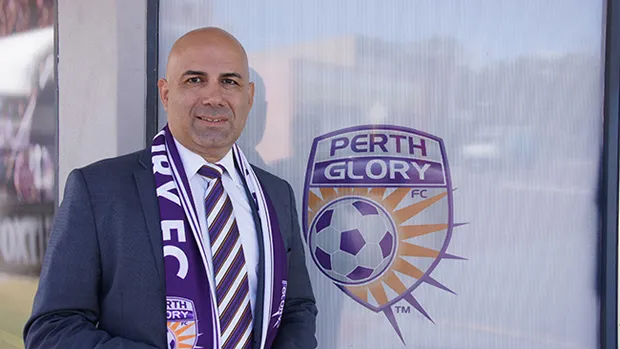
Global marketing and advisory firm Bastion has strengthened its leadership team with the appointment of Peter Filopoulos as Managing Director, Experience. This decision brings one of Australian football’s most influential administrators into a new phase of the sports business landscape.

Filopoulos, who has held senior roles across Football Australia, Football Victoria and Perth Glory, will lead Bastion’s experiential and partnerships division, applying a football-informed lens to brand engagement.

Drawing on his time in the game, Filopoulos emphasised the importance of cohesion in building meaningful fan connections.

“For me, the biggest lesson is that fans don’t see brand, content and experience as individual silos, they experience it all as one connected ecosystem,” he said.

“At Football Australia, the work resonated most when everything was aligned; the team, the narrative, the partners and the matchday experience all working together to feel cohesive and authentic. That’s when engagement moves beyond interaction and becomes something far more meaningful.”

He added that too many organisations still treat fan engagement as short-term.

“Where a lot of organisations fall short is treating fan engagement as a campaign. It’s not, it’s an always-on system.”

Filopoulos’ move reflects a broader shift within football, where commercial growth is increasingly driven by experience-led strategy.

“At Bastion, we put experience at the centre—because it’s where the brand comes to life, where partners integrate in a way that adds real value and where fans genuinely connect,” he said.

“Our focus is on building platforms that bring fans closer to the brand… Get that right, and you’re creating something people actively want to be part of.”

Most Popular Topics

Editor Picks

Send this to a friend