

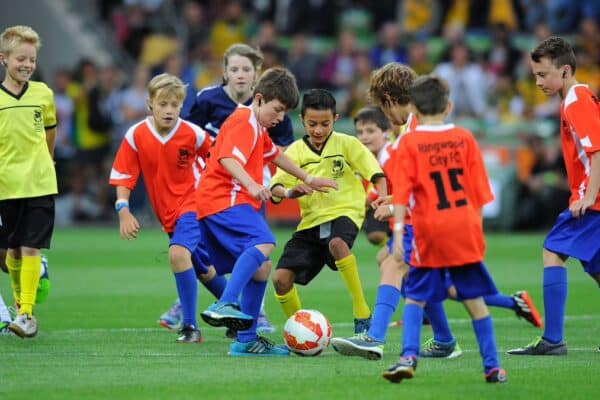

Manly United announces training compensation reward for grassroots clubs

Manly United have announced an agreement that will give grassroots clubs in the Manly Warringah Football Association a portion of any training compensation the NPL club receives for players who started their career in their local area.

The current FIFA rules state training compensation is allocated to clubs that play a role in a player’s development from the age of twelve onwards.

However, acknowledging the important role grassroots clubs have in the formative years of development, Manly United will reward all clubs that help develop young players.

“Manly United recognises the part grassroots clubs play in the Australian football pyramid and believes it is only fair that local clubs, who play a critical first part in helping football players to fall in love with the game, should be recognised,” said Manly United CEO David Mason.

“There has been a lot of talk lately about uniting football and bringing the entire football ecosystem together and if we are serious about that it has to include the grassroots football community, which is home to 96% of Australia’s football players.”

Wakehurst Football Club will be the first club to benefit from the agreement, with former Manly United and Sydney FC youngster Cameron Peupion recently signing for Brighton and Hove Albion in the EPL.

“Cameron started his football playing with Wakehurst and then joined Manly United as a 9-year-old, moved onto Sydney FC and is now about to live out a dream that started at Hews Parade and Lionel Watts Oval on the biggest stage of all,” Mason said.

“We would like to thank Danny Townsend and Sydney FC for the way we worked together on a fair Training Compensation arrangement with Brighton but we believe that cooperation should go all the way back to his junior club.

“The grassroots is always forgotten when Australian football thinks of the player pathway and just before he departed Australia Cameron came down to Cromer Park to spend some time with the SAP players and watched his mates play for Wakehurst before jetting off to England.”

17-year-old Peupion said: “This is fantastic that Wakehurst has been recognised. It is my first club, it’s where I started to play my football and along with Manly and Sydney FC have helped me get to the point that I’m about to chase my dream in the Premier League. It’s great that all the people who have helped me have been recognised.”

Wakehurst Football Club President Greg Dick was delighted with the news.

“This is a fantastic surprise and a great reward for Wakehurst Football Club. Cameron started his football with Wakehurst before moving onto Manly United and we think this new agreement is a tremendous recognition and reward for local clubs in the MWFA,” he said.

“Whilst training compensation applies from the age of 12 this agreement clearly demonstrates the MWFA’s leadership and commitment to the development of grassroots U6-U11 football.”

Previous ArticleNext Article

Isabella Mossin awarded Ninja A-League Women Referee of the Year

The youngest recipient since its inception, Mossin will officially receive the award after leading the Ninja A-League Grand Final 2026 on Saturday.


A rapid rise

After debuting in 2023, Mossin has quickly proved quality, composure and confidence as a referee in the Ninja A-League.

As a result of the achievement, Mossin will be the appointed referee for this weekend’s Grand Final between Melbourne City FC and Wellington Phoenix.

After beginning in the North West Sydney Football Association, Mossin then honed her craft with the Football NSW Referee Academy, a journey with foundations truly embedded in youth development and grassroots football.

Thus, Mossin is not just am individual success story, but a symbol of what institutional investment and opportunities can do for young women looking for a pathway to the game.


Celebrating success

The plaudits, unsurprisngly, are arriving from across Australia’s football landscape, with many emphasising the incredible standards set by Mossin since her debut just three years ago.

“This award is testament to Isabella’s hard work and dedication to refereeing, and a great reflection of the next generation of referees coming through the system in Australia,” said A-Leagues CEO, Steve Rosich.

“At just 25 years of age, she has consistently demonstrated composure, leadership, strong decision-making and the ability to perform under pressure in some of the biggest matches in the competition,” highlighted Football Australia Head of Referees, Jon Moss.

“Having someone refereeing their first Ninja A-league Women’s Grand Final at the age of 25 years should inspire all girls and young women referees (and potential referees) and show them that age is not a barrier to talent being recognised within Football Australia refereeing,” said Chair of Football Australia Referee Committee, David Elleray.

Given Mossin’s reputation and experience already at the top level of women’s football in Australia, there is no doubt that she will rise to the occasion this Saturday.

Female Football Week kicks off across Northern NSW

Female Football Week has officially begun across Northern NSW, with a program of gala days, networking events and awards ceremonies running until Sunday May 17, marking a ten-day celebration that organisers say reflects both the growth of women’s football in the region and the work still required to sustain it.

The national initiative, now a fixture on the football calendar, provides a dedicated period of visibility for female participants across all levels of the game from players, coaches, referees to volunteers, whose contributions have historically received less recognition than their male counterparts.

NNSWF Participation and Women’s Football Officer Serena Carter said the week offered something for everyone connected to women’s football in the region.

“Female Football Week provides a fantastic chance to highlight the dedication and skill of female players, coaches, referees and volunteers across the northern NSW community,” Carter said. “There’s something for everyone to enjoy, from grassroots participants to elite competitors.”

Women’s football in northern NSW spans remote and regional communities where clubs operate on limited resources, alongside more established metropolitan programs with clearer development pathways. Female Football Week creates a moment of shared recognition across that spectrum and acknowledges the role volunteers play, from running the canteen to progressing through the pathway.

Northern NSW Football has recorded some of its strongest participation numbers in women’s and girls’ football in recent seasons, a trend that has placed increasing pressure on clubs and facilities to keep pace. The week’s events offer clubs an opportunity to showcase their commitment to diversity and inclusion at a time when that commitment is being tested by growth.

Most Popular Topics

Editor Picks

Send this to a friend