

Jamie Harnwell driving the game forward in Western Australia

Jamie Harnwell is Perth Glory’s record appearance holder, with 256 games across three decades. Now Chief Football Officer for Football West, he spoke to Soccerscene about the changes from the NSL to the A-League, the challenges of running a football federation, and his favourite footballing moments throughout his career.

So firstly, what’s the biggest challenges facing Football West at the moment?

Harnwell: I think it’s interesting. Football West is in a really good position, being very fortunate with COVID over here and able to get out and play. The challenges are more for our clubs I suppose, and then Football West supporting them. Facilities are always a challenge for every sport, but certainly for football. We need to make sure there are enough grounds and space for people to play, but also aspects like lighting, adequate change rooms, and those sorts of things are suitable for clubs. We have a number of them almost putting up the closed sign because they have too many players and not enough space for them to play.

The other challenge for Football West and the clubs is the increase in governance requirements. We are basically a volunteer sport in many ways. And the increasing legalities and issues across that for volunteers to deal with can be difficult. So it’s time that we at Football West need to be able to support our clubs, make sure they’re adhering to good practice, and doing the right things so that they can continue to grow.

How has professional football in Australia improved since you first debuted with Perth Glory in the late 90s?

Harnwell: I think it’s actually professional football now. You know when I first started playing, I think there was ourselves and maybe Carlton who were actual full-time professional clubs. The rest were part-time as people were still working during the day, going to training at night, and trying to juggle the two. So certainly the transition into the A-League and full-time professionalism for all clubs has been huge, and just the continued increased coverage and media around the game has made us much more accessible. It’s easier to see and has a much better chance of building that supporter base across the game here in Australia.

What areas do you think the game can continue to improve on going forward into the future?

Harnwell: There’s always talent development and making sure that we stay on pace with best practices and what’s happening in other parts of the world. We are a smaller nation in the grand scheme of things in football, so we need to be smart about how we approach those sorts of things and make sure we get bang for our buck for everything that we do. The other thing is we need to try and increase the commercialism of the game and make sure that we continue to get funds into the game that can assist in the youth development that can help in costs for clubs and all those types of things. So that’s the way I know Football Australia is working hard on it. They’re starting to bring more and more partners into the game. But if you look at the mega machines like AFL, then we probably still have some way to go in that.

How can football win across young athletes into joining the sport over others?

Harnwell:
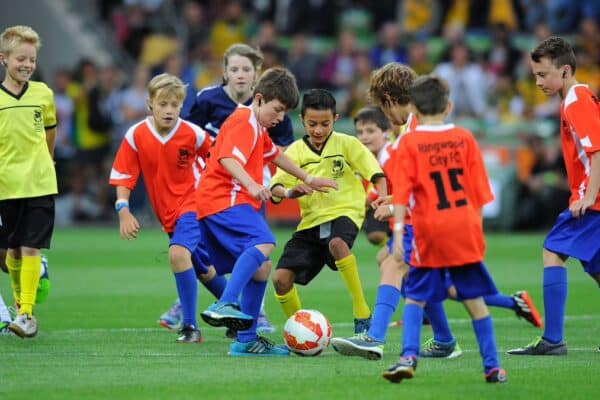
I think we’re really lucky as a game. I can’t speak for other states, I suppose – but the numbers here at Football West in Western Australia just continue to grow year in year out. We are a very attractive game for parents to pick for young boys and girls. It’s a very easy game to choose and very easy to play and train. So we’re certainly well-positioned in that respect – making sure that our clubs provide positive environments that they enjoy what they do. There isn’t the overarching focus on just winning games, but more a longer-term development based approach that will make sure talented young players will stay in football rather than going across to other codes.

On a personal level, what is your most memorable footballing memory?

Harnwell: There’s probably a few, I suppose for myself as a player – it would have been the first NSL Championship that we won. We’d had a couple of cracks at it before and sort of fell away in the Grand Final. So that first win in 2003 was huge, and really got the monkey off our back, and managing to score in that game with the massive crowd was fantastic. But I’m also a Manchester United fan, so the treble was pretty good as well. So I don’t know which one ranks better for me!
Previous ArticleNext Article

Victory unites with Roasting Warehouse in culture-led partnership

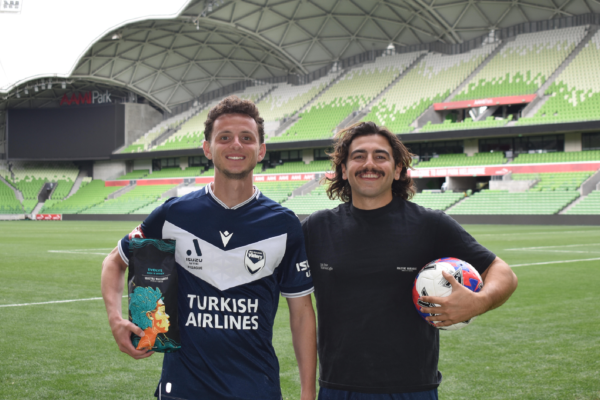
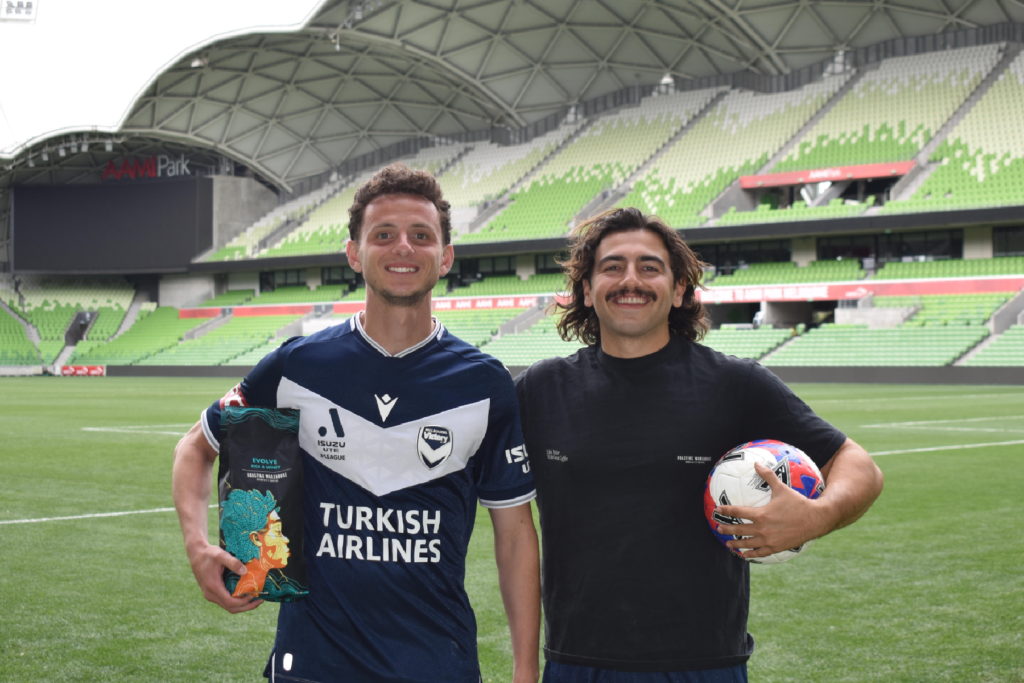
The Melbourne-based anf family-owned business will join the Victory family, uniting two institutions which represent the city’s culture and identity.

A partnership with local roots

As the newest partner of Melbourne Victory, Roasting Warehouse joins forces with a vital part of the city’s sporting landscape.

The club’s Managing Director, Caroline Carnegie, outlined why the partnership bears so much value to both parties.

“We are excited to collaborate with Roasting Warehouse, a community-oriented destination for high-quality coffee, proud of its foundations in Melbourne,” said Carnegie via official media release.

“Football and coffee sit at the epicentre of Melbourne’s culture. The two go hand-in-hand, consistently at the centre of the conversation that stirs Melburnians, which is no different to the conversation sport and Melbourne Victory stir in the State.”

Indeed, this is a partnership which combines the identity, passions and culture of an entire city, therefore giving it the foundations required for long-term, mutual success.

Representing the best of Melbourne

Both Victory and Roasting Warehouse are hugely successful in their respective industries. They are institutions with community-oriented philosphies, who pride themselves on craft and quality.

“We’re incredibly proud to partner with Melbourne Victory, a club that represents the heart, passion, and ambition of Melbourne,” revealed Roasting Warehouse Head of Brand, Alexander Paraskevopoulos.

“As a Melbourne-founded, family-run business, supporting a team that means so much to the local community feels very natural for us.”

Furthermore, through their high-quality blends, Roasting Warehouse will look to prepare Victory’s players and staff for high performances on the pitch as the seasons nears completion.

But this is about far more than just fueling athletes.

This is a partnership which embodies and unites two of Melbourne’s greatest strengths and cultural markers – a connection forged from the city’s very own DNA.


For more information about Roasting Warehouse, click here.

Melbourne Victory’s reaffirmed partnership backs local businesses

In an announcement made on Tuesday, Melbourne Victory revealed their continued alliance with the Committee for Melbourne. The partnership aims to unite and support local businesses, and grow sporting communities across Victoria.

The intersection for business and sport

The partnership between Melbourne Victory and the Committee for Melbourne stands as a reflection of the city’s leading culture for both business and sport.

The Committee for Melbourne strives to provide Melbourne with a better present and future, focusing on affordability, livability and sustainability. It is the result of a merger between two organisations – the Committee and the Melbourne Chamber of Commerce – resulting in an oragnisation backed by 200 years of combined expertise.

Furthermore, Melbourne Victory, through the Victory in Business (VIB) network, proudly presented by AGL, have facilitated over $225 million in transactions between member companies. It is one of Australia’s largest corporate sporting network groups with over 100 members.

Thus, uniting two organisations of such prestige and past success is an exciting development for business leaders and Victoria’s wider sporting landscape.

Together, they represent something far more important than business partners. Reflected in their extensive support network, they show that connection, success and identity can all be delivered at once.


Representing the best of Melbourne

Melbourne Victory Managing Director, Caroline Carnegie, outlined why the connection with the Committee for Melbourne is so important for members and for the city as a whole.

“Melbourne Victory is proud to represent the whole of Victoria – and proud to partner with the Committee for Melbourne to strengthen the link between sport and business,” Carnegie explained.

“Together, we’re building a network that connects people, creates opportunity and celebrates everything that makes Melbourne great.”

Moreover, Committee for Melbourne Chief Executive, Scott Veenker, reflected on the partnership’s connection to Victoria’s culture for business, sport and a united community.

“Business and sport are fundamental to Victoria’s identity and sucess. This partnership connects those worlds – from the boardroom to the pitch – creating real pathways for collaboration, innovation and growth,” Veenker said.


A meaningful partnership

As symbols of the city’s passion for sport and business, Melbourne Victory and the Committee for Melbourne have therefore built a connection which benefits all.

It is an alliance built on a shared identity, culture and dedication to making Melbourne an even more united, inclusive and competitive place.

Most Popular Topics

Editor Picks

Send this to a friend