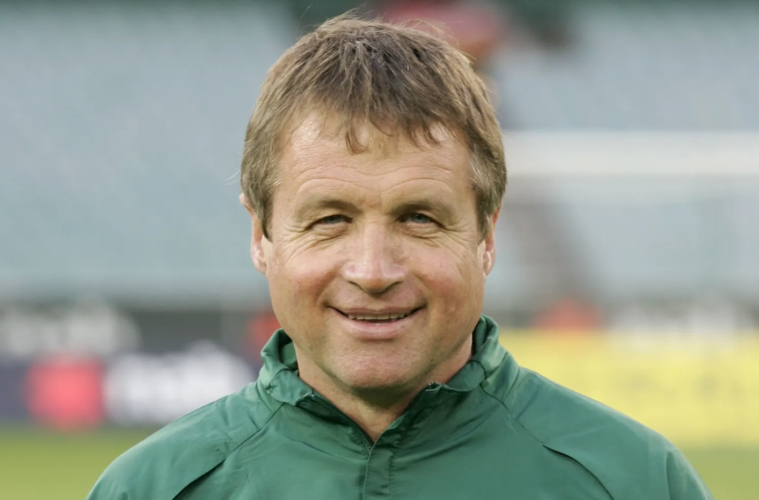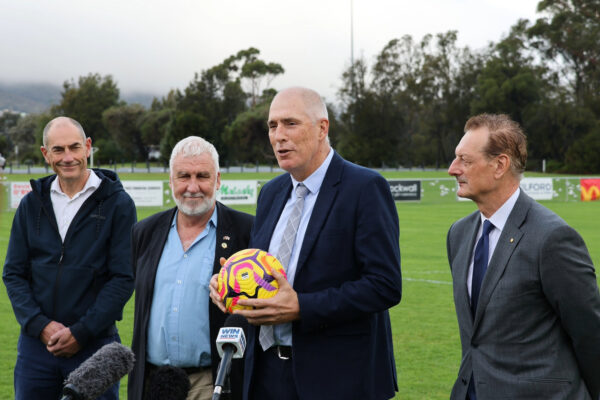




Gilbert Lorquet has held the seat of Football NSW Chairman for almost 5 years.
With recent initiatives and growth in the Football State Federation, Gilbert recently had an exclusive discussion with Soccerscene to talk about the role of chairman, what he focuses on delivering to all levels of the country’s largest footballing community, his journey from grassroots football and much more.
What is your relationship with football?
Gilbert Lorquet: My journey in football spans every level of the game from grassroots to governance.
It all began as a passionate fan. I grew up in Stanmore in Sydney’s inner west, shaped by my Mauritian heritage and surrounded by a vibrant mix of first-generation families who, like mine, shared a deep love for football.
I joined Abbotsford FC in the Canterbury district, where the warm, inclusive club culture nurtured my passion for the game. That led me to volunteer as a coach and manager, eventually becoming club president.
From there, I was invited to join the board of the Canterbury District Soccer Football Association, serving as Deputy Chair for six years.
About five years ago, I was encouraged to put my hand up for a position on the Football NSW board. Coming from a grassroots background, I had modest expectations but at one of my very first meetings, I was elected Chair. It was, and continues to be, a tremendous honour.
What does the job of Chairman entail?
Gilbert Lorquet: For me, it starts with providing clear strategic direction and strong governance to ensure a bold, sustainable vision for football across the state.
I work closely with Football NSW CEO, the board, and key stakeholders to ensure we stay aligned and deliver on our objectives.
About four years ago, we developed a strategic plan focused on five core pillars: grassroots development, high-performance pathways, facilities, inclusion, and integrity. These pillars continue to guide our key milestones, which we’ll review and refine in the coming year.
My goal is to ensure we not only deliver on these priorities internally, but also actively engage clubs and communities so we can protect and grow the game for generations to come.
Are there any recent initiatives that you’ve been proud in achieving?
Gilbert Lorquet: Football in Australia is often referred to as a sleeping giant and while that may still be true at some levels, at the grassroots, we’re very much awake.
Since COVID, we’ve shown an ability to adapt, shaping our offerings around what communities want and need. That responsiveness has been key to our success.
2024 was a record-breaking year for participation. We saw a 9% increase in player registrations, welcoming over 20,000 new participants. Female participation alone grew by 17%, a clear sign of momentum and opportunity.
Football NSW was proud to receive four awards at the NSW Community Sports Awards, including the Inclusion Achievement of the Year for our NAIDOC Week games, an initiative I’m especially proud of.
For me, success in football must go beyond on-field performance, It’s about fostering inclusivity, driving development, and creating deep, meaningful community connections.
What are the unique strengths of FNSW and how does this fuel your initiatives and goals?
Gilbert Lorquet: Football NSW is one of the largest sporting organisations in Australia, with over 200,000 registered participants. That scale gives us a unique platform, not only to support elite player development but to deliver meaningful, broad-based community impact.
Our grassroots foundation is critical. It drives growth, accessibility, and, more importantly, inclusivity. We need to continue building on that strength to secure the game’s future.
A couple of years ago, we launched our Club Development Conference to bring together associations, club presidents, and committee members under one roof. It’s a chance to engage directly on the issues that matter most to clubs, providing practical support, guidance, and a sense of unity across the football ecosystem.
Player development pathways remain another key strength. From structured playing opportunities to coaching and refereeing pathways, we’re helping talent flourish at every level.
While there’s always room for improvement, NSW continues to contribute significantly to our national teams, proof that our system is working.
We also place a strong emphasis on collaboration. Our partnerships span local government, schools, councils, and community groups, helping us create a more connected and inclusive football landscape.
Finally, our leadership is stable and forward-thinking. With a committed board and executive team focused on transparency and long-term planning, our strategic direction aligns closely with Football Australia’s new constitutional reforms.
That alignment is critical for attracting long-term investment and ensuring the infrastructure, systems, and innovation are in place to carry the game forward.

Can you give us a rundown on the female development in NSW?
Gilbert Lorquet: Following the 2023 FIFA Women’s World Cup, our focus has been on sustaining and building on that momentum and the results have been outstanding.
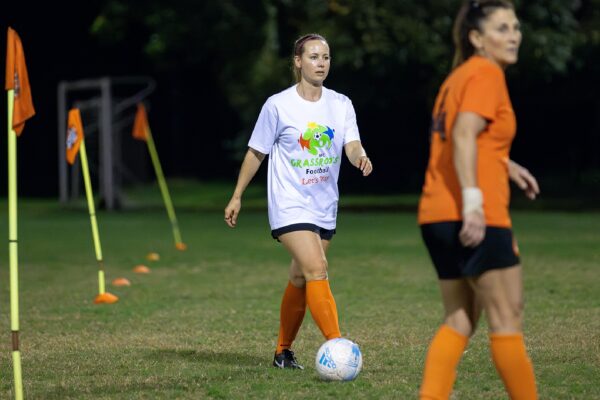
We’ve seen a 17% growth in female player registrations, alongside a 16% increase in referees and a remarkable 36% rise in female coaches. In total, female participation surged by 36% in just one year. That’s incredible progress.
To support this growth, we’ve prioritised investment in infrastructure and program development. A key example is the NSW Football Legacy Fund, established as part of the World Cup legacy. Last year, we completed a $10 million Legacy Program that delivered 43 infrastructure upgrades and supported 98 participation initiatives across the state.
With the AFC Women’s Asian Cup on the horizon, a further $3.2 million has already been allocated to over 90 community football projects to enhance both facilities and participation opportunities.
Through the NSW Government’s Play Our Way program, $654,000 has been directed to Football NSW, funding over 740 scholarships and expanding opportunities for women and girls.
This funding also supports initiatives like Empower Her, which is focused on advancing female leadership, education, and inclusion in football, on and off the pitch.
Last November, we hosted our Women’s Leadership Forum, with more scheduled for this year. These forums are critical in promoting greater female representation in coaching, administration, and decision-making roles.
It’s all part of a long-term vision to ensure women and girls feel empowered, supported, and celebrated across every level of the game.

The new second division, what’s the feeling of Football New South Wales and from you personally for this opportunity?
Gilbert Lorquet: I’m genuinely excited about the launch of the National Second Division and the opportunities it brings. It’s a long-overdue initiative and a significant milestone for Australian football, finally bridging the gap between the NPL and the A-League.
For Football NSW, this is a transformative development. Over the next few years, we’ll be watching closely as the competition evolves and contributes to a more connected, competitive, and dynamic football ecosystem.
The eight foundation clubs will help spotlight the rich history and diversity of football in Australia, especially for younger fans who may not be familiar with these stories.
Of course, this won’t change everything overnight, but it’s a critical step in the right direction and one we fully support.
You are juggling a few things right now, how do you keep on top of it all?
Gilbert Lorquet: I’m currently the CEO of the NORTH Foundation, the official charity of the Northern Sydney Local Health District. I’m also completing my PhD at UTS, which focuses on measuring the social impact of football in diverse communities.
Balancing multiple responsibilities requires clarity of purpose. I constantly ask myself: ‘Do the strategic outcomes I’m pursuing align with what I’m truly passionate about?’ And when we look back 5 or 10 years from now, what legacy will we be proud to have built?
For me, it all comes down to discipline and time management. As simple as it sounds, making the most of each day is critical.
Equally important is having a strong support network with a shared vision. Trust and the ability to delegate not just as a CEO but across all roles is essential for sustained progress.
And finally, it’s about staying grounded. Taking time to pause, reflect, and ask: ‘Have we achieved what we set out to do? If not, why not?’ That kind of reflection is key to learning, evolving, and making a meaningful impact.
What are you passionate about in this role?
Gilbert Lorquet: I feel incredibly fortunate that my professional life aligns so closely with my passions and values.
At the heart of it, I’m driven by the desire to make a difference, to leave things better than I found them.
My role as Chair isn’t about sitting behind a desk. It’s about being present, visible, and actively engaged.
It means being out in the community, having real conversations, building trust, and staying deeply connected to the people who live and breathe football every day.
For me, leadership is not just about serving the present, it’s about building for the future. The FNSW of 2025 is not what it was in 2020, and it won’t be the same in 2050.
That captures the essence of our responsibility. Whether it’s creating opportunities on or off the pitch, our role is to be evolving, adaptive custodians of the game, bridge builders who connect today’s efforts with tomorrow’s possibilities.