


Is Australia ready for a two-year World Cup cycle?

Battle lines are being drawn between FIFA and key stakeholders, as it remains to be seen whether Australia will support the push for a two-year World Cup cycle.

FIFA’s minutes from the 71st Congress, where Saudi Arabia put forward the motion to study the viability of a two-year cycle, doesn’t include what member federations voted for in the motion.

Football Australia hasn’t stated publicly whether they were one of the 166 nations who voted for the motion, or whether they support the plans.

Football Australia is instead adopting a wait-and-see approach, to avoid taking a position before any proposal for changes are put forward after the viability study is completed.

Two-time A-League Coach of the Year Ernie Merrick believes the push from FIFA for a two-year World Cup cycle is because of business and money.

“It’s about profit and loss. It’s not about the people in the sport really, and FIFA are always competing with their confederations, of which there are six, and FIFA only have one event where they make substantial money from revenue and that’s every four years,” Merrick said.

“So in effect FIFA loses money for three years, and then the fourth year and makes massive profits mainly from broadcast, ticket sales, and sponsorship from a World Cup.”

The majority of FIFA’s $8.7 billion in revenue between 2015-2018 came from the 2018 Men’s tournament.

The commercial value of another World Cup every four years is incredibly attractive to the governing body as a way to boost its already full coffers.

Australian football will struggle to keep up with other countries if the World Cup is hosted every two years, according to Merrick.

“At the same time a lot of countries, including Asian countries, are spending an enormous amount of money on facilities and preparation setups for national competition. We all know of England’s setup, which is huge at St George’s Park, and here we don’t have a designated specific setup to prepare national teams,” he said.

“There’s a lot of infrastructure that will have to change to give Australia a chance to qualify on a regular basis. We certainly have good players and good coaches and we can compete with anyone regarding players, coaching and strategy but when it comes to the sort of money involved in preparing a national team, friendly games, and the amount of travel involved, Australia is really going to suffer.”

Michael Valkanis – former A-League coach, player and current Greece assistant coach – believes that without aligning with FIFA international dates, it means the A-League will struggle to adapt to a two-year World Cup cycle.

“We saw the effects of the Socceroos going away to play, and it always makes it difficult on A-League coaches and teams to support that.” Valkanis said.

“You can see the effects it can have on finals games, and we’ve been crying out for a long time that we become parallel with the rest of the world with international dates.”

Some of Australia’s biggest competitors in the AFC are showing ambivalence towards the concept.

“It would depend on how it would all be organised,” a Korean FA official told Deutsche Welle.

“If we want to have consistent success then we need to play as many competitive games against South American and European teams as possible. At the moment, we play one or two games every four years if we qualify. It’s not enough.”

While the viability of a two-year World Cup cycle is being studied, it is unclear how determined FIFA is to implement such a radical change to the football calendar against intense opposition from some of its members.

Merrick believes the end result could be FIFA demanding a portion of the confederation’s revenue.

“I think four years is probably a better situation at the moment – maybe three years down the track – but I think confederations will have to come to an arrangement with FIFA, and FIFA will want to take some of their revenue somehow through licensing,” Merrick said.

Those involved in international football already believe that the best model is the one we have currently, something that Valkanis is a strong fan of.

“I am a traditionalist. I think the World Cup is something special that stands out from any other competition in the world,” he said.

“The only other event that comes close is the Olympic Games, and to change the format so we see it every two years instead of four, I don’t think it leaves it the same. It is special the way it is.”

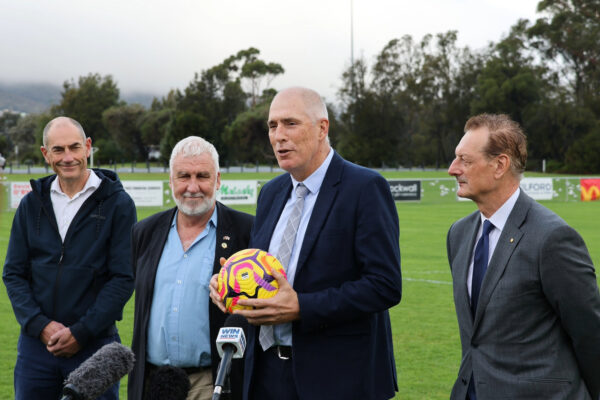
Football Australia CEO James Johnson will have a challenge on his hands navigating what a change in the World Cup’s schedule means for Australian football, as FIFA continues to push for increased revenue from the game.
Previous ArticleNext Article

Community Spirit Shines on AFC Grassroots Football Day 2026

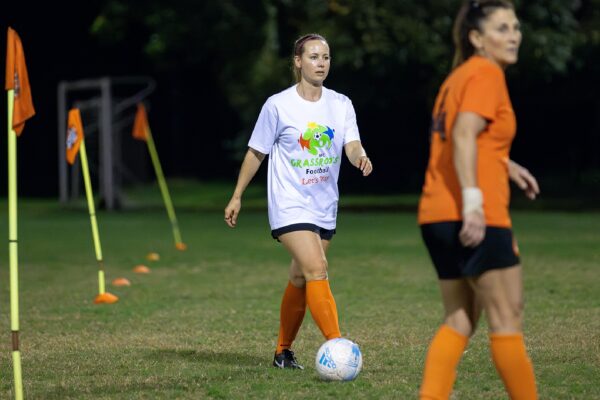
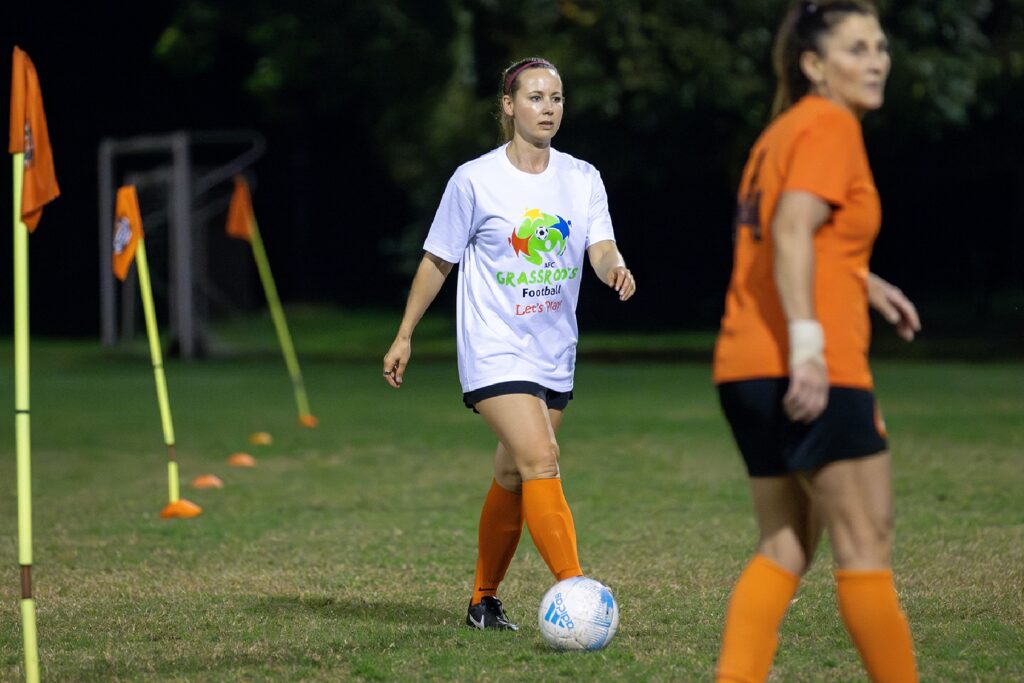
This week, Football Australia (FA) celebrated AFC Grassroots Football Day 2026, championing the people and communities who continue to hold up a safe, inclusive and supportive environment in the football landscape.

‘For all, for life’

In collaboration with Football NSW, Canterbury Football Association and community club, Balmain & District Football Club, the day reflected the very best of what football provides.

The event brought in participants of all ages – from 4-74 years-old – and reached a total of 400 people. Girls-only programs, all-abilities sessions and over-age football ensured all were catered for.

Such a diverse range of participants builds on a wider drive during FIFA World Football Week, which seeks to promote the sport not just as the dazzling lights of 100,000-seater stadiums, but as a way to foster community spirit and social development.

Furthermore, FA support through its Club Changer program was a welcome addition to the action, emphasising the organisation’s commitment to nurture a real love for the game across communities in Australia.

“Through Club Changer we support our clubs to provide a safe, fun and enjoyable environment where everyone is welcome; whether that be as a player, volunteer, referee or supporter,” explained National Program Manager Club Development at FA, Grace Lambourne.

“Everyone should feel they belong and are welcome to play, stay, and love the game.”


A welcome celebration

While the upcoming FIFA World Cup will no doubt inspire millions of future Socceroos and Matildas, events like the AFC Grassroots Football Day represent something beyond just inspiration.

It is a platform. An opportunity to express a love for football and to connect with others while doing so.

And connections between the professional and grassroots game is more important than ever if Australia is to nurture the next generation of talent.

This is particularly clear in the rise of women’s football across the nation. Since the FIFA Women’s World Cup, female participation rose by 32%, and registrations for the MiniTillies Program skyrocketed from 264 in 2023, to 1223 in 2024.

The professionals spark passion. But communities turn that passion into playing time.

That is why celebrating grassroots football – and the volunteers and families who sustain it – is a vital part of Australia’s football future. Together, FA and the AFC are creating strong foundations built on positivity, engagement, and inclusivity for all with a love for the beautiful game.

FA partners with Coca-Cola ahead of FIFA World Cup 2026

The two-year partnership will place the global soft-drink giants as the Official Supplier for Australia’s Men’s and Women’s senior national teams.


Global partner, global stage

As the Socceroos look to deliver performances on the pitch at this summer’s tournament, it is a move off the pitch which will capture the imagination of fans across the country.

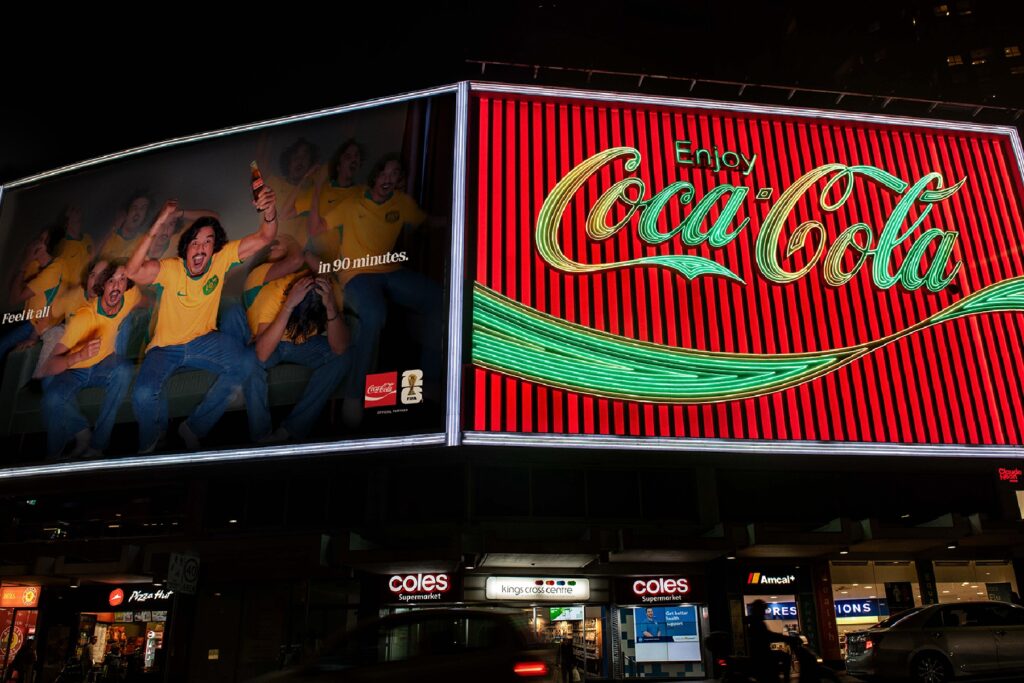
Football Australia announced an exciting deal with Coca-Cola, designed to align the global reach of football – and of the brand itself – to unite and engage fans this summer as well as during the FIFA Women’s World Cup 2027.

Thus, through national campaigns featuring prize draws and the chance to access various rewards, Coca-Cola will help to drive passion and interest in upcoming major tournaments.

“This partnership brings together the global scale of Coca-Cola with the passion and reach of football in Australia, creating new opportunities to connect with fans across the country,” explained FA CEO, Martin Kugeler, via press release.

“The upcoming FIFA World Cup 2026 represents a key moment for the CommBank Socceroos, and the Coca-Cola campaigns will help bring supporters closer to the team through unique and engaging experiences.”

Furthermore, with the FIFA Women’s World Cup 2027 also set to enjoy similar campaigns by Coca-Cola, the partnership’s impact and reach will extend across both the men’s and women’s game.


Marketing power

As football continues to grow – both in financial power and population reach – collaborations with global brands are now an expected aspect of tournament build-ups.

The Royal Spanish Football Federation (RFEF) also struck a deal with fashion brand Loewe, set in place for the next four years. In a similar vein, England’s off-pitch teamwear will feature the marks of both Nike and Palace Skateboards, while France will receieve their prematch jersey from Nike and Jacquemus.

This is the state of the landscape. Aligning global brands and household names with a sport capable of reaching billions at once.

Values, reach and connecting with fans. Three key ingredients to a successful collaboration.

Such alignment is key to the partnership between FA and Coca-Cola, as recognised by Managing Director, Coca-Cola Europacific Partners, Orlando Rodriguez.

“For nearly 90 years, Coca-Cola has been a part of the fabric of Australian life – bring people together through shared moments,” said Rodriguez.

“Partnering with Football Australia reflects our continued commitment to connecting communities through experiences that unite the nation, with the CommBank Socceroos and Matildas at the heart of that.”

Most Popular Topics

Editor Picks

Send this to a friend