



How La Liga continues to excel through its global fan engagement strategy

Millions of fans and consumers around the world engage with La Liga’s digital platforms on a daily basis.

This provides those in the Spanish competition’s digital strategy department with a rich depth of data to analyse and dissect.

La Liga has continued to emphasise collecting data in recent years and in turn has generated significant benefits for clubs, broadcasters, sponsors and fans of Spanish football.

The Spanish competition, through its digital strategy department, construct differing data-driven strategies with the overall intention of boosting fan engagement and fan loyalty.

Recently speaking at the Nextv Sport Europe conference, La Liga head of consumer strategy Olivia Archanco further explained: “We work on data-driven strategies that make the complex matter of big data simple. We analyse data in a structured way that helps us generate user information that can be used to build awareness, engagement and conversion, while at the same time earning greater loyalty of fans.”

Building customer loyalty

La Liga deliberately splits the users who engage with it digital platforms (such as the official competition website, its app or its OTT service LaLigaSportsTV) into three sperate categories. Those categories are guests – who navigate without signing up, prospects – who provide some demographic information and lastly, registered users.

Registered users, either through filling out an online form or signing in through their social media profile, disclose information that improves La Liga’s data ecosystem and further shape the league’s consumer strategy.

“With all this information from the different platforms that we manage, we are getting a very detailed picture of the fan,” Archanco said.

“We know if they are following a club, if they are season ticket holders, if they play our Fantasy game or if they are watching other sports on the OTT.”

Through this approach fans receive an efficient digital experience with La Liga as these data-driven strategies are more likely to show a user content or information that they are interested in.

“The information is used for personalisation purposes,” Archanco continued.

“We engage better with consumers when we know their age, the city where they live or the interests they have. We can direct fans towards conversion and, through those, can provide better services that are much more targeted and personalised. We do this in a natural way, not aggressively and not spamming people.”

Benefits for commercial partners

In addition to satisfying fans, this approach also brings significant returns for sponsors, broadcasters and other commercial partners.

“The more we know about our users, the better we can strategise and activate with wider stakeholders,” Archanco said.

“For sponsors, they are traditionally looking to generate more awareness and they ask for exposure, but this is changing,” she added.

“In this sense, we feel we are able to provide an added value as we can not only generate awareness but also engagement. We can generate leads and clicks and, on top of that, we are also helping them to generate conversation.”

In a recent example which showed how effective this can be, assisted by the competition’s business intelligence (BI) and analytics teams, one of the league’s sponsors ran a new campaign using user data from sources like Facebook, leading to thousands of customer orders. The campaign was a huge success and also saved the partner 90 percent of the cost when compared to spending in previous campaigns.

Ultimately, insights generated by La Liga highlight an asset that can benefit partners all over the world. The competition’s global network delegates, who give the league a physical presence in over 80 countries, are collaborating with BI and analytics teams and providing additional local insights that complement the data.

This information can help sponsors or broadcasters guide their own content and better position their local offerings.

“Through personalisation, we are able to provide different content for different countries or segments,” Archanco explained.

Support for clubs to become data-driven

La Liga itself is also supporting clubs who might not have the resources to efficiently gather and analyse data themselves.

“We have learned how to play the music and now we want to share it with the clubs as well,” Archanco stated.

“They can just jump in and they don’t have to invest and reinvent the wheel. We help them to go very fast.

“Instead of investing years and years in building all this infrastructure and investing a lot of money on it, what we offer clubs is almost a plug-and-play functionality,” she continued.

As well as this, the Spanish competition offers consultancy services for clubs who are interested, helping them create campaigns and acquisition strategies.

Agencies, who specialise in developing narratives and improving storytelling are also available to clubs.

“We are working to help the digitalisation process so that we can reduce the gap between the big clubs and the rest,” Archanco said.

“We think that this is going to affect the competition because we’re helping clubs to be more innovative and to build a better narrative with their consumers and fans. They will gain more support, more income and get closer to the bigger teams. I think this is something that will benefit the whole of La Liga. It’s good for everyone to be on a more equal footing.”
Previous ArticleNext Article

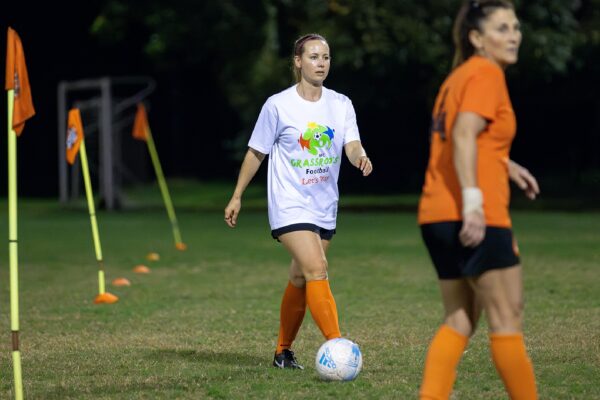
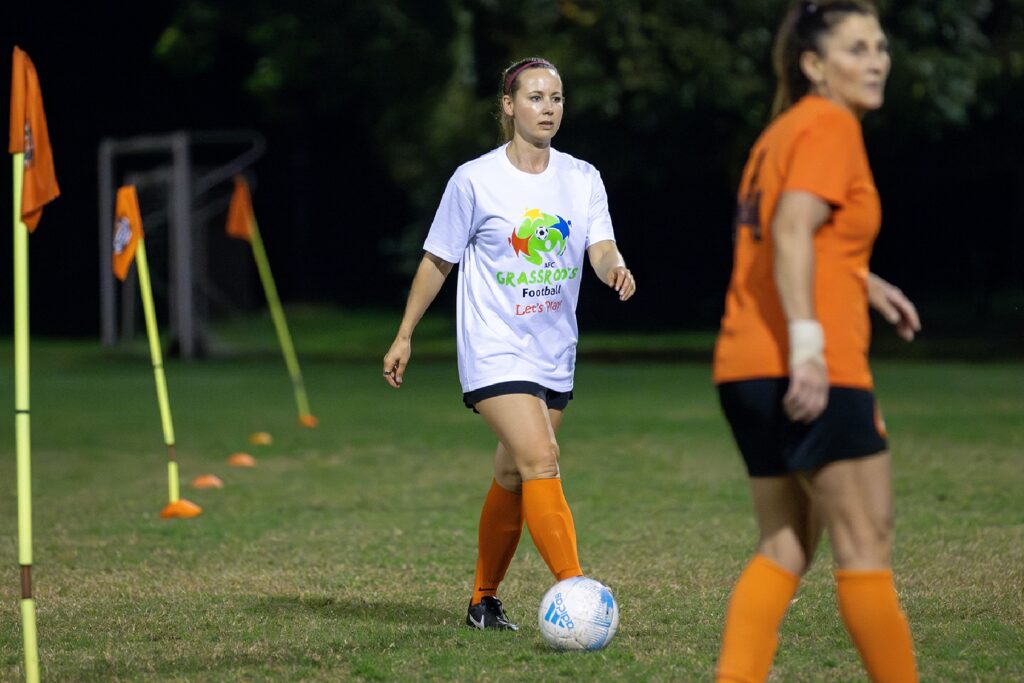
Community Spirit Shines on AFC Grassroots Football Day 2026

This week, Football Australia (FA) celebrated AFC Grassroots Football Day 2026, championing the people and communities who continue to hold up a safe, inclusive and supportive environment in the football landscape.

‘For all, for life’

In collaboration with Football NSW, Canterbury Football Association and community club, Balmain & District Football Club, the day reflected the very best of what football provides.

The event brought in participants of all ages – from 4-74 years-old – and reached a total of 400 people. Girls-only programs, all-abilities sessions and over-age football ensured all were catered for.

Such a diverse range of participants builds on a wider drive during FIFA World Football Week, which seeks to promote the sport not just as the dazzling lights of 100,000-seater stadiums, but as a way to foster community spirit and social development.

Furthermore, FA support through its Club Changer program was a welcome addition to the action, emphasising the organisation’s commitment to nurture a real love for the game across communities in Australia.

“Through Club Changer we support our clubs to provide a safe, fun and enjoyable environment where everyone is welcome; whether that be as a player, volunteer, referee or supporter,” explained National Program Manager Club Development at FA, Grace Lambourne.

“Everyone should feel they belong and are welcome to play, stay, and love the game.”


A welcome celebration

While the upcoming FIFA World Cup will no doubt inspire millions of future Socceroos and Matildas, events like the AFC Grassroots Football Day represent something beyond just inspiration.

It is a platform. An opportunity to express a love for football and to connect with others while doing so.

And connections between the professional and grassroots game is more important than ever if Australia is to nurture the next generation of talent.

This is particularly clear in the rise of women’s football across the nation. Since the FIFA Women’s World Cup, female participation rose by 32%, and registrations for the MiniTillies Program skyrocketed from 264 in 2023, to 1223 in 2024.

The professionals spark passion. But communities turn that passion into playing time.

That is why celebrating grassroots football – and the volunteers and families who sustain it – is a vital part of Australia’s football future. Together, FA and the AFC are creating strong foundations built on positivity, engagement, and inclusivity for all with a love for the beautiful game.

Geelong Regional Football Hub vision one step closer to reality

A process five years in the making, the Geelong Regional Football Hub (GRFH) will now build its home at Sutcliffe Reserve in Corio.

A major advancement

The project promises to be a major boost for the football community in Victoria’s west.

But the approval isn’t just about addressing the current issues facing players in and around Geelong (with just one football pitch found per 6,971 people), it symbolises an all-important promise to players, coaches and supporters:

A promise to invest, support and grow.

So now, following an extensive process of potential site assessments and council approvals, Football Victoria (FV) will prepare to lay the physical foundations at Sutcliffe Reserve in Corio – ten minutes away from Geelong CBD.

“This is a brilliant result for the sport in Victoria and the start of something truly exciting for football in Geelong and the surrounding area,” said FV CEO, Dan Birrell, via press release.

But despite the obvious anticipation over site approval, there remains one more bridge to cross to bring this project from blueprint to building block: securing funding.


What is the GRFH?

Beyond a mere community football centre, the GRFH will become a world-class hub for playing opportunities, development pathways and venue for several of FV’s most popular competitions.

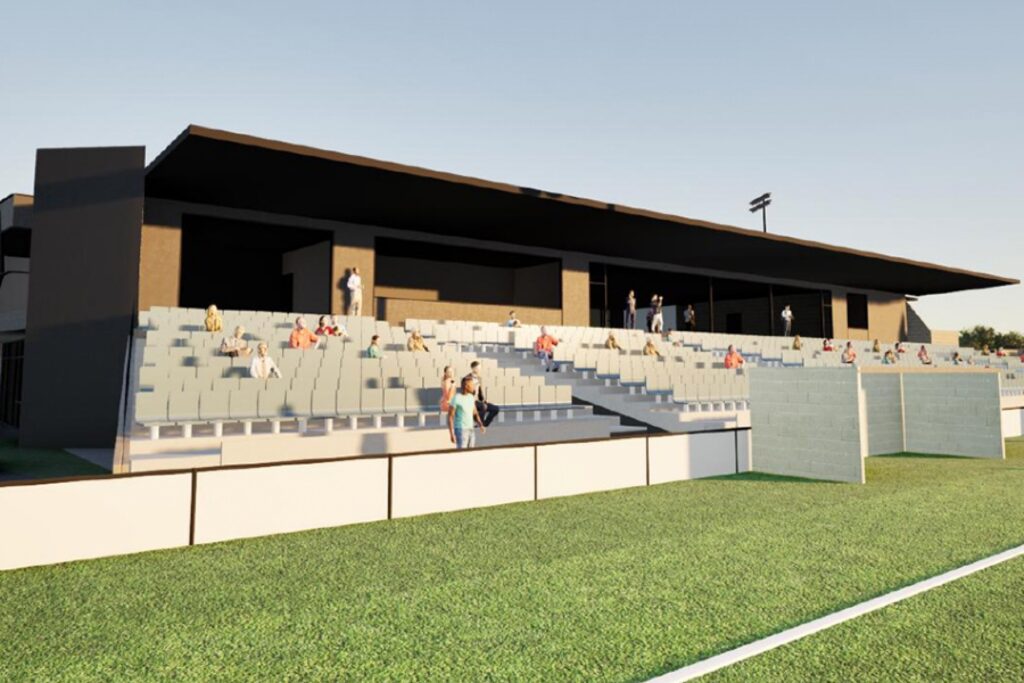
The proposed site will include five pitches, of which two will boast seated stands, as well as two pavilions, social spaces, kitchen and bar areas, media spaces, and facilities for players and match officials.

Such extensive, thorough infrastructure will therefore ensure the site can host an array of competitions for players across the landscape to showcase their talent. From supporting everything from school competitions to NPL VIC Men’s and Women’s games, the GRFH will be a place for player growth, opportunity and community engagement with the beautiful game.

And as Geelong Mayor, Stretch Kontelj, highlighted, the current demand requires investment of this nature as soon as possible.

“With more than 7,370 registered players across the Geelong region, the scale of demand is undeniable. A regional football hub would be genuinely transformational,” Kontelj said via press release.

“It would drive participation across all genders, abilities and levels of the game, strengthen education and development pathways, attract major events and tournaments and deliver lasting social and economic benefits for Geelong and the broader region.

The demand is there. The support is unwavering.

All that remains is the financial backing to bring about real, tangible results for those driving this vision forward.

Most Popular Topics

Editor Picks

Send this to a friend