


Government facilities investment needs to keep up as Women’s Asian Cup looms

OOTBALL AUSTRALIA AND PARAMOUNT AUSTRALIA AGREE TO HISTORIC MULTI-YEAR, MULTI-PLATFORM MEDIA RIGHTS DEAL FOR AUSTRALIAN NATIONAL TEAMS THROUGH TO 2028

In recent times, Football Australia released their ‘Legacy 23 report’ on the Women’s World Cup which was held in Australia and New Zealand last July.

Sarah Walsh – Head of Women’s Football, World Cup Legacy and Inclusion at Football Australia – reflected on the impact of the Matildas after the release of the Legacy report. The Matildas have been at the forefront of transformative societal change, challenging perceptions and gender stereotypes while advocating for sustained evolution within the Australian and international sporting landscape.

“The Legacy ‘23 post-tournament report delves into the success achieved in leveraging the tournament, however, emphasises the need for increased funding to ensure that the legacy of the FIFA Women’s World Cup Australia and New Zealand 2023 isn’t merely a momentary triumph, but evolves into foundations for a thriving, equitable, and dynamic future for football,” Walsh stated.

The numbers revealed in the report were quite staggering. The document stated that the World Cup had generated a $1.32 billion impact on the economy – with over 86,000 visitors to Australia contributing strongly to that figure.

1,288,175 tickets were sold to Australian based matches, with a global television viewership of almost two billion people.

The event itself played a hugely significant role in promoting physical exercise and well-being across the nation with an estimated $324 million reduction in healthcare costs due to this increased activity in the community.

A key part of the ‘Legacy 23’ plan from the FA was to garner increased government investment in facilities – due to the expected boom of popularity in the sport after hosting a World Cup on home shores.

Football Australia unlocked more than $398 million in federal and state government funding for ‘Legacy 23’ related projects. $129 million of the total funds also positively benefitted other sports – due to facility upgrades to stadiums such as Perth Rectangular Stadium, Brisbane Stadium, Melbourne Rectangular Stadium and the La Trobe Sports Precinct in Melbourne.

Due to the Matildas’ success, and FA’s advocacy, the Australian government contributed $200 million to the ‘Play Our Way’ grant program. This is Australia’s biggest comprehensive investment in women’s sports, with funding to address participation barriers through safe, inclusive and sustainable facilities and programs.

While the allocation of the investment between sports for this grant program has not been made public, football must be at the forefront for a large portion of this funding with a home Women’s Asian Cup on the horizon.

According to FA’s ‘Legacy 23’ report, under 20% of the $398 million worth of government funding was invested into community facilities.

“There remains a significant deficiency in facility investment across pivotal states that demands urgent attention,” FA’s report read.

“As participation demands increase, the strain on existing facilities within the 2,400+ clubs nationwide, already at saturation levels, requires immediate attention from all levels of government—federal, state, and local.

“Addressing this gap is essential to meet the expected surge in participation, improve the experience and retention rate for women and girls on our journey to the national 50:50 target, and continue fostering the wide-ranging benefits that football provides to its community of over 2 million people.

“It will therefore be crucial that grassroots football club facility upgrades materially benefit from the Play Our Way grant program.”

The AFC Women’s Football Committee recently recommended Australia as the host country for the 2026 Women’s Asian Cup – essentially earmarking another monumental football tournament to be held in our backyard.

According to Australian Financial Review, Football Australia is expecting up to half a million attendees for the event, with visitor/organisation expenditure of between $115 and $140 million, making it the biggest female edition of all time.

With the tournament just two years away, it is essential that further grassroots facility investment is allocated by government parties as the demand and popularity of the sport will continue to grow at a significant rate.

FA claims the Asian Cup represented “a crucial platform to advance the goals outlined in the ‘Legacy 23’, particularly in addressing the shortfall in football facility investment.”

“Australia is ready, one of the most multicultural societies in the world, with over 300 different ancestries and almost 20% of our nation’s population having ties back to countries that comprise the Asian Football Confederation, meaning every team that visits our shores will have a ‘home away from home’ feeling,” the report said.

“This esteemed Asian football tournament provides an ideal platform for all tiers of government to employ football as a tool for effectively implementing sports diplomacy and tourism strategies within Asia.”

The governing body believes there is an overall $2.9 billion facility gap to bring grassroots facilities in line to an acceptable level.

They won’t get anywhere near that level of investment from government authorities immediately, but considerably more must be invested before Asia’s biggest female sporting event comes to our shores.

Previous ArticleNext Article

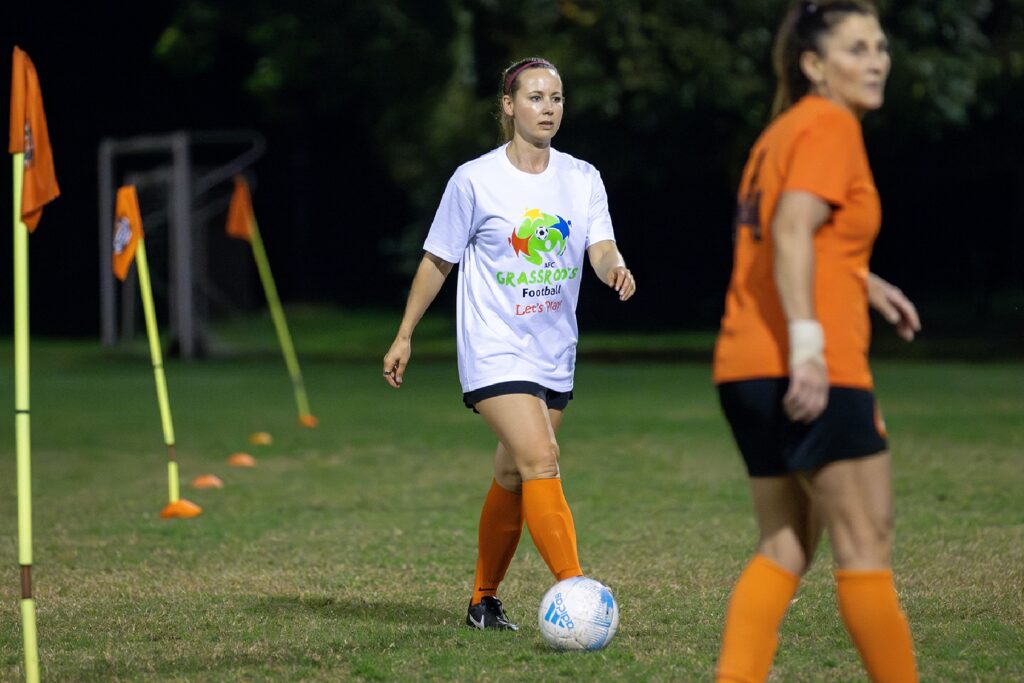
Community Spirit Shines on AFC Grassroots Football Day 2026

This week, Football Australia (FA) celebrated AFC Grassroots Football Day 2026, championing the people and communities who continue to hold up a safe, inclusive and supportive environment in the football landscape.

‘For all, for life’

In collaboration with Football NSW, Canterbury Football Association and community club, Balmain & District Football Club, the day reflected the very best of what football provides.

The event brought in participants of all ages – from 4-74 years-old – and reached a total of 400 people. Girls-only programs, all-abilities sessions and over-age football ensured all were catered for.

Such a diverse range of participants builds on a wider drive during FIFA World Football Week, which seeks to promote the sport not just as the dazzling lights of 100,000-seater stadiums, but as a way to foster community spirit and social development.

Furthermore, FA support through its Club Changer program was a welcome addition to the action, emphasising the organisation’s commitment to nurture a real love for the game across communities in Australia.

“Through Club Changer we support our clubs to provide a safe, fun and enjoyable environment where everyone is welcome; whether that be as a player, volunteer, referee or supporter,” explained National Program Manager Club Development at FA, Grace Lambourne.

“Everyone should feel they belong and are welcome to play, stay, and love the game.”


A welcome celebration

While the upcoming FIFA World Cup will no doubt inspire millions of future Socceroos and Matildas, events like the AFC Grassroots Football Day represent something beyond just inspiration.

It is a platform. An opportunity to express a love for football and to connect with others while doing so.

And connections between the professional and grassroots game is more important than ever if Australia is to nurture the next generation of talent.

This is particularly clear in the rise of women’s football across the nation. Since the FIFA Women’s World Cup, female participation rose by 32%, and registrations for the MiniTillies Program skyrocketed from 264 in 2023, to 1223 in 2024.

The professionals spark passion. But communities turn that passion into playing time.

That is why celebrating grassroots football – and the volunteers and families who sustain it – is a vital part of Australia’s football future. Together, FA and the AFC are creating strong foundations built on positivity, engagement, and inclusivity for all with a love for the beautiful game.

FA partners with Coca-Cola ahead of FIFA World Cup 2026

The two-year partnership will place the global soft-drink giants as the Official Supplier for Australia’s Men’s and Women’s senior national teams.


Global partner, global stage

As the Socceroos look to deliver performances on the pitch at this summer’s tournament, it is a move off the pitch which will capture the imagination of fans across the country.

Football Australia announced an exciting deal with Coca-Cola, designed to align the global reach of football – and of the brand itself – to unite and engage fans this summer as well as during the FIFA Women’s World Cup 2027.

Thus, through national campaigns featuring prize draws and the chance to access various rewards, Coca-Cola will help to drive passion and interest in upcoming major tournaments.

“This partnership brings together the global scale of Coca-Cola with the passion and reach of football in Australia, creating new opportunities to connect with fans across the country,” explained FA CEO, Martin Kugeler, via press release.

“The upcoming FIFA World Cup 2026 represents a key moment for the CommBank Socceroos, and the Coca-Cola campaigns will help bring supporters closer to the team through unique and engaging experiences.”

Furthermore, with the FIFA Women’s World Cup 2027 also set to enjoy similar campaigns by Coca-Cola, the partnership’s impact and reach will extend across both the men’s and women’s game.


Marketing power

As football continues to grow – both in financial power and population reach – collaborations with global brands are now an expected aspect of tournament build-ups.

The Royal Spanish Football Federation (RFEF) also struck a deal with fashion brand Loewe, set in place for the next four years. In a similar vein, England’s off-pitch teamwear will feature the marks of both Nike and Palace Skateboards, while France will receieve their prematch jersey from Nike and Jacquemus.

This is the state of the landscape. Aligning global brands and household names with a sport capable of reaching billions at once.

Values, reach and connecting with fans. Three key ingredients to a successful collaboration.

Such alignment is key to the partnership between FA and Coca-Cola, as recognised by Managing Director, Coca-Cola Europacific Partners, Orlando Rodriguez.

“For nearly 90 years, Coca-Cola has been a part of the fabric of Australian life – bring people together through shared moments,” said Rodriguez.

“Partnering with Football Australia reflects our continued commitment to connecting communities through experiences that unite the nation, with the CommBank Socceroos and Matildas at the heart of that.”

Most Popular Topics

Editor Picks

Send this to a friend