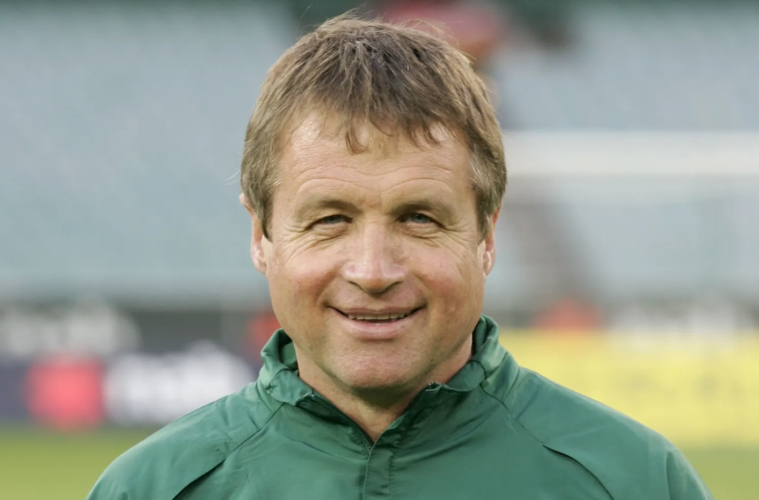





From the passionate days of the NSL to shaping the next generation of Australian footballers, Brian Macnicol has seen it all.
A former player during the golden era of the National Soccer League (NSL) and now a youth development coach, Macnicol brings decades of experience and insight into football.
Macnicol is mentoring young talent in today’s professional environment and working with academies to help nurture the current young group into becoming top level footballers.
In a wide-ranging chat with Soccerscene, Macnicol reflects on the raw passion of the NSL, compares past and present youth systems, and weighs in on the potential for a new golden generation in Australian football.
Theo Athans
You played early in your career in the peak of the NSL days. Can you describe the passion of the NSL compared to how it is now?
Brian Macnicol
You couldn’t compare with the local derbies especially South Melbourne vs Heidelberg, which was the pinnacle, and its similar to a Victory vs City game these days.
But the supporters were incredibly passionate for every game and especially for their ethnic backgrounds so it meant something to them. Even as players like myself who weren’t Greek born or a particular ethnic background of a club, we still understood what it meant for them.
Melbourne Croatia and Preston Makedonia were crazy. I remember the day we got police escorted out of Preston early in the 90’s so it was crazy back then.
It’s changed for the better now because young kids are involved but yeah, the NSL was extremely passionate. They were great days.
T.A.
How professional was the NSL back then? In terms of quality on the pitch and the facilities.
B.M.
I have had this discussion before with people about then vs now and you can’t really compare. It’s sort of like comparing house prices today to back in those days where it’s changed completely.
Like I said, it’s for the better, these guys in the A-league today have incredible facilities. I worked for George Kotses at Southern Motors cleaning cars who were the major sponsor of the club and you’d be in the sun working hard all day then drive straight to training where these days they don’t have that.
In terms of quality on the pitch, we had the Viduka’s, the Mehmet Durakovic’s, the Stevie Blair’s you know there’s a list of players who were quality.
Stan Lazaridis had a great career, I played with Doug Hodgson and Sean Murphy who both played in England, and Kevin Muscat who was a great player and has a great coaching career.
Compared to these days, technically the players are superior to us but that’s maybe because they’re training day in and day out, so everything improves. Instead of only having two hour training sessions, three nights a week, these guys are training everyday with programs from Strength and Conditioning coaches, physios, analysis, recovery and dieticians.
At the latter end of my career with Jeff Hopkins as coach he tried to bring in a bit more professionalism but it was hard because the money wasn’t the same as it is these days.
My nephew Quinn, who is at Brisbane Roar, he’s only 16 but I think he’s earning more money than I earnt in a whole year at u16’s.
There were quality players back then and everyone would have been better with the programs they have these days. It’s a shame, it’s just the times I suppose.
They’re so lucky, and I don’t mean that in an envious way, but I try to teach the kids I coach that they are lucky.

T.A.
You coached at the u20’s and u21’s NPL level early in your coaching career. How did that help you develop into the coach you are today, especially with youth development?
B.M.
I had an association with Chris Taylor, I started with him probably 10 or 12 years ago and he was at Dandy Thunder doing the first team and brought me on as his assistant. We crossed paths at Southern Blue Tongues which was a representative summer program and we got to know each other from there so he took me to Dandy Thunder NPL Seniors.
Then he more or less took me where he went and I followed him because there was a bit of respect there. He took me to South Melbourne and from there we went to Oakleigh so I’ve learnt a lot of my coaching methods and strategies under Chris Taylor so I owe a big thanks to him for giving me these opportunities and set me up in my coaching career.
T.A.
What motivated you to get into coaching after your playing career?
B.M.
The one person that motivated me was probably my dad. He has been coaching all his life and had an association with Craig Moore. At a young age he was coaching the state teams and he coached me, same with my brother who is the technical director for Rochedale in the NPL up in Brisbane.
It’s sort of in the family, it’s something I enjoy doing and now I’ve dropped down from doing the u23’s to the younger age group which I enjoy because you’re developing them into top players. I have already seen some good players go on and have a great career like Matt Millar and Jacynta Galabadaarachchi who is playing up in Portugal.
It’s really nice to see that you invest something into these guys and they go on to live their dream as professional footballers.
T.A.
Speaking on youth player development, how do you compare the youth environment now to back in your day when you first started playing?
B.M.
I’m actually working with Jai Ingham in his academy, and he has a successful academy under Malvern so I’ve been with Jai for a year and a half now and it’s very professionally run. Great coaches have been involved like Joe Guest, myself, big Harry Sawyer so these sorts of players are coaching.
Going back to my days and comparing it to now, they just have way more information these days. No disrespect to the coaches back then but they didn’t have to do coaching badges like every coach now so back then I never did any strength and conditioning work, video analysing or had any dietitians to help me out.
With Jai’s academy, everything is very structured, all sessions are well planned and it’s high intensity so everything is very professional in that sense.
Like I said earlier on about the NSL days, we were working full time and then having to go play football after compared to these days having a full time role.

T.A.
And do you believe the youth system is good enough in Australia at the moment?
B.M.
I went overseas last year and took a young academy to the UK with Mitch Nichols and we did tours of Cardiff, Southampton, QPR and finished off at Tottenham with Ange.
We got to play tier one academies with our group of young boys and we competed really well. We gave every academy we played a decent game, the only team that gave us a bit of a footballing lesson was Tottenham who beat us 5-2.
They were superior to the others but our boys did really well so we asked the question ‘what do you think is special about these academies?’ and they were saying around the age of 15 and 16 they start to get kids from all different parts of Europe and that’s where it starts to pick up in quality.
Obviously, the facilities they have are on another level and even the coaches they had, I think the u16 coach they had used to coach at the Premier League level. But it was a fantastic experience to play these teams in their training facilities in a new environment.
I guess the point is we weren’t far away from these clubs but as they start to get older and recruit from Europe, so that widens the gap.
No youngsters from Europe are going to come to Australia, are they? They’ll go to countries where football is their number one sport.
T.A.
The Socceroos golden generation has come and gone but do you think the current NPL and A-League development system can produce world class players again?
B.M.
You’d hope so. I was reading about Tom Waddingham from Brisbane Roar and they were liking him to Viduka which is an unbelievable statement this early in his career. Viduka was top scorer in the NSL at 18 so he was on another level.
I’m not exactly sure why we haven’t replaced that golden generation because we have better facilities, coaches and programs in the current day compared to back then but I just don’t think the mentality of players these days is the same.
I played with a few players who were physically and mentally strong whereas these days the anger has been taken out of the game a little bit.
I’m sure it’s a question that a lot of people want to answer but even a name comes to mind, Jo Biskic, who I had a bit of experience playing with at Heidelberg United and he was a terrific player technically. Even the Melbourne Croatia boys were all fantastic in their own right, it was an incredible team.
All we can do is keep working hard, give the youngsters all the information, facilities and coaching we can and hopefully we do produce these players again.
As a country we seem to lack a proper number nine. Defensively I think we’re really good, you’ve got the two centre backs in Harry Souttar and Cameron Burgess then you’ve got Bos and Geria as full backs. But it’s lacking those attacking players and especially that number nine.
You’d want to beat Bahrain and these other countries but in saying that every country is improving at the same time so we have to keep up.