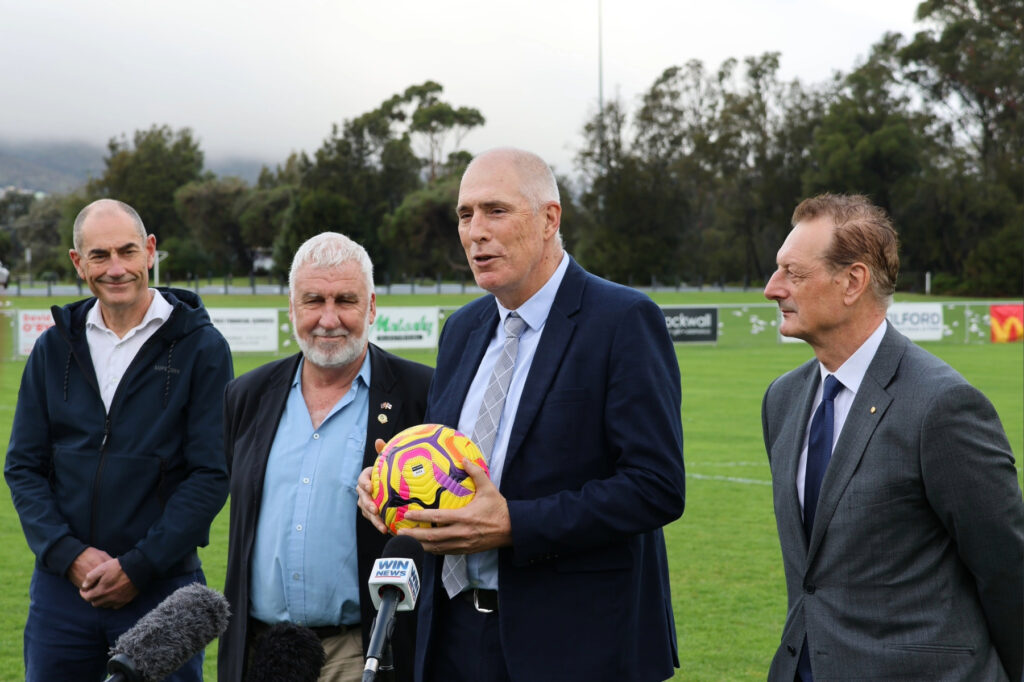




Kimon Taliadoros played for some of Australia’s biggest clubs in the National Soccer League, and joined Football Victoria (FV) as president of the federation in 2015 before becoming Chief Executive Officer (CEO) in February of this year. He spoke to Soccerscene about the challenges he has faced so far at FV, increasing participation in football, and how sport serves as an escape for many in our community.
Q. What challenges have you faced as CEO of FV?
Taliadoros: Football has the most significant challenges, however the most significant opportunities, because we part of the global game. Within Victoria, we have an extremely competitive marketplace with Melbourne effectively being the hub for Australian sport, and Australia’s national sports – cricket, AFL, basketball, and netball. The extremely competitive local market competing for resources, support and athletes remains the ongoing challenge for football.
Q. How can FV further engage upcoming athletes to win them over to football?
Taliadoros: We believe that if we can attract people to try football in any of its numerous formats – small-sided, full-sized, social football, futsal, boys, girls, men, women, people of all backgrounds and genders – and we can produce an enjoyable game day experience we can continue to develop that relationship with the sport, that will turn into a lifetime engagement with the sport in a number of different ways – as a player, as an official, as a volunteer or as a fan. We hope to engage with someone who enjoys the benefits of a lifetime relationship with football.
Q. How important is having pathways for inclusion in football?
Taliadoros: It is critical that football is accessible for all. It is Football Victoria’s obligation to ensure that it is available to everyone. From a gender perspective, we set ourselves a target of 50/50 participation by 2027 back in 2018, and we committed to achieving that not only from a playing perspective but also from a refereeing, coaching and administrative perspective. At the very heart of our purpose is to ensure the football experience is available to everyone who lives in Victoria.
Q. Phil Brown mentioned increased participation in Powerchair Football is a goal for Capital Football, does FV have any similar goals?
Taliadoros: We intend to expand all our programs in Victoria until we meet demand, including for blind football, AAA, women and girls, wheelchair and power football. This satisfies the goal of being accessible, which is a really important word, ensuring it is available for all. This covers a range of criteria, including the format, the cost, and the convenience. This has been the heart of our role as Football Victoria, as custodians of the game, and it remains our goal.
Q. The price of playing football in Australia is often discussed, how can we make it cheaper to play?
Taliadoros: It is a significant challenge for the football ecosystem. The football economy has historically relied on a user-pay system, so the grassroots has subsidised the football economy in Australia. There are two ways we can try to address the pricing issue. The first is to increase the supply of football, which would lead to a reduction in prices through more football more often, more clubs, and more facilities. The second element of that is being able to generate a football economy that results in the professional game being able to contribute to the development of football in much the same way as cricket, AFL, and NRL – the most popular professional sports in Australia – invest significantly in their communities.
Q. How do we achieve that?
Taliadoros: It’s the growth of our key brands. Our Socceroos, Matildas, our underage teams, and the FFA Cup. All those commercial brands and assets that are critical to being able to generate a commercial outcome that can be invested in grassroots to further develop and grow.
Q. Does the disruption from lockdowns have the potential to drive up prices and make football more inaccessible?
Taliadoros: Not necessary, the disruption may have an impact on clubs from an income perspective. From a sports perspective, the demand is high at all levels, increasingly so from a community sports perspective. Community sport is increasingly being recognised as essential to our social fabric, so that has resulted in a very strong interest in participation. I wouldn’t have thought that would have been an impact on cost, but certainly, it would have affected families in certain ways.
One area that has been affected, because it has had such a significant effect on small businesses, is the strain on clubs who typically rely on small businesses for sponsorship and support. There has been an impact on clubs from a revenue perspective. The other area we have seen impact is the number of volunteers. They have come in fewer numbers, which means the demands around COVID Safe community sport are considerably greater, so there has been an additional strain on clubs to put on their community football.
Q. We are seeing how important sport is to society, is football an escape for people in these times?
Taliadoros: Without a doubt. We know this because we’ve had three lockdowns, and for every lockdown we’ve had this year in Victoria, we’ve had constant demand on our communications that clubs are provided with the latest information to enable them to get back to playing as soon as possible. This is essentially driven by their players, their coaches, and their local communities. We have very strong evidence that community sport from a football perspective has a greater demand now, perhaps even more so than ever before.”
Q. What will be the biggest challenges for FV this year and going forward?
Taliadoros: Our biggest challenges remain the same as they have been for the past five years, and even before that. We have a demand for playing football exceeding the ability to provide opportunities. This generally means facilities, which is a challenge. The second greatest challenge is to ensure that we can drive effective take-up and participation from women and girls. We need to leverage the incredible Matildas, the home of the Matildas that is being built out at La Trobe, and the Women’s World Cup arriving in two years. Those are the two greatest challenges that will remain for Football Victoria.