


Football Queensland Locks In Major BildGroup Partnership to Supercharge Facility Growth Statewide

Football Queensland has announced a major new partnership with BildGroup, a move expected to accelerate the upgrade of club facilities, changerooms, clubhouses and synthetic fields across the state. Building on the momentum of record infrastructure investment — and following BildGroup’s role as a Major Partner at the 2025 Queensland Football Convention in October – the alliance positions Queensland football for stronger long-term growth, improved standards, and better resources for clubs and communities.

Building for a successful future

With record levels of investment already secured, the alliance with BildGroup is another reflection of Football Queensland‘s commitment to providing its players and clubs with quality resources and facilities.

Furthermore, as the Official Infrastructure & Surfacing Partner, BildGroup will play a vital role in Football Queensland’s short and long-term future.

“We know that the improvement and upgrading of football facilities is crucial to supporting the ongoing growth of our game, and today’s announcement marks the beginning of a long-term collaboration with BildGroup designed to improve infrastructure planning and elevate facility standards statewide,” explained Football Queensland CEO, Robert Cavallucci.

“As an industry leader in construction, civil infrastructure and sporting surfaces with a commitment to innovation and improvement, BildGroup bring particular expertise in the construction of changerooms, club houses and synthetic fields through their specialist sports field construction business, TurfOne.”

Having already worked together at the 2025 Queensland Football Convention, at which BildGroup stood as a Major Partner, it is clear that both organisations enjoy a shared vision for the game.

A symbolic partnership

This is a collaboration founded on an essential principle: commitment to growth and development. It is not about building short-term or temporary improvements, but about laying the groundwork for a sustainable and exciting future for Football Queensland. .

“BildGroup is proud to partner with Football Queensland in a shared commitment to building strong foundations for the future of the game,” said BildGroup CEO, Stephen Hill.

“For us, this partnership is about more than infrastructure. It’s about supporting local communities and creating opportunities for players, volunteers and clubs to thrive.”

Although the team at BildGroup will be constructing high-quality facilities, leading specialised workshops and delivering online sessions, we must remember the importance of what we are witnessing.

With every blueprint approved, workshop delivered and surface installed, the partnership between BildGroup and Football Queensland will be a driving factor in football development statewide for years to come.


About BildGroup

BildGroup is a multi-disciplinary contractor with a strong presence across Australia. Founded in 1979, BildGroup has since grown its workforce and expertise to cover services in civil infrastructure, urban development, landscaping, sports field construction, road profiling and asphalt paving solutions.

They remain committed to delivering projects of the highest quality to their partners, but without compromising on the physical and mental well-being of the team.

For more information about BildGroup and their work, read here.
Previous ArticleNext Article

Community Spirit Shines on AFC Grassroots Football Day 2026

This week, Football Australia (FA) celebrated AFC Grassroots Football Day 2026, championing the people and communities who continue to hold up a safe, inclusive and supportive environment in the football landscape.

‘For all, for life’

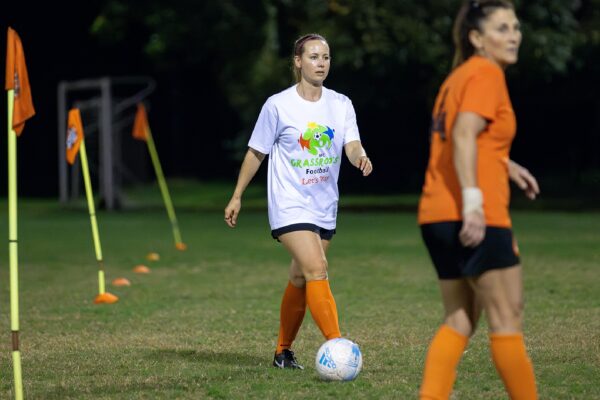
In collaboration with Football NSW, Canterbury Football Association and community club, Balmain & District Football Club, the day reflected the very best of what football provides.

The event brought in participants of all ages – from 4-74 years-old – and reached a total of 400 people. Girls-only programs, all-abilities sessions and over-age football ensured all were catered for.

Such a diverse range of participants builds on a wider drive during FIFA World Football Week, which seeks to promote the sport not just as the dazzling lights of 100,000-seater stadiums, but as a way to foster community spirit and social development.

Furthermore, FA support through its Club Changer program was a welcome addition to the action, emphasising the organisation’s commitment to nurture a real love for the game across communities in Australia.

“Through Club Changer we support our clubs to provide a safe, fun and enjoyable environment where everyone is welcome; whether that be as a player, volunteer, referee or supporter,” explained National Program Manager Club Development at FA, Grace Lambourne.

“Everyone should feel they belong and are welcome to play, stay, and love the game.”


A welcome celebration

While the upcoming FIFA World Cup will no doubt inspire millions of future Socceroos and Matildas, events like the AFC Grassroots Football Day represent something beyond just inspiration.

It is a platform. An opportunity to express a love for football and to connect with others while doing so.

And connections between the professional and grassroots game is more important than ever if Australia is to nurture the next generation of talent.

This is particularly clear in the rise of women’s football across the nation. Since the FIFA Women’s World Cup, female participation rose by 32%, and registrations for the MiniTillies Program skyrocketed from 264 in 2023, to 1223 in 2024.

The professionals spark passion. But communities turn that passion into playing time.

That is why celebrating grassroots football – and the volunteers and families who sustain it – is a vital part of Australia’s football future. Together, FA and the AFC are creating strong foundations built on positivity, engagement, and inclusivity for all with a love for the beautiful game.

What do Football Queensland’s Annual Numbers mean for Australian Football?

Football Queensland has released its 2025 Annual Report, revealing record total revenue of $25.3 million, participation exceeding 296,000 and more than 94,000 female participants across the state, as the organisation positions itself for a decade of growth leading into the Brisbane 2032 Olympic and Paralympic Games.

The report, released following the Annual General Meeting on Friday May 22, documents a year in which Football Queensland recorded a pre-depreciation surplus of $306,599 while maintaining participant registration fees at their lowest level among all Australian member federations for the fifth consecutive year. A statutory deficit of $269,860 after depreciation was recorded following the recognition of a $295,953 impairment against a long-outstanding debt owed by Football Australia, a matter the board and executive indicated they would continue to pursue.

Total revenue grew from $23.9 million in 2024 to $25.3 million in 2025, driven by increases across registration income, community and advanced football programs, and other income streams. Commercial revenue declined slightly from $3.66 million to $3.36 million across the same period.

Growth on and off the field

The participation figures embedded in the report underscore the scale of the challenge and opportunity facing Queensland football. Women’s and girls’ participation reached 94,165 across all programs, with club-based women’s and girls’ participation growing to 37,946. Coles MiniRoos participation climbed seven percent to 46,448, with female MiniRoos participation up ten percent.

Girls United programs welcomed more than 3,500 participants across leagues, social sessions and carnivals statewide, while the Q-League Schools Competition has now delivered playing opportunities to close to 1,000 students since its inception. Walking Football continued to expand, with the 7th Annual QUT Walking Football Cup attracting 39 teams and more than 300 participants.

Digital engagement also reached new heights, with FQTV livestream views climbing to 2.47 million and women’s viewership surging 67 percent across the year, a figure that reflects the growing audience for female football at state competition level and points to the commercial opportunity the women’s game represents for Queensland football governance.

Coach registrations grew 22.9 percent, with Football Queensland delivering courses to close to 3,000 participants across the state including dedicated all-female Foundation of Football, C Diploma and B Diploma programs. Referee registrations grew 6.3 percent, supported by 170 courses delivered to more than 2,100 attendees and a landmark Memorandum of Understanding with three of Queensland’s leading school sport associations to strengthen referee development pathways.

The 2032 dimension

Perhaps the most consequential element of the 2025 report is Football Queensland’s progress on the Brisbane 2032 infrastructure agenda. The organisation submitted a comprehensive proposal to the Queensland Government’s 100-Day Olympic Infrastructure Review, advocating for a purpose-built Tier 2 rectangular stadium, upgrades to Perry Park and the establishment of a Queensland State Home of Community Football at Meakin Park.

The submission secured meaningful outcomes, with Queensland Government contributions toward Perry Park and a State Home of Community Football included in the government’s 2032 Delivery Plan. The infrastructure foundations being laid now will determine whether the Games leave a lasting legacy for football in Queensland or a missed opportunity.

CEO Robert Cavallucci said the year had been defined by investment in the structures that make participation possible.

“Our priority remained the delivery of accessible and inclusive participation opportunities for all Queenslanders as our community and social programs reached thousands of players in every corner of the state,” Cavallucci said.

Most Popular Topics

Editor Picks

Send this to a friend