Football Coaches Australia presents ‘The Football Coaching Life Podcast’ S3 Ep 4 with Gary Cole interviewing Belinda Wilson

Gary Cole

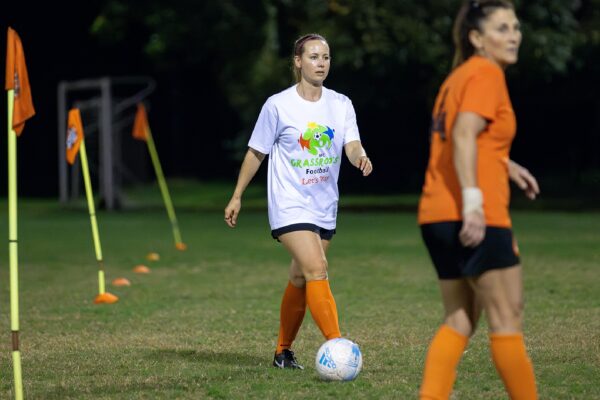
Belinda Wilson began her football journey in Byron Bay on the far north coast of NSW. She is currently enjoying autumn in Zurich, Switzerland where she is the Senior Technical Development Manager, Women’s Football with FIFA. A remarkable achievement for a young Australian Coach and Administrator.

After falling in love with the game on a family holiday to the UK, Belinda returned to Byron Bay unable to play as she was a girl. At the time there were no girls’ competitions and girls weren’t allowed to play with boys. She was eventually allowed to play as a twelve-year-old in the senior women’s team.

Her coaching journey began as a teenager coaching her younger brothers’ team from U6 through to U13’s. Her talent saw her be rewarded as coach of FFNC U14 girls’ representative team.

Belinda has worked as the Coach Education Manager for AFC, been in fulltime club roles in Sweden and Denmark. She returned to Australia to work with FNSW, NSWIS and Head Coach of the Australian U17 team, also winning a Premiership with Brisbane Roar in 2013.

She was appointed as Head Coach of the Guam Women’s National Team and National Technical Director in 2017 and has also been on the FIFA Technical Panel for World Cups in 2007 and 2011 and the 2008 Olympic Games.

Belinda’s ‘One Piece of Wisdom’ was: “Don’t be afraid to take a risk. Go out there and challenge yourself to see who you are as a person but also as a coach. Take the opportunities and take a risk, the worst that can happen is you end up where you started, and sometimes that’s not a bad place to be.”

Please join us in sharing Belinda Wilson’s Football Coaching Life.

Previous ArticleNext Article

FCA to Host Exclusive Two-Part Goalscoring Workshop Series with Dr Ron Smith

One of Australian football’s most respected coaching minds shares decades of research ahead of the FIFA Men’s World Cup.

Football Coaches Australia (FCA) has announced an exclusive two-part coach education series featuring renowned coach educator and football analyst Dr Ron Smith, offering coaches a rare opportunity to explore the evolving science of goalscoring through the lens of one of Australia’s most influential football thinkers.

The online workshops, scheduled for June 1 and June 8, will examine the historical development, modern trends and future direction of goalscoring in football, drawing on extensive research that formed the foundation of Dr Smith’s doctoral studies.

For FCA, the sessions represent the culmination of more than a year of planning and provide a timely opportunity for coaches to deepen their understanding of attacking play ahead of the FIFA Men’s World Cup.

“Ron’s work on goalscoring has been years in the making and continues to evolve,” FCA President Ian Greener said.

“We felt there was no better time to bring this knowledge to the coaching community than in the lead-up to the World Cup, when coaches around the world will be analysing the game’s best teams and players.”

Across the two sessions, Dr Smith will present findings from his extensive research into goalscoring patterns and trends, examining how the game has changed over time and what coaches can learn from football’s biggest tournaments.

Topics covered throughout the series will include:

  • Historical analysis of goalscoring trends
  • How goalscoring has evolved in the modern game
  • Key patterns identified through Dr Smith’s research
  • Scoring trends across the last six FIFA Men’s World Cups
  • Comparisons between men’s and women’s World Cup tournaments
  • The role of pressing, transition moments and direct play in creating goals
  • Practical coaching implications for improving attacking performance

The two-part structure has been intentionally designed to build upon itself. Session One will focus on the evidence, data and research underpinning Dr Smith’s findings, while Session Two will explore the practical applications and coaching interventions that can emerge from that analysis.

Football Australia has accredited both workshops with one Continuing Professional Development (CPD) hour each, allowing coaches to earn two CPD hours by attending both sessions.

Dr Smith’s coaching and coach education credentials span decades. He has worked extensively with Football Australia, the Australian Institute of Sport and the Socceroos, while also holding coaching roles internationally in Iceland and Malaysia, as well as within the A-League.

His contributions to coach development have helped shape generations of Australian coaches, making this series a valuable opportunity for coaches across all levels of the game.

Event Details

History and Future of Goalscoring – Session One
Date: Monday, June 1, 2026
Time: 7:30pm AEST
Format: Online
CPD: 1 Football Australia-accredited CPD hour

Following the completion of the FIFA Men’s World Cup, FCA is also planning a special panel discussion featuring leading Australian and international coaching voices to analyse the key tactical developments, trends and lessons emerging from the tournament.

Further details regarding that event are expected to be released later this year.

FCA members can attend the workshops free of charge, while guest registrations are available through Eventbrite.

The Man Who Built a Women’s Football Program from Nothing is now an Award-Winning Gender Equity Leader

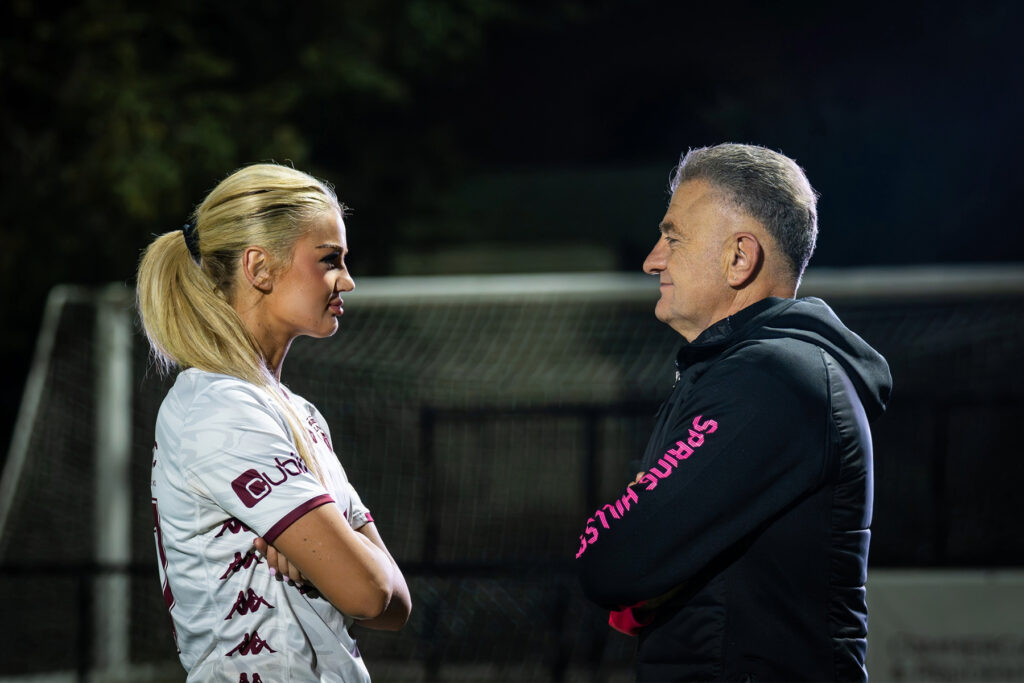
Eight years ago, Spring Hills Football Club did not have a girls’ team. Today it has one of the most recognised women’s programs in Melbourne’s west, a senior NPLW side, and a head coach who has just been named Gender Equity Leader of the Year at the Melton City Council Volunteer Achievement Awards.

Tom Markovski, Spring Hills’ NPLW Head Coach, received the award at a ceremony coinciding with National Volunteer Week, recognised for his community leadership, promotion of gender equality and commitment to advancing the status of women and people of all genders in sport. The recognition comes from outside the football community entirely, awarded by a local council celebrating volunteers across every sector of civic life in one of Melbourne’s fastest-growing regions.

Building from scratch

When Markovski arrived at Spring Hills, women’s football at the club did not exist. His first act was to champion the establishment of the club’s first all-girls team, a process that required persuading a club culture built around men’s football that the investment was worth making.

Women’s football in community clubs has historically struggled to access the same facilities, scheduling priority, coaching resources and institutional support as the men’s game. Clubs have been slow to invest in programs whose return is less immediately visible than a senior men’s premiership, and in a growing outer-suburban community like Melton, where volunteer capacity is finite and demand across every program is high, the case for building something new always has to compete with the urgency of maintaining what already exists.

Markovski made the case anyway, and kept making it across eight years of coaching senior and junior NPL teams while simultaneously building the structural foundations of a women’s program designed to outlast any individual’s involvement. The club’s first all-girls team became multiple junior girls teams. Those junior teams created the pipeline for a senior women’s side. The senior women’s side created visible pathways for younger players to see where the game could take them within their own club.

The outcome is a program that Spring Hills now holds up as central to its identity rather than supplementary to it. The club has become a leader in female participation in Melbourne’s west, and recently made history within the NPLW Victoria structure by fielding junior teams coached entirely by female coaches, a milestone that reflects the depth of the program Markovski helped build.

What the Award Recognises

The Melton City Council’s decision to name Markovski its Gender Equity Leader of the Year places his work in a frame that extends beyond football. Melton is one of the fastest-growing local government areas in Australia, a diverse and rapidly expanding community where the institutions that bring people together, like schools, councils, sporting clubs, carry an outsized responsibility for social cohesion.

Mayor Cr. Lara Carli, speaking at the awards ceremony, reflected on the role volunteers play in communities like Melton’s. “Volunteering creates friendships, strengthens communities and builds a sense of belonging,” she said. “It helps people feel connected, supported and valued, and those things are more important than ever in a growing and diverse community like ours.”

For the girls now playing football at Spring Hills who were not playing anywhere eight years ago, Markovski’s contribution is not abstract. It is the specific and concrete fact of having somewhere to play, someone to coach them, and a pathway that leads somewhere.

Most Popular Topics

Editor Picks

Send this to a friend