


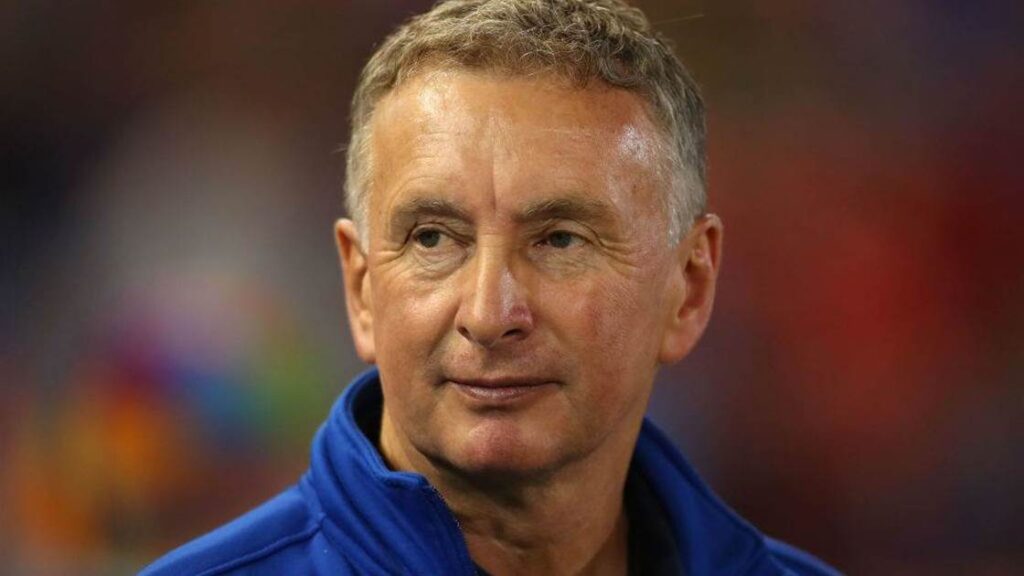
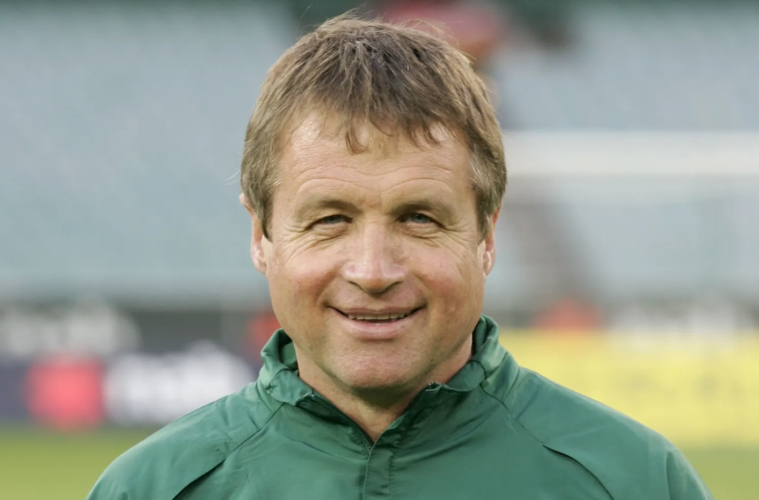
FCA Ambassador Ernie Merrick on being a football coach

The players must have clarity in their roles and a belief in the formations and structures being implemented by the Head Coach.

As often stated, there are only two types of coaches in football – “those that are sacked or those about to be sacked”.  Such is the emotional nature of the sport and the insecurity of the role.

It seems that, in most football clubs, negative short-term results determine the employment status of the coach. How much time are the club Board prepared to allow the Head Coach to build a team for the future?

Football can be simplified and defined as a team invasion game. The objective is to invade territory to an area where goal-scoring is possible. The players must have clarity in their roles and a belief in the formations and structures being implemented by the Head Coach.

A major failure of any player is not being involved in the invasion. Penetration through forward passes and movement is critical and everyone needs to play their part. FEAR is the foremost inhibitor of performance.

There is no doubt, that the noise from the critical and emotional minority affects decisions regarding short-term results – wins or losses.  Logic and reason would favour a coach who strategically plans and implements developmental processes which will deliver sustained success over time. Sir Alex Ferguson won Manchester United’s first EPL Premiership after 7 years and went on to win 13 EPL Championships and 17 other trophies.

The ultimate aim of the coach is to find the line between luck and skill and shift it. Luck plays a role but the implementation of programs that develop skilled technique, tactical decision-making, strategic awareness and game plan execution will grow the club and achieve continued success in the longer term. The Head Coach focuses on the TEAM, however, management is about INDIVIDUALS.

The modern professional game requires expert staff comprised of coaches and service providers to cover all aspects of player development – technical, tactical, physical, mental and personal skills. The Head Coach/Manager must demonstrate that he is able to coordinate the staff and drive change with a clear vision of the processes involved. He must be capable of planning a comprehensive holistic program and develop relationship skills that encourages staff and player buy-in and a willingness to be accountable.

The Head Coach must demonstrate competence in:

  • Enlisting support staff with qualifications, experience and education skills
  • Targeting the recruitment of players who fit specific profiles within the team game plan who have the necessary skill set combined with the right mindset and resilience
  • Implementing a program which clearly defines his coaching philosophy
  • Designing an attacking Game Model that will provide the best opportunity for success
  • Encouraging a brand of football that excites the crowds and makes them feel part of the game
  • Providing the club fans via the media with club driven news and team information

Poor results in the early stages of the coach appointment is not unusual but has to be managed and conciliated. Providing honest relevant information which accepts and identifies problematic issues and a club perspective on how matters will be resolved is always helpful.

Winning teams embrace pressure and the weight of high expectation.

The key to long term success is managing failure and learning from it.

As Einstein states – “Failure is success in progress.” [That’s Jimmy Einstein from Glasgow not Albert].

Previous ArticleNext Article

FCA to Host Exclusive Two-Part Goalscoring Workshop Series with Dr Ron Smith

One of Australian football’s most respected coaching minds shares decades of research ahead of the FIFA Men’s World Cup.

Football Coaches Australia (FCA) has announced an exclusive two-part coach education series featuring renowned coach educator and football analyst Dr Ron Smith, offering coaches a rare opportunity to explore the evolving science of goalscoring through the lens of one of Australia’s most influential football thinkers.

The online workshops, scheduled for June 1 and June 8, will examine the historical development, modern trends and future direction of goalscoring in football, drawing on extensive research that formed the foundation of Dr Smith’s doctoral studies.

For FCA, the sessions represent the culmination of more than a year of planning and provide a timely opportunity for coaches to deepen their understanding of attacking play ahead of the FIFA Men’s World Cup.

“Ron’s work on goalscoring has been years in the making and continues to evolve,” FCA President Ian Greener said.

“We felt there was no better time to bring this knowledge to the coaching community than in the lead-up to the World Cup, when coaches around the world will be analysing the game’s best teams and players.”

Across the two sessions, Dr Smith will present findings from his extensive research into goalscoring patterns and trends, examining how the game has changed over time and what coaches can learn from football’s biggest tournaments.

Topics covered throughout the series will include:

  • Historical analysis of goalscoring trends
  • How goalscoring has evolved in the modern game
  • Key patterns identified through Dr Smith’s research
  • Scoring trends across the last six FIFA Men’s World Cups
  • Comparisons between men’s and women’s World Cup tournaments
  • The role of pressing, transition moments and direct play in creating goals
  • Practical coaching implications for improving attacking performance

The two-part structure has been intentionally designed to build upon itself. Session One will focus on the evidence, data and research underpinning Dr Smith’s findings, while Session Two will explore the practical applications and coaching interventions that can emerge from that analysis.

Football Australia has accredited both workshops with one Continuing Professional Development (CPD) hour each, allowing coaches to earn two CPD hours by attending both sessions.

Dr Smith’s coaching and coach education credentials span decades. He has worked extensively with Football Australia, the Australian Institute of Sport and the Socceroos, while also holding coaching roles internationally in Iceland and Malaysia, as well as within the A-League.

His contributions to coach development have helped shape generations of Australian coaches, making this series a valuable opportunity for coaches across all levels of the game.

Event Details

History and Future of Goalscoring – Session One
Date: Monday, June 1, 2026
Time: 7:30pm AEST
Format: Online
CPD: 1 Football Australia-accredited CPD hour

Following the completion of the FIFA Men’s World Cup, FCA is also planning a special panel discussion featuring leading Australian and international coaching voices to analyse the key tactical developments, trends and lessons emerging from the tournament.

Further details regarding that event are expected to be released later this year.

FCA members can attend the workshops free of charge, while guest registrations are available through Eventbrite.

FA partners with Coca-Cola ahead of FIFA World Cup 2026

The two-year partnership will place the global soft-drink giants as the Official Supplier for Australia’s Men’s and Women’s senior national teams.


Global partner, global stage

As the Socceroos look to deliver performances on the pitch at this summer’s tournament, it is a move off the pitch which will capture the imagination of fans across the country.

Football Australia announced an exciting deal with Coca-Cola, designed to align the global reach of football – and of the brand itself – to unite and engage fans this summer as well as during the FIFA Women’s World Cup 2027.

Thus, through national campaigns featuring prize draws and the chance to access various rewards, Coca-Cola will help to drive passion and interest in upcoming major tournaments.

“This partnership brings together the global scale of Coca-Cola with the passion and reach of football in Australia, creating new opportunities to connect with fans across the country,” explained FA CEO, Martin Kugeler, via press release.

“The upcoming FIFA World Cup 2026 represents a key moment for the CommBank Socceroos, and the Coca-Cola campaigns will help bring supporters closer to the team through unique and engaging experiences.”

Furthermore, with the FIFA Women’s World Cup 2027 also set to enjoy similar campaigns by Coca-Cola, the partnership’s impact and reach will extend across both the men’s and women’s game.


Marketing power

As football continues to grow – both in financial power and population reach – collaborations with global brands are now an expected aspect of tournament build-ups.

The Royal Spanish Football Federation (RFEF) also struck a deal with fashion brand Loewe, set in place for the next four years. In a similar vein, England’s off-pitch teamwear will feature the marks of both Nike and Palace Skateboards, while France will receieve their prematch jersey from Nike and Jacquemus.

This is the state of the landscape. Aligning global brands and household names with a sport capable of reaching billions at once.

Values, reach and connecting with fans. Three key ingredients to a successful collaboration.

Such alignment is key to the partnership between FA and Coca-Cola, as recognised by Managing Director, Coca-Cola Europacific Partners, Orlando Rodriguez.

“For nearly 90 years, Coca-Cola has been a part of the fabric of Australian life – bring people together through shared moments,” said Rodriguez.

“Partnering with Football Australia reflects our continued commitment to connecting communities through experiences that unite the nation, with the CommBank Socceroos and Matildas at the heart of that.”

Most Popular Topics

Editor Picks

Send this to a friend