



Elite Skills Arena’s Smart Training Tools for Every Level of the Game

Elite Skills Arena is a designer and manufacturer of football products, invented to enhance the productivity and efficiency of footballers at all levels.

The company was founded in 2014 by ex-football chairman Eddie Mitchell, famous for owning AFC Bournemouth FC and taking them from the bottom of League Two to Premier League contention.

Elite Skills Arena have sold their technology and products to major league clubs across Europe, including FC Barcelona, Manchester City FC, Southampton FC, and many others, accounting for over 60 clubs and national teams.

Recently, the company signed a tech partnership with the Rangers FC, supplying them with the latest ICONs and Circuit products to be used in the club’s youth programmes and first team.

The company’s mission is to empower coaches by giving clubs the equipment to identify talent, rehabilitate players faster and prevent risk of reinjury, and other technical development while keeping the enjoyment of the game alive.

The ICON

Their flagship product, the ICON, is a dodecagon (12-sided) ‘arena’ with sensors on each panel to analyse the player’s movement, touch, awareness of their surroundings, and passing ability.

The ICON was first mocked up in 2014, later released on the market in 2016, and got the attention of football clubs for its ability to individually analyse and identify each player’s strengths and weaknesses using data. The training product has been used by professional footballers like Cristiano Ronaldo, Luis Suárez, and David Beckham.

The equipment is designed to mimic match-realistic movements for players to fine-tune their skills and abilities on the field and off of the field for footballers who are rehabilitating after injury.

The ICON can also benefit youth development in the sport, allowing coaches to test the skill level of their young players, give appropriate and useful feedback on their game, and give each training session with the ICON a chance for players to express what they’ve learnt.

The ICON comes in several types: the most popular 2.5 m diameter arena Fast Foot, the range of versions each with their own specific features, the ICON Q (known as the ICON Wall) used for academy training, and the ICON CUBE, which is marketed to “force the player away from the centre”.

Elite Skills Arena also provides professionally designed programmes for the ICON to help players target much-needed skills to focus on, as well as develop their physical and mental capabilities while on the field.

The Wireless Circuit

Among other products, Elite Skills has released a range of safe and controlled wireless training products designed to help a football player rehabilitate from injuries without the risk of further pain.

The product, called the Wireless Circuit, covers individual obstacles, training drills, and scoring and sensor equipment to monitor the level of efficiency of the player’s fitness.

Separated into four different modules as well as custom drills, the Circuit is used to relay real-time feedback to coaches on what their players are doing right and wrong, including their physical health, to gain an insight into enhancing performance.

Each module is set up to work on specific attributes and skills footballers need to improve on, including passing accuracy, movement of the ball, and shooting opportunities.

Outside of training, the ICON and other ESA products can also be used for entertainment purposes. At the event, ICONs are rented to allow brands and patrons to show off their football skills. Brands like Tag Heuer, Adidas and Disney have used Elite Skills Arena products at promotional events.

One of these products is the Precision Wall, one of the latest products Elite Skills Arena has made, designed to develop shooting accuracy for players. Similar to the ICON, the player is put in front of a wall of panels and sensors and has to hit the targets when lit up, simulating the pressure of real-time situations.
Previous ArticleNext Article

Community Spirit Shines on AFC Grassroots Football Day 2026

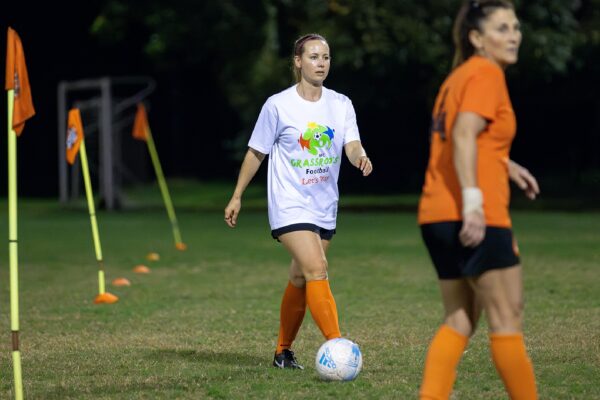
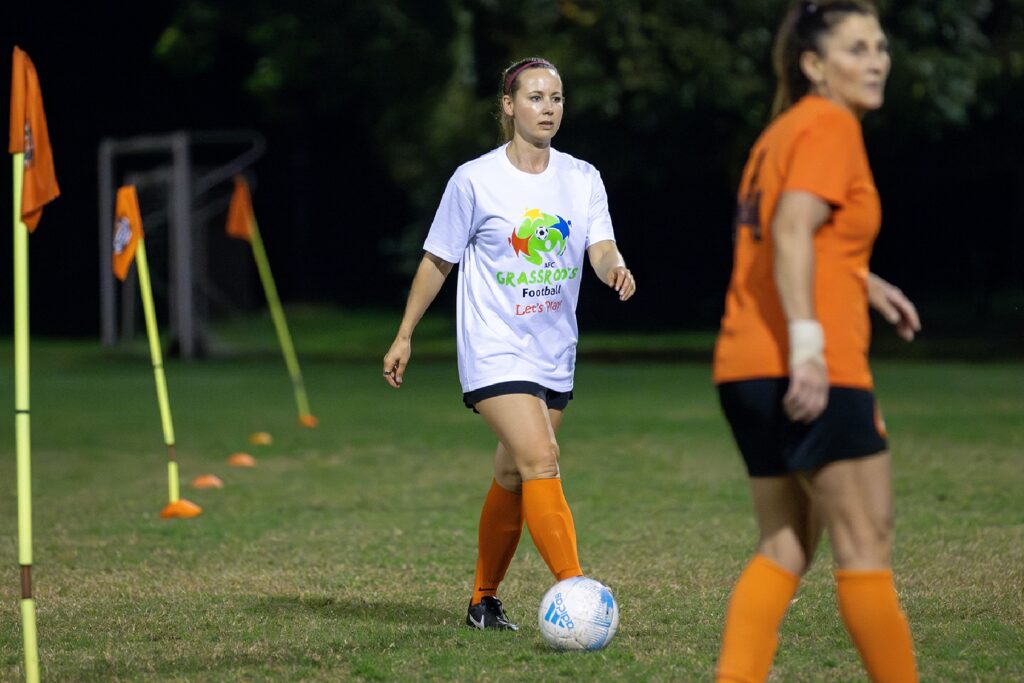
This week, Football Australia (FA) celebrated AFC Grassroots Football Day 2026, championing the people and communities who continue to hold up a safe, inclusive and supportive environment in the football landscape.

‘For all, for life’

In collaboration with Football NSW, Canterbury Football Association and community club, Balmain & District Football Club, the day reflected the very best of what football provides.

The event brought in participants of all ages – from 4-74 years-old – and reached a total of 400 people. Girls-only programs, all-abilities sessions and over-age football ensured all were catered for.

Such a diverse range of participants builds on a wider drive during FIFA World Football Week, which seeks to promote the sport not just as the dazzling lights of 100,000-seater stadiums, but as a way to foster community spirit and social development.

Furthermore, FA support through its Club Changer program was a welcome addition to the action, emphasising the organisation’s commitment to nurture a real love for the game across communities in Australia.

“Through Club Changer we support our clubs to provide a safe, fun and enjoyable environment where everyone is welcome; whether that be as a player, volunteer, referee or supporter,” explained National Program Manager Club Development at FA, Grace Lambourne.

“Everyone should feel they belong and are welcome to play, stay, and love the game.”


A welcome celebration

While the upcoming FIFA World Cup will no doubt inspire millions of future Socceroos and Matildas, events like the AFC Grassroots Football Day represent something beyond just inspiration.

It is a platform. An opportunity to express a love for football and to connect with others while doing so.

And connections between the professional and grassroots game is more important than ever if Australia is to nurture the next generation of talent.

This is particularly clear in the rise of women’s football across the nation. Since the FIFA Women’s World Cup, female participation rose by 32%, and registrations for the MiniTillies Program skyrocketed from 264 in 2023, to 1223 in 2024.

The professionals spark passion. But communities turn that passion into playing time.

That is why celebrating grassroots football – and the volunteers and families who sustain it – is a vital part of Australia’s football future. Together, FA and the AFC are creating strong foundations built on positivity, engagement, and inclusivity for all with a love for the beautiful game.

Geelong Regional Football Hub vision one step closer to reality

A process five years in the making, the Geelong Regional Football Hub (GRFH) will now build its home at Sutcliffe Reserve in Corio.

A major advancement

The project promises to be a major boost for the football community in Victoria’s west.

But the approval isn’t just about addressing the current issues facing players in and around Geelong (with just one football pitch found per 6,971 people), it symbolises an all-important promise to players, coaches and supporters:

A promise to invest, support and grow.

So now, following an extensive process of potential site assessments and council approvals, Football Victoria (FV) will prepare to lay the physical foundations at Sutcliffe Reserve in Corio – ten minutes away from Geelong CBD.

“This is a brilliant result for the sport in Victoria and the start of something truly exciting for football in Geelong and the surrounding area,” said FV CEO, Dan Birrell, via press release.

But despite the obvious anticipation over site approval, there remains one more bridge to cross to bring this project from blueprint to building block: securing funding.


What is the GRFH?

Beyond a mere community football centre, the GRFH will become a world-class hub for playing opportunities, development pathways and venue for several of FV’s most popular competitions.

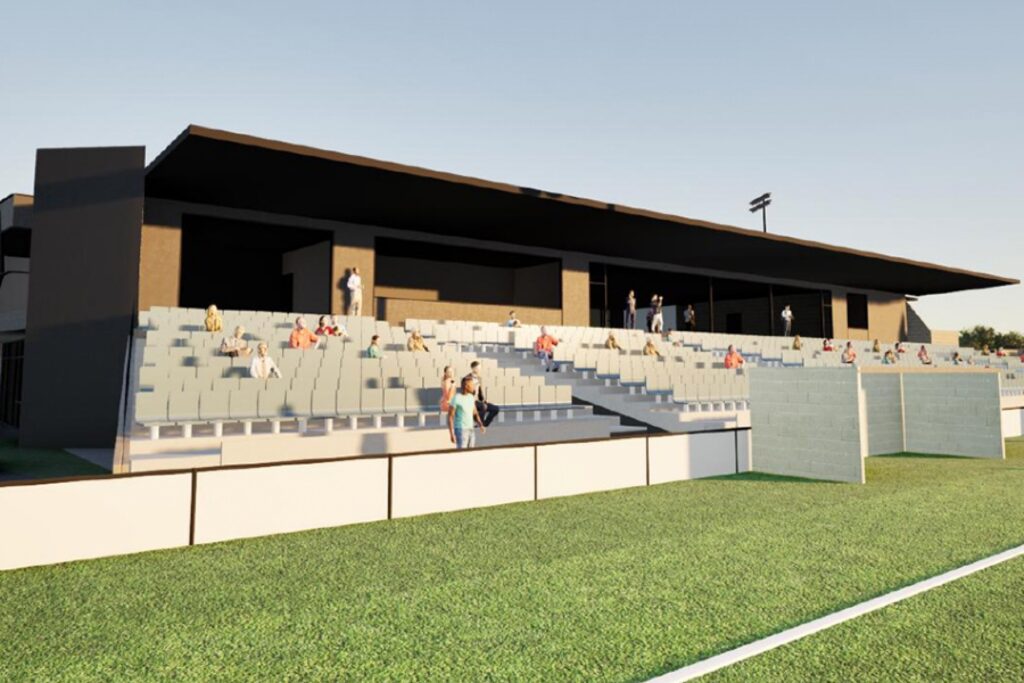
The proposed site will include five pitches, of which two will boast seated stands, as well as two pavilions, social spaces, kitchen and bar areas, media spaces, and facilities for players and match officials.

Such extensive, thorough infrastructure will therefore ensure the site can host an array of competitions for players across the landscape to showcase their talent. From supporting everything from school competitions to NPL VIC Men’s and Women’s games, the GRFH will be a place for player growth, opportunity and community engagement with the beautiful game.

And as Geelong Mayor, Stretch Kontelj, highlighted, the current demand requires investment of this nature as soon as possible.

“With more than 7,370 registered players across the Geelong region, the scale of demand is undeniable. A regional football hub would be genuinely transformational,” Kontelj said via press release.

“It would drive participation across all genders, abilities and levels of the game, strengthen education and development pathways, attract major events and tournaments and deliver lasting social and economic benefits for Geelong and the broader region.

The demand is there. The support is unwavering.

All that remains is the financial backing to bring about real, tangible results for those driving this vision forward.

Most Popular Topics

Editor Picks

Send this to a friend