Could COVID-19 stunt progress towards the Second Division?

The ongoing worldwide pandemic has seen the A-League, as well as all state competitions postpone their fixtures until further notice.

The current situation is bleak, with no timeframe set for when on-field competition can restart or whether the current season will be cancelled in favour of a fresh start next season.

The FFA has a lot on their plates right now and no-one would envy them right now. However, if they’re not careful enough, they could potentially set Australian soccer back several seasons.

The COVID-19 pandemic will end, but things won’t normalise for a long time. The health and safety of Australians is of the utmost priority and thankfully, the country hasn’t been as seriously affected as some.

In saying that, several aspects of the game in our country cannot be sacrificed and must not be put on the backburner.

The National Second Division was easily the most necessary adjustment to the elite level of our sport prior to the COVID-19 pandemic.

Obviously, these bizarre times have altered this. But when the dust settles, and it will, the FFA needs to act upon the National Second Division.

When life-changing events take place, it becomes second nature to drop whatever you’re doing and focus solely on the important matter at hand.

After a while, it becomes easy to forget on what you were originally focused on. Sometimes, it gets left in the rear-view mirror altogether and you never do a U-turn to find it.

The FFA cannot do this to their current plans on the National Second Division.

At the time of writing, no ‘set in stone’ plans currently exist for the FFA and the National Second Division. Nothing concrete has been put to paper.

On the flipside, it is known there are strong motivations to get the ball rolling as quickly as possible. Like a cheese wheel going down a hill.

Weird analogy, but the point remains. The FFA is acutely aware of how important the National Second Division is to the future of the A-League and the sport in Australia, as a whole.

It goes without saying what makes the European leagues so cutthroat and enviable to Australians.

The promotion and relegation, the seemingly endless divisions in countries like England, Germany and Spain. The possibility of playing against some of the best in the world, both domestically and in continental tournaments. The knowledge that if you’re not up to scratch, you can be out the door as quick as the snap of a finger.

Or as quick as a cheese wheel going down a hill. How’s that come up again?

There isn’t as much accountability for poor performance in Australian soccer. If you finish bottom in the A-League, there’s no real punishment. Some seasons can be a real lottery.

The point of all this? To ensure the FFA doesn’t allow COVID-19 to halt their plans on the National Second Division.

They can be excused for ignoring other issues right now, some just simply aren’t essential. But the future of Australian soccer is one of the most essential issues for them.

Let’s say for arguments sake that the FFA planned to introduce the National Second Division at the start of the 2022-23 A-League season.

Let’s also say that the COVID-19 pandemic happened in another universe, allowing them a near uninterrupted 18-24 months to figure out a setup for the National Second Division.

With their current motives to get the National Second Division started, it’s more than plausible that it could become a reality in that timeframe.

However, we live in the universe where COVID-19 has wreaked havoc upon the world and these plans have been temporarily put to the side.

It’s foreseeable that the FFA will allow things to completely settle before they resume planning on the National Second Division.

That is easily one of the biggest mistake they could make at that time, when it comes.

They can’t afford to delay any longer. If they push plans back to 2024-25 or even longer down the line, the game in this country will suffer even more.

We can’t imagine having to make these tough decisions during this time such as cutting or furloughing staff amongst other things.

But if they make the decision to delay the National Second Division plans, they’ll regret it sooner than they think.

We’re hopeful this is not the case.

If you enjoyed this article and want to see more like it, subscribe to our weekly newsletter for more just like it.

Also, get involved in the conversation on Twitter @Soccersceneau

 

Previous ArticleNext Article

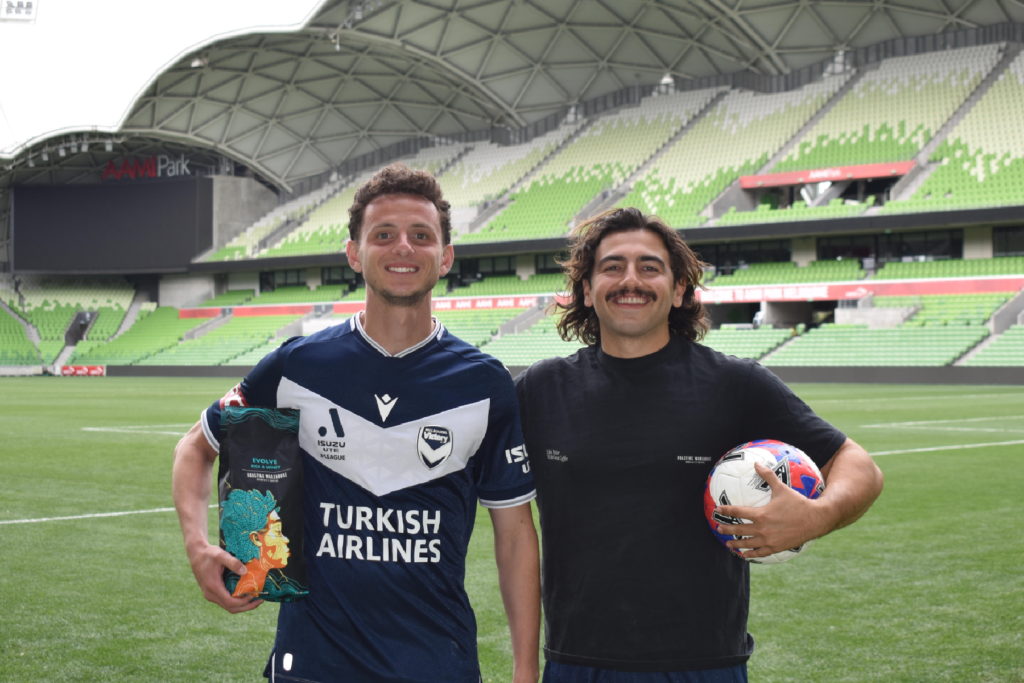
Victory unites with Roasting Warehouse in culture-led partnership

The Melbourne-based anf family-owned business will join the Victory family, uniting two institutions which represent the city’s culture and identity.

A partnership with local roots

As the newest partner of Melbourne Victory, Roasting Warehouse joins forces with a vital part of the city’s sporting landscape.

The club’s Managing Director, Caroline Carnegie, outlined why the partnership bears so much value to both parties.

“We are excited to collaborate with Roasting Warehouse, a community-oriented destination for high-quality coffee, proud of its foundations in Melbourne,” said Carnegie via official media release.

“Football and coffee sit at the epicentre of Melbourne’s culture. The two go hand-in-hand, consistently at the centre of the conversation that stirs Melburnians, which is no different to the conversation sport and Melbourne Victory stir in the State.”

Indeed, this is a partnership which combines the identity, passions and culture of an entire city, therefore giving it the foundations required for long-term, mutual success.

Representing the best of Melbourne

Both Victory and Roasting Warehouse are hugely successful in their respective industries. They are institutions with community-oriented philosphies, who pride themselves on craft and quality.

“We’re incredibly proud to partner with Melbourne Victory, a club that represents the heart, passion, and ambition of Melbourne,” revealed Roasting Warehouse Head of Brand, Alexander Paraskevopoulos.

“As a Melbourne-founded, family-run business, supporting a team that means so much to the local community feels very natural for us.”

Furthermore, through their high-quality blends, Roasting Warehouse will look to prepare Victory’s players and staff for high performances on the pitch as the seasons nears completion.

But this is about far more than just fueling athletes.

This is a partnership which embodies and unites two of Melbourne’s greatest strengths and cultural markers – a connection forged from the city’s very own DNA.


For more information about Roasting Warehouse, click here.

Marie-Louise Eta makes history as new Union Berlin head coach

In an historic appointment, Eta will take over as head coach of Union Berlin until the end of the season.

History in the making

Previously the first female assistant coach in Bundesliga history with Union Berlin, Eta will now take the reigns of the men’s first team on an interim basis.

Currently, the club sit in 11th place in the Bundesliga table, but with only two wins so far in 2026, relegation appears an all-too-real prospect, and one which the club is desperate to avoid.

“Given the points gap in the lower half of the table, our place in the Bundesliga is not yet secure,” said Eta via official media release.

‘I am delighted that the club has entrusted me with this challenging task. One of Union’s strengths has always been, and remains, the ability to pull together in such situations.”

Eta will begin as Union’s new head coach with immediate effect, and will be in the dugout for the club’s matchup against Wolfsburg this weekend.


A step into an equal future

Eta’s appointment signals a major step towards a more level playing field in the football landscape.

Furthermore, Eta joins other coaches including Sabrinna Wittmann, Hannah Dingley and Corinne Diacre who, in recent years, have blazed a trail for female coaches to step into the men’s game.

Wittmann currently manages FC Ingolstadt in Germany’s third division, and was the first female head coach in Germany’s top three divisions.

In 2023, Dingley became caretaker manager of Forest Green Rovers, and thus the first woman to lead a men’s professional team in England.

Diacre, now head coach of France’s women’s national team, managed Ligue 2’s Clerment Foot between 2014 and 2017.


Final thoughts

The impact therefore, is that Eta’s appointment will show future generations of aspiring female coaches that men’s football is an equally viable and possible pathway as the women’s game.

The time is now to level the playing field.

And while it may be a short-term role, its effect on attitudes towards equality and fair opportunities in the game will hopefully resonate long after the season ends.

Most Popular Topics

Editor Picks

Send this to a friend