


Coca-Cola resolves FIFA dispute, sponsors Club World Cup

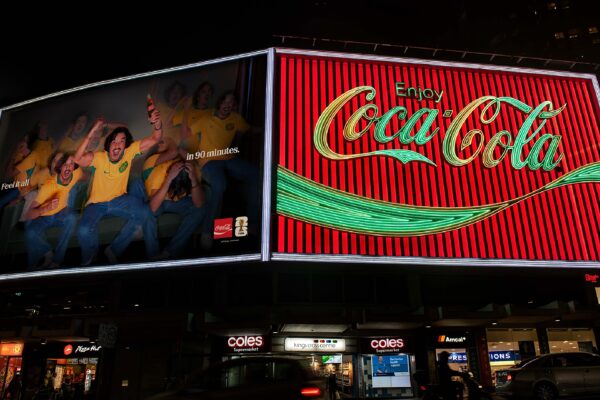
Long-standing FIFA partner Coca-Cola has settled a legal dispute with the international football governing body and will now sponsor the revamped FIFA Club World Cup this June in the United States.

In October 2023, Coca-Cola lodged a legal complaint against FIFA at the Arbitration Centre in Zurich, Switzerland, arguing that its existing partnership agreement should have included sponsorship rights for the Club World Cup.

At the time, FIFA had only secured one confirmed sponsor for the tournament and was reportedly renegotiating contracts with existing partners, a move that left Coca-Cola “less than thrilled,” according to The Guardian.

FIFA’s struggles to attract sponsors

Coca-Cola has a partnership agreement with FIFA that extends until 2030, covering major tournaments such as the FIFA World Cup. The beverage giant believed that FIFA was prioritising new sponsors over long-term partners like itself.

While the details of the resolution remain unclear, Coca-Cola has now officially joined Bank of America and the Saudi Arabia Public Investment Fund as sponsors of the tournament. FIFA will likely welcome this resolution, as reports suggest the governing body has faced difficulties in attracting commercial interest for the expanded Club World Cup, which aims to secure up to 10 sponsors to generate over $1 billion in revenue.

The long-standing partnership continues strong

FIFA Chief Business Officer Romy Gai spoke on the incredible relationship between the two parties despite recent issues.

“The Coca-Cola Company has been involved in stadium advertising at every FIFA World Cup since 1950 and has provided many memorable experiences in global football over the decades,” he said in a press release.

“We are delighted to have such an important and a long-standing partner on board as we usher in a new era in global club football with the FIFA Club World Cup. This will be an exciting, inclusive and a truly global tournament that will ultimately further the development of the club game while delivering value to our partners.”

Brad Ross, Vice President of Global Sports and Entertainment Marketing and Partnerships at The Coca-Cola Company shared the same sentiment.

“Sports partnerships like the one we have with FIFA are an important growth driver for our company, brands and global system, and the FIFA Club World Cup will be a significant moment to bring the world together through the power of sport,” Ross said in a press release.

“Football fans are among the most passionate in the world, and we’re honoured to be part of these moments by refreshing fans and athletes with our portfolio of beverages and providing them with innovative experiences.”

Club World Cup faces backlash

The revamped tournament, which kicks off on 14 June, will feature 32 teams, including 12 from Europe, six from South America, four each from Africa and Asia, five from North America, and one from Oceania.

Despite securing a global broadcast deal with DAZN, the new format has drawn criticism from clubs and players, who argue that additional fixtures will further congest an already demanding football calendar.

Conclusion

The resolution of this dispute reinforces Coca-Cola’s long-standing association with FIFA and provides much-needed commercial support for the Club World Cup.

However, concerns over fixture congestion and the tournament’s commercial viability continue to pose challenges for FIFA’s latest project.

Previous ArticleNext Article

Football NSW calls on clubs to Make It Red for Heart Health Round

Football NSW is calling on clubs and associations across the state to register for the 2026 Make It Red campaign, joining a national awareness movement aimed at reducing heart-related deaths on sporting grounds ahead of Heart Health Round on the weekend of June 5 to 7.

The campaign, developed by the Heartbeat of Football Foundation, asks sporting clubs to wear red, raise funds and build awareness around heart disease and sudden cardiac arrest, which is the leading single cause of disease burden and death in Australia for both men and women, and one that health authorities say is largely preventable through modifiable risk factors.

The call to action comes as the Foundation continues its work to map and register Automated External Defibrillators across NSW sporting facilities, a project that has already engaged twelve football associations and fed data into both the NSW Ambulance GoodSAM registry and NSW Health’s public AED map. The availability of a functioning, registered AED on site is among the most significant determinants of survival following sudden cardiac arrest, with survival rates declining sharply for every minute without defibrillation.

Football NSW is encouraging clubs to engage with the campaign across three areas. Clubs can register for the Make It Red campaign to help fund research, education and prevention programs. Participants, particularly those aged over 35, are encouraged to seek a free heart health screening test from their local GP or enquire about hosting a Heartbeat of Football testing day. Clubs are also urged to ensure their grounds have active, accessible AEDs in place, with guidance available through Football NSW’s Rescue Ready Guide.

The Make It Red campaign runs from June 5 to July 12, with Heart Health Round taking place across the opening weekend. Clubs can register and access participation resources at makeitred.org.

Community Spirit Shines on AFC Grassroots Football Day 2026

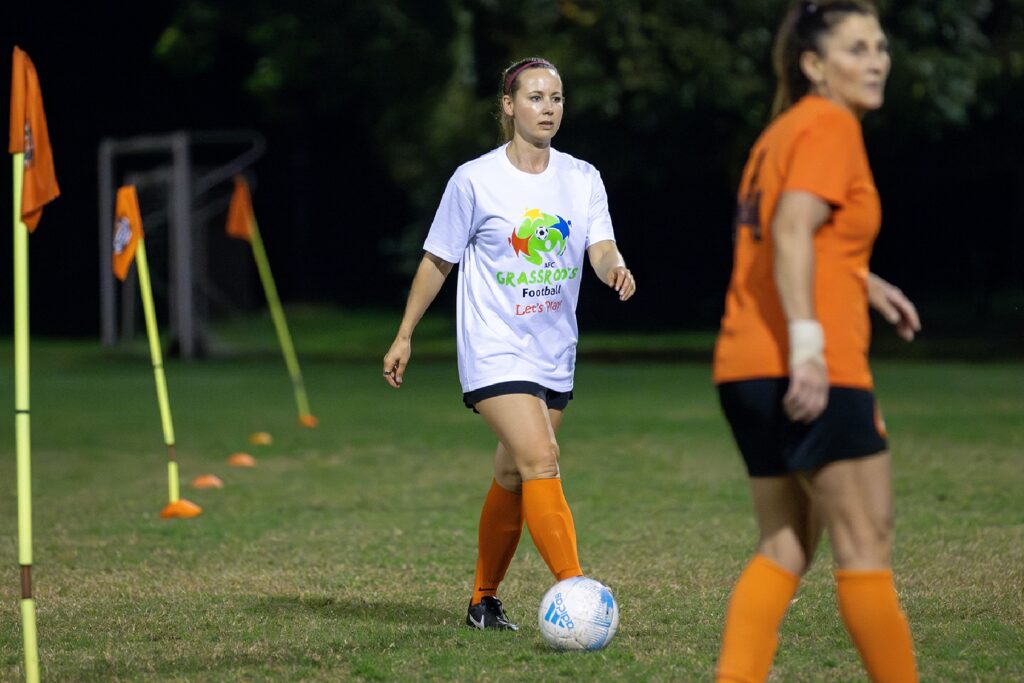
This week, Football Australia (FA) celebrated AFC Grassroots Football Day 2026, championing the people and communities who continue to hold up a safe, inclusive and supportive environment in the football landscape.

‘For all, for life’

In collaboration with Football NSW, Canterbury Football Association and community club, Balmain & District Football Club, the day reflected the very best of what football provides.

The event brought in participants of all ages – from 4-74 years-old – and reached a total of 400 people. Girls-only programs, all-abilities sessions and over-age football ensured all were catered for.

Such a diverse range of participants builds on a wider drive during FIFA World Football Week, which seeks to promote the sport not just as the dazzling lights of 100,000-seater stadiums, but as a way to foster community spirit and social development.

Furthermore, FA support through its Club Changer program was a welcome addition to the action, emphasising the organisation’s commitment to nurture a real love for the game across communities in Australia.

“Through Club Changer we support our clubs to provide a safe, fun and enjoyable environment where everyone is welcome; whether that be as a player, volunteer, referee or supporter,” explained National Program Manager Club Development at FA, Grace Lambourne.

“Everyone should feel they belong and are welcome to play, stay, and love the game.”


A welcome celebration

While the upcoming FIFA World Cup will no doubt inspire millions of future Socceroos and Matildas, events like the AFC Grassroots Football Day represent something beyond just inspiration.

It is a platform. An opportunity to express a love for football and to connect with others while doing so.

And connections between the professional and grassroots game is more important than ever if Australia is to nurture the next generation of talent.

This is particularly clear in the rise of women’s football across the nation. Since the FIFA Women’s World Cup, female participation rose by 32%, and registrations for the MiniTillies Program skyrocketed from 264 in 2023, to 1223 in 2024.

The professionals spark passion. But communities turn that passion into playing time.

That is why celebrating grassroots football – and the volunteers and families who sustain it – is a vital part of Australia’s football future. Together, FA and the AFC are creating strong foundations built on positivity, engagement, and inclusivity for all with a love for the beautiful game.

Most Popular Topics

Editor Picks

Send this to a friend