

In the modern football economy, the transition from elite athlete to administrator is rarely seamless. For two decades, David Williams’ existence was governed by the binary metrics of the professional game: goals scored, contracts signed, and minutes played. From the freezing training pitches of Brøndby to the humid pressure cookers of the Indian Super League, his career was defined by the relentless demand for performance.
Now, following his retirement in November 2025 due to a career-ending ACL injury, the former Socceroo is swapping the stadium penalty box for the grassroots pitch. As the newly appointed Program Development Lead at Football West (FW), Williams is tasked with reshaping the foundational layer of West Australian talent.
A Strategic Coup for the State
For the state governing body, securing Williams is a significant coup. The “ex-pro” circuit is often littered with tokenistic ambassadorial roles, but Williams offers tangible intellectual property. His journey began as a teenage prodigy at the Queensland Academy of Sport, carrying the heavy burden of being labelled the “best Australian prospect since Harry Kewell” by Miron Bleiberg.
He has lived the entire spectrum of the industry: the hype of a European transfer at 18, the volatility of the A-League loan system, and the cultural adaptability required to win titles in India. He understands the mechanics of the “football business” better than most.
“I’m very excited to have this opportunity to stay in football and work with young people,” Williams said. “I’m passionate about youth development and helping them grow, whether that’s as a coach, a mentor or just as a role model.”
The “Role Model” Mandate
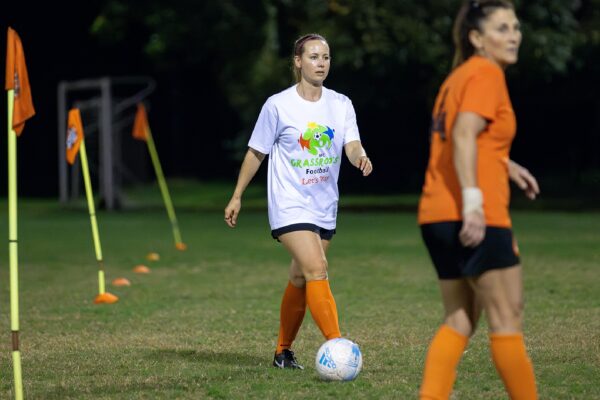
In his new capacity, Williams will oversee the Coles MiniRoos, Football School holiday camps, and school clinics. On paper, these are participation programs. In practice, they are the first point of contact in the talent pipeline.
For FW, leveraging Williams’ heritage is a strategic necessity. As a member of the Indigenous Football Australia Council, Williams understands the structural barriers facing indigenous players. His presence provides a tangible pathway for kids who often feel disconnected from the metropolitan elite.
“Being indigenous, I would love to do some work in the regions and work with young indigenous children through football,” Williams noted. “It would be great to support the regional CPOs (community participation officers) and deliver sessions with these kids. That’s something I’m extremely passionate about.”
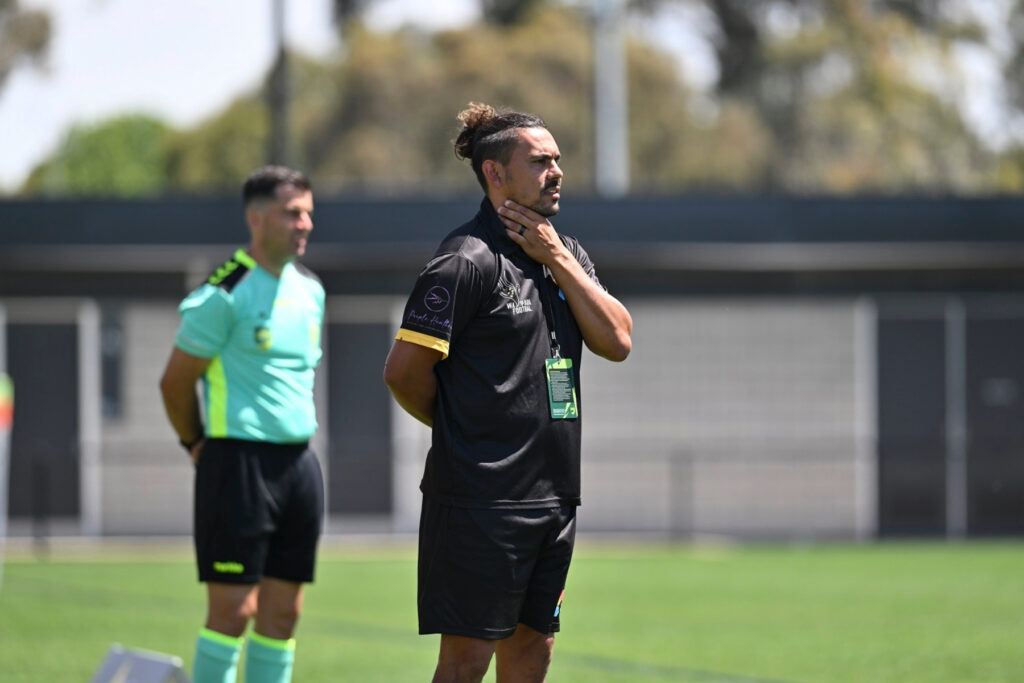
This is not a post-retirement affectation. Throughout 2025, while still nominally a Perth Glory player, Williams was already building his coaching resume as head coach of the Charles Perkins XI: Football Australia’s First Nations youth program. He isn’t just a figurehead; he is an operator actively closing the gap between regional talent and elite opportunity.
Proving the Concept: Success in the Dugout
Williams’ administrative portfolio is backed by growing tactical acumen. In December 2025, he coached the WA Paras State Team to their inaugural national title. For a squad that had frequently been the “nearly men” of the competition, Williams’ high-performance mindset was the catalyst for a historic breakthrough.
“That was an unbelievable experience, especially for the people who have been in the Paras program for a long time and seen them go close so often,” he reflected.
Crucially, this role sits alongside his appointment as Technical Director for NPL WA powerhouse Stirling Macedonia. Williams sits at the intersection of the state’s entire ecosystem as he drives grassroots participation for the federation by day and steers elite NPL structures for a club by night. It signals an ambition to master the technical direction of the game, not just the commercial side.
A Global Perspective, Locally Applied
Williams’ value to the WA system lies in his resilience. He was the first Indigenous player to represent Melbourne City. Williams scored in the UEFA Cup against Eintracht Frankfurt. He won the Indian Super League with ATK.
David Williams understands the technical demands of European academies and the harsh realities of the transfer market. When he speaks to a 12-year-old at a holiday clinic, he isn’t reciting a coaching manual. He is speaking from the experience of sharing a pitch with Alessandro Del Piero. He knows what “elite” actually looks like.
“After I finished at Perth Glory last year, I had some other great opportunities, but I am more passionate about my role within Football West,” Williams said. “This is different.”
As 2026 approaches, Williams faces a new kind of pressure. He is no longer responsible for scoring the winner at HBF Park. Instead, he is charged with ensuring that the thousands of kids in the MiniRoos programs fall in love with the game, and that the pathways he once navigated are accessible to them. It is a different game, but one David Williams is uniquely qualified to play.