




From its origins as a small men’s club with just a handful of junior teams, Beaumaris Soccer Club has grown into one of the largest and most respected community clubs in Melbourne’s Bayside region. With over 600 members, including more than 500 juniors and nine senior teams across men’s and women’s competitions, the club continues to thrive—both on and off the pitch.
Built on the core principle of doing “what’s best for the kids,” Beaumaris SC prides itself on being more than just a football club. It’s a welcoming, inclusive space where players and families from all backgrounds can enjoy the game in a fun, safe, and supportive environment. The club places equal value on player development and community involvement, nurturing not only future athletes but also strong values of respect, sportsmanship, and teamwork.
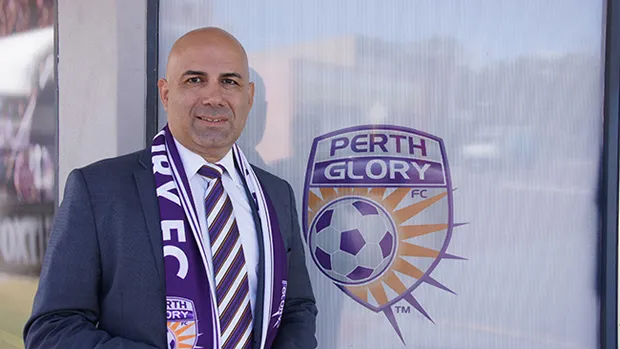
Speaking with Soccerscene, President of Beaumaris SC Joe Mottola, who has led the club for 16 years, shares insights into Beaumaris SC’s evolution, its community-first approach, and what lies ahead for the club in 2025 and beyond.
Can you share some insight into your role as President, and how Beaumaris SC has evolved since you first stepped into that position?
Joe Mottola: I’ve been President for 16 years, and the transformation has been incredible. When I first came on board, we didn’t have any women’s teams, now we have close to 300 girls playing at the club, which is one of our proudest achievements.
Back then, we were a small men’s club with just a handful of junior teams. Today, we’ve grown to over 600 members. It’s been amazing to watch. A major milestone was the construction of our new pavilion, the Council built us a million-dollar facility complete with a kitchen, which has become a real hub for our community.
We also have a fantastic committee made up of dedicated volunteers who each bring something valuable to the table. Their work has been crucial in helping us evolve.
On the pitch, both our senior men’s and women’s teams now compete in State League 1. The men’s team even reached NPL level for a couple of years, but the financial demands were enormous. Sponsorship requirements at that level are tough to sustain, so we made the decision to step back. Still, our juniors have gone from strength to strength.
We’re operating under a very different model now. In the past, we relied heavily on volunteer coaches but the expectations from parents and players have risen. These days, all of our coaches are paid, which helps us deliver a higher standard across the board.
While the committee remains volunteer-based, we’ve had to bring in paid staff, including a club administrator to keep things running smoothly. It’s become increasingly difficult to run a club of this size purely on goodwill. Financial sustainability is now critical, whether it’s through sponsorship, council funding, or government support. That’s the reality for community clubs in this era.

Beaumaris SC has over 500 junior players and 9 senior teams. What do you think makes the club such a strong community hub in the Bayside area?
Joe Mottola: It’s not just one thing, it’s a combination of everything. The committee, the characters, the volunteers, the facilities, they all play a part. A strong community club needs good coaching, a committee that puts the club first without self-interest, and everyone working together on the same page.
Our volunteers are absolutely critical. They help run every aspect of the club, from administration to setting up the grounds, and we try to make things as seamless as possible for parents to register their kids and for the players to enjoy their football. That sense of order and identity takes a huge effort, and when it works, it really shows. I’d say we’re one of the better-run clubs in that regard, from my experience.
But volunteers are always an issue, you can never have too many. On a typical Saturday morning, I might have 12 to 14 volunteers doing short shifts. I still pitch in myself, whether it’s vacuuming, cleaning the changerooms, or chopping tomatoes for the souvlaki!
We do have paid kitchen staff now because it’s such a large operation, and it’s just not sustainable to run something like that entirely with volunteers. But overall, it’s that mix, strong facilities, passionate people, and a shared commitment to the club, that makes Beaumaris SC such a valuable part of the Bayside community.
How is Beaumaris SC investing in junior development and coach education through initiatives like the SHIVER Programme?
Joe Mottola: The SHIVER program is designed to provide advanced coaching for kids of all ages who want to improve their football outside of their regular team training. It’s a program that’s really popular with parents because it offers extra-curricular sessions led by highly qualified and experienced coaches, different from their usual team coaches.
These specialised coaches run the program entirely within the club, offering training twice a week. Players can subscribe to join the sessions, which gives them additional skill development opportunities. Over the years, SHIVER has been enormously successful.

Beaumaris SC’s Junior Director of Football Jamie Hollywood will lead SHIVER which is an integrated and structured coaching and development programme designed to facilitate junior players to achieve their full potential with a focus on making it an enjoyable player experience.
Complementing SHIVER, our coach development is absolutely vital for our club. Last night [14th May], we hosted a Football Victoria coaching course [Foundation in Football] right here in our dining room, with about 40 coaches attending. That’s nearly our entire coaching group. The course combines theory sessions on the big screen with practical drills on the pitch, delivered by Football Victoria’s expert coaching team. It runs over four weeks and offers a fantastic opportunity for our coaches to upskill and become qualified.
We’re always looking for ways to improve and support our coaches because ultimately, better coaches mean better players. It’s a big job, but we’re committed to making the process as easy and accessible as possible. Our goal is to keep improving for the benefit of both our kids and coaches.
Can you tell us about the recent lighting upgrade at Beaumaris Reserve and what it means for the club’s sustainability and match-day experience?
Joe Mottola: The lighting upgrade at Beaumaris Reserve was primarily for training purposes rather than match days, as we’re only allowed to play games during the day due to being in a residential zone on council-owned grounds. This limitation definitely holds us back because if we owned private land, we could play football 24/7 and fill it all year-round.
We share the grounds with cricket during the off-season, which is unfortunate since soccer is really a year-round sport and we could use the facilities more extensively if it were up to us.
That said, Bayside City Council does a lot to support us. Sometimes we’re not on the same page, but we get there eventually. The lighting upgrade itself has improved training conditions slightly, mainly making things more efficient in terms of power and billing, though there’s still more to do.
Luckily, we also have access to another fantastic facility at Beaumaris Secondary College, which we rent from the Melbourne Cricket Club (MCC). It’s a fantastic facility with a FIFA-approved pitch where we can play night games, sometimes until 10pm. While it’s also near residents, having this facility nearby has been a godsend and we’re very grateful to the MCC for their support over the past five years.
Are there any new sponsors or partnerships this season, and how are they helping BSC grow both on and off the pitch?
Joe Mottola: Yes, we’ve welcomed a few new sponsors this season, most notably Optus, who’ve come on board as our major sponsor. They’ve been absolutely fantastic, they’ve provided our playing kits for around 600 kids over a two-year period, which is just extraordinary. They’re not just a name on a jersey either; they’re really hands-on and visible at the club, attending our events and even bringing along outdoor entertainment like inflatables for the kids.
Bendigo Bank has also been a long-term supporter, and we really value that consistency. We make sure to give our sponsors front-and-centre visibility whenever we can. For example, Marshall White Real Estate recently sponsored all the shirts for our Goal Kick junior program. So on the first day, I gave their representative, Jason Swift, the mic for 20–30 seconds to thank him in front of all the families, with a bit of cheeky encouragement to sell their houses through him!
There’s always plenty of humour around the club, we don’t take ourselves too seriously, and I think that’s what makes BSC such a likeable place. We’ve worked hard to create a positive, welcoming culture. For over a decade now, we’ve been feeding players after matches — win, lose or draw — and it’s become part of the fabric here. We’ll even do light interviews with players, referees, and coaches. It’s a fun way to reflect and build community. At the end of the day, If the volunteers and players aren’t enjoying themselves, something’s wrong. That’s the motto we live by, and it’s a big reason why we’ve built such a strong, lasting community.

What would you say is next for the club in 2025 and beyond? Are there any upcoming initiatives or areas of focus you’re particularly excited about?
Joe Mottola: For us, it’s about continuing to build on the foundations we’ve already laid, particularly when it comes to the development of our kids and coaches. That’s always been at the heart of what we do, and it’ll stay that way.
We don’t necessarily have one big, shiny initiative on the horizon, but we do have aspirations. We’d love to see both our men’s and women’s senior teams promoted into the next leagues, the women stepping up from State League 1, and the men doing the same. That’s something we all strive for. At the same time, we’re happy where we are too, it’s about balance. You can be ambitious and still content with what you’ve built.
What’s most important is maintaining a strong, supportive environment where kids can enjoy their football, develop their skills, and grow into good players and even better people. That’s what’s made this club what it is — a well-respected, community-driven club, both with Football Victoria and within the broader football world.
We’ve been fortunate to have some strong personalities involved, including people who’ve played at the highest level. But more than anything, it’s about continuing to do what we do, and doing it well. That’s how we’ll move forward.