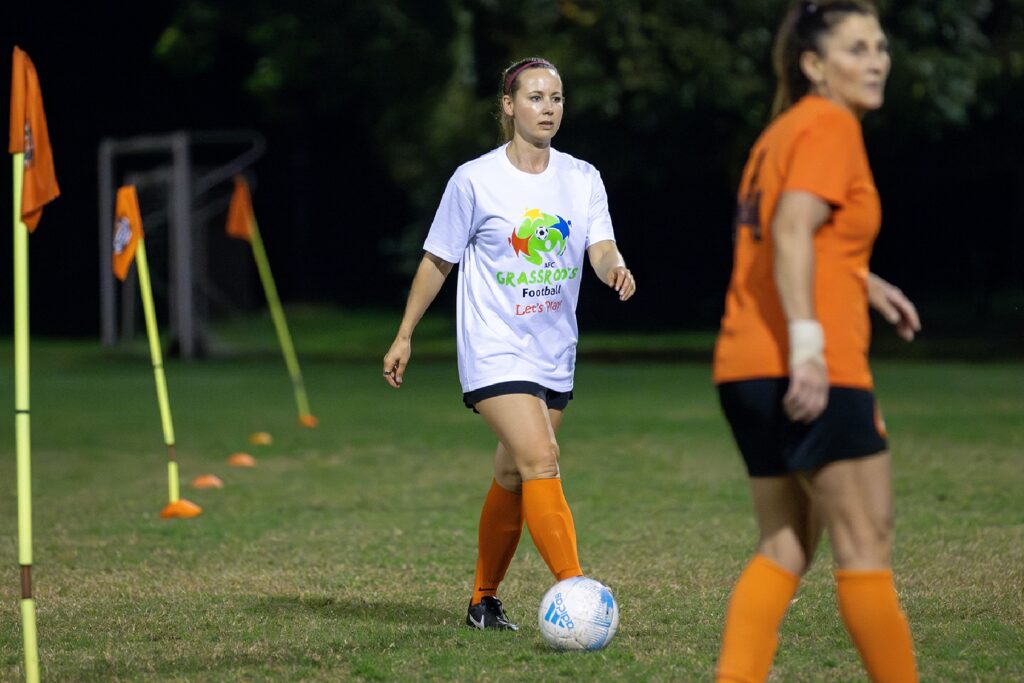

FFA Announce Growth in Female Participation in 2019

In a recent statement, the FFA have revealed nearly two million women and girls across the country played football in 2019.

An 11% increase was made across all seven states and territories, with Victoria achieving a rise of over 50%.

“Our growth is testament to everyone connected with our great game. It’s due in no small part to the progress we’ve made as a sport over the past 24 months and the way our clubs and volunteers have responded and contributed to this achievement,” said Peter Filopoulos, CEO of Football Victoria.

“We have a shared aspiration for our sport to continue to grow and develop, and I’m certain we’ve not even scratched the surface as to the continued growth of our game.

“Our firm agenda to support the ongoing growth and development of our game in Victoria continues through our strategic plan, FootbALLways, which was announced last year.  The plan is about uniting, inspiring and enabling Victorians of ALL backgrounds and abilities to live and love football, for life.”

Women’s sports in Australia has been on a steady incline in the last few years, thanks in part to various different sports all doing their bit.

The AFLW, introduced in 2017 has been a massive influence for young girls, as well as the success of our women’s national cricket team.

They recently captured the ICC T20 Women’s World Cup in a thumping win over India, showcasing them as one of the country’s most successful international sides.

Foxtel also recently used channel 507 as a pop-up channel for women’s sports only called FOXW. It was only a temporary change however, one would suspect it’s something that is being seriously considered down the line as permanent.

The quality and success of Australia’s national women’s soccer team needs no explanation.

FFA CEO James Johnson and FFA Head of Football Sarah Walsh both commented on the census results, stating that they couldn’t be happier.

“I’m particularly pleased that this hard work has resulted in large increases in the numbers of both coaches and volunteers, as they add tremendous value to our game, and I’d like to thank everyone involved for their commitment to our sport.”, said Johnson.

“I’m delighted that more women and girls than ever are now playing football,” Walsh said.

“FFA is committed to increasing diversity and inclusion in football, and we have seen a number of female-football initiatives in the past year that have proved very popular.”

Walsh went on to talk about the importance of the Women’s World Cup bid, something that has been gaining traction for many months now.

“There’s still a long way to go for female football in this country and a lot of growth to be experienced in the coming years. We are aiming for 50:50 gender parity by 2027 and hosting the FIFA Women’s World Cup in 2023 in Australia and New Zealand would fast track our push to reach this target.”

50/50 gender parity as Walsh calls it is perhaps the greatest challenge facing the FFA. Whilst the women’s game is getting the push it fully deserves, there will still be detractors.

2027 seems like a long time away, but unless the FFA can successfully bid on the Women’s World Cup as well as successfully develop our brightest up and coming female players, time will fly by.

The results of this census are certainly promising and that would be mostly down to the success of our elite players.

Yes, there is a huge gap between the community and elite levels. But the two will always be connected, especially when it comes to younger aspiring players.

Do you think that the FFA can reach 50/50 by 2027? Furthermore, how much of an impact do you think the Women’s World Cup would have on that 50/50 goal if the tournament was held here in Australia?

Get involved in the discussion on Twitter @Soccersceneau. Don’t forget to subscribe to our weekly newsletter for more articles just like this delivered to your inbox every Friday.


 

Previous ArticleNext Article

Football NSW calls on clubs to Make It Red for Heart Health Round

Football NSW is calling on clubs and associations across the state to register for the 2026 Make It Red campaign, joining a national awareness movement aimed at reducing heart-related deaths on sporting grounds ahead of Heart Health Round on the weekend of June 5 to 7.

The campaign, developed by the Heartbeat of Football Foundation, asks sporting clubs to wear red, raise funds and build awareness around heart disease and sudden cardiac arrest, which is the leading single cause of disease burden and death in Australia for both men and women, and one that health authorities say is largely preventable through modifiable risk factors.

The call to action comes as the Foundation continues its work to map and register Automated External Defibrillators across NSW sporting facilities, a project that has already engaged twelve football associations and fed data into both the NSW Ambulance GoodSAM registry and NSW Health’s public AED map. The availability of a functioning, registered AED on site is among the most significant determinants of survival following sudden cardiac arrest, with survival rates declining sharply for every minute without defibrillation.

Football NSW is encouraging clubs to engage with the campaign across three areas. Clubs can register for the Make It Red campaign to help fund research, education and prevention programs. Participants, particularly those aged over 35, are encouraged to seek a free heart health screening test from their local GP or enquire about hosting a Heartbeat of Football testing day. Clubs are also urged to ensure their grounds have active, accessible AEDs in place, with guidance available through Football NSW’s Rescue Ready Guide.

The Make It Red campaign runs from June 5 to July 12, with Heart Health Round taking place across the opening weekend. Clubs can register and access participation resources at makeitred.org.

Community Spirit Shines on AFC Grassroots Football Day 2026

This week, Football Australia (FA) celebrated AFC Grassroots Football Day 2026, championing the people and communities who continue to hold up a safe, inclusive and supportive environment in the football landscape.

‘For all, for life’

In collaboration with Football NSW, Canterbury Football Association and community club, Balmain & District Football Club, the day reflected the very best of what football provides.

The event brought in participants of all ages – from 4-74 years-old – and reached a total of 400 people. Girls-only programs, all-abilities sessions and over-age football ensured all were catered for.

Such a diverse range of participants builds on a wider drive during FIFA World Football Week, which seeks to promote the sport not just as the dazzling lights of 100,000-seater stadiums, but as a way to foster community spirit and social development.

Furthermore, FA support through its Club Changer program was a welcome addition to the action, emphasising the organisation’s commitment to nurture a real love for the game across communities in Australia.

“Through Club Changer we support our clubs to provide a safe, fun and enjoyable environment where everyone is welcome; whether that be as a player, volunteer, referee or supporter,” explained National Program Manager Club Development at FA, Grace Lambourne.

“Everyone should feel they belong and are welcome to play, stay, and love the game.”


A welcome celebration

While the upcoming FIFA World Cup will no doubt inspire millions of future Socceroos and Matildas, events like the AFC Grassroots Football Day represent something beyond just inspiration.

It is a platform. An opportunity to express a love for football and to connect with others while doing so.

And connections between the professional and grassroots game is more important than ever if Australia is to nurture the next generation of talent.

This is particularly clear in the rise of women’s football across the nation. Since the FIFA Women’s World Cup, female participation rose by 32%, and registrations for the MiniTillies Program skyrocketed from 264 in 2023, to 1223 in 2024.

The professionals spark passion. But communities turn that passion into playing time.

That is why celebrating grassroots football – and the volunteers and families who sustain it – is a vital part of Australia’s football future. Together, FA and the AFC are creating strong foundations built on positivity, engagement, and inclusivity for all with a love for the beautiful game.

Most Popular Topics

Editor Picks

Send this to a friend