Shay Boyle: Developmental issues send more and more young domestic players abroad

The tyranny of distance remains a challenge for many young Australian footballers looking for opportunities abroad, yet domestic developmental issues for talented teenagers like Shay Boyle also play a role.

Australian parents spend tens of thousands of dollars on academy and registration fees from a very young age; often over-estimating the talent their son or daughter possesses. They are tempted by fame and fortune and lured into the trappings of football professionalism, potentially unaware of just how difficult the road can be.

With obvious failings in Australia when it comes to development, it is highly likely that a significant percentage of our best young players are not fulfilling their enormous potential by remaining on local shores. That fact is causing more and more players to look and head abroad in search of the skills and knowledge required to be a top class professional.

There is a vast chasm between the talented Aussie youngster, seemingly with magic at their feet and the polished and experienced professionals in the lower leagues of European football. No doubt, our best young players can succeed if given the opportunity abroad, however, knowing the recruitment and scouting game is paramount. Parents with experience in it could potentially have much to share with those less versed in the idiosyncrasies of the system.

One man with plenty of experience and nous when it comes to such matters is James Boyle. A Scotsman, he immigrated to Australia in 2010 and in 2018 launched the Football Business Network; an organisation designed to forge connections between the football and corporate worlds, providing mutual benefit.

An astute coach, Boyle has experience at numerous Sydney based NPL clubs and will be working under Rydalmere FC head coach Gavin Rae in season 2020.  He also has a talented young footballer for a son.

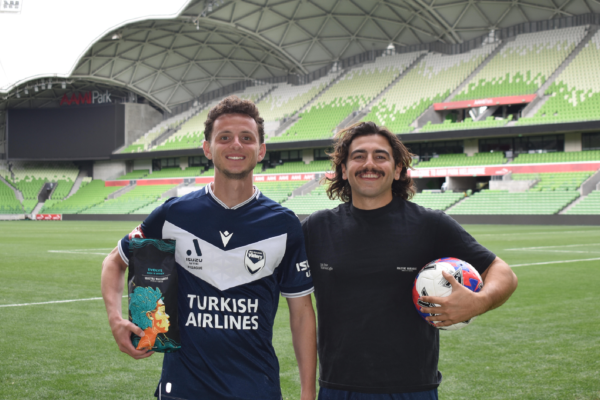
The eldest of his twins, Shay, has recently taken a leap of faith and ventured abroad; granted a spot at the Fleetwood Town FC International Football Academy. The club competes in England’s third tier, League One and stands a chance at promotion after some excellent recent form.

The academy aims to locate and enlist international talent oft dismissed in its domestic setting, something Shay has lived his entire footballing life thanks to his diminutive frame.

The young Boyle has found his football pot of gold with Fleetwood Town. After years of toil, disappointment and some success, a trial with Getafe FC’s youth academy and some interest from Scottish giants Celtic, led to a scout making contact with the Boyle’s in the land down under.

Fleetwood Town were interested and after viewing a professional and extensive YouTube clip that featured edited highlights from hours and hours of his play, Shay was offered a six month placement and flew to the northern hemisphere just before Christmas.

The senior Boyle to me expressed his undeniable belief in the importance of such a professional digital package being presented to prospective clubs. Mounting a compelling case for an international academy to take a punt on a young man from the other side of the world is a challenge, yet Shay’s presentation convinced Fleetwood Town that there was indeed something worth pursuing. The teenager’s professional journey has begun, albeit far from home.

Not a tall boy, Shay has battled against perceptions of physical weakness throughout his career. Year after year, the now 16-year-old was told that his skills were more than adequate, yet that the modern game accommodated few players of his stature. Footballers continue to improve as athletes and the thinking appears to be that potential at a young age is measured by frame size and not always the skills possessed by the athlete.

Boyle has been dogged by such opinions in the Australian domestic scene. Frustrated, his view is that his son may never have received such recognition in his adopted home, thanks to a valuing of size above skill.

It is undoubtedly true that more and more imposing men are taking up the game around the globe and the next generation will once again prove to be bigger and more powerful than the next. Yet for every menacing centre-back, there is a dexterous genius capable of embarrassing the taller and more cumbersome man.

Shay Boyle has always been that player. After watching the scouting clip, it is clear he is undoubtedly skilled and blessed with a football mind and spatial vision. James constantly used former Italian International Andrea Pirlo’s words, “Football is played with the mind and the feet are the tools” as he worked with Shay as a junior footballer.

That sentiment has been the cornerstone of his development as a player.

Socceroos and Olyroos coach Graham Arnold recently called for further investment in the national youth teams, also stating that he sees little being done to develop domestic talent. Whilst Boyle is now receiving the tuition and competition he requires to test himself, Australian football has lost another promising player and depth.

Boyle senior has set up a Facebook page to assist parents of Australian players and arm them with the knowledge required when it comes to pathways towards international academies and opportunities abroad.

Visit YSA – Youth Soccer Australia – Information and Agency on Facebook.com, follow the page and use the collective wisdom of coaches, administrators and parents to inform your knowledge of the sometimes confusing structures in professional football.

Previous ArticleNext Article

The Participation Boom Councils Didn’t Plan For Is Hitting Football Hard

Football in Australia isn’t being held back by passion, participation, or community support. It’s being held back by local government failure. From a CEO perspective, the warning signs are no longer subtle — they’re screaming. Confidence towards councils is collapsing, clubs are done believing the rhetoric, and the people carrying the game every weekend are telling us the same thing: councils don’t understand football, don’t consult properly, and don’t plan for growth. This isn’t opinion anymore. It’s measurable. And it should embarrass every policymaker in the country.

Football in Australia isn’t struggling because of a lack of passion. It isn’t struggling because communities don’t care. And it certainly isn’t struggling because participation is declining.

Football is struggling because, at the local government level, confidence is collapsing. What is more, the people closest to the game can feel it.

Soccerscene’s latest survey on council readiness and football planning shows something deeply confronting: trust in councils is at its lowest point, and clubs no longer believe the rhetoric. Councils frequently speak about “supporting the world game” and “investing in community sport,” but the data tells a different story.

The people building the game every weekend, people such as presidents, coaches, volunteers and administrators, are telling us councils do not understand football demand, do not consult effectively, and do not plan for long-term growth. And that’s not an emotional opinion. It’s now measurable.

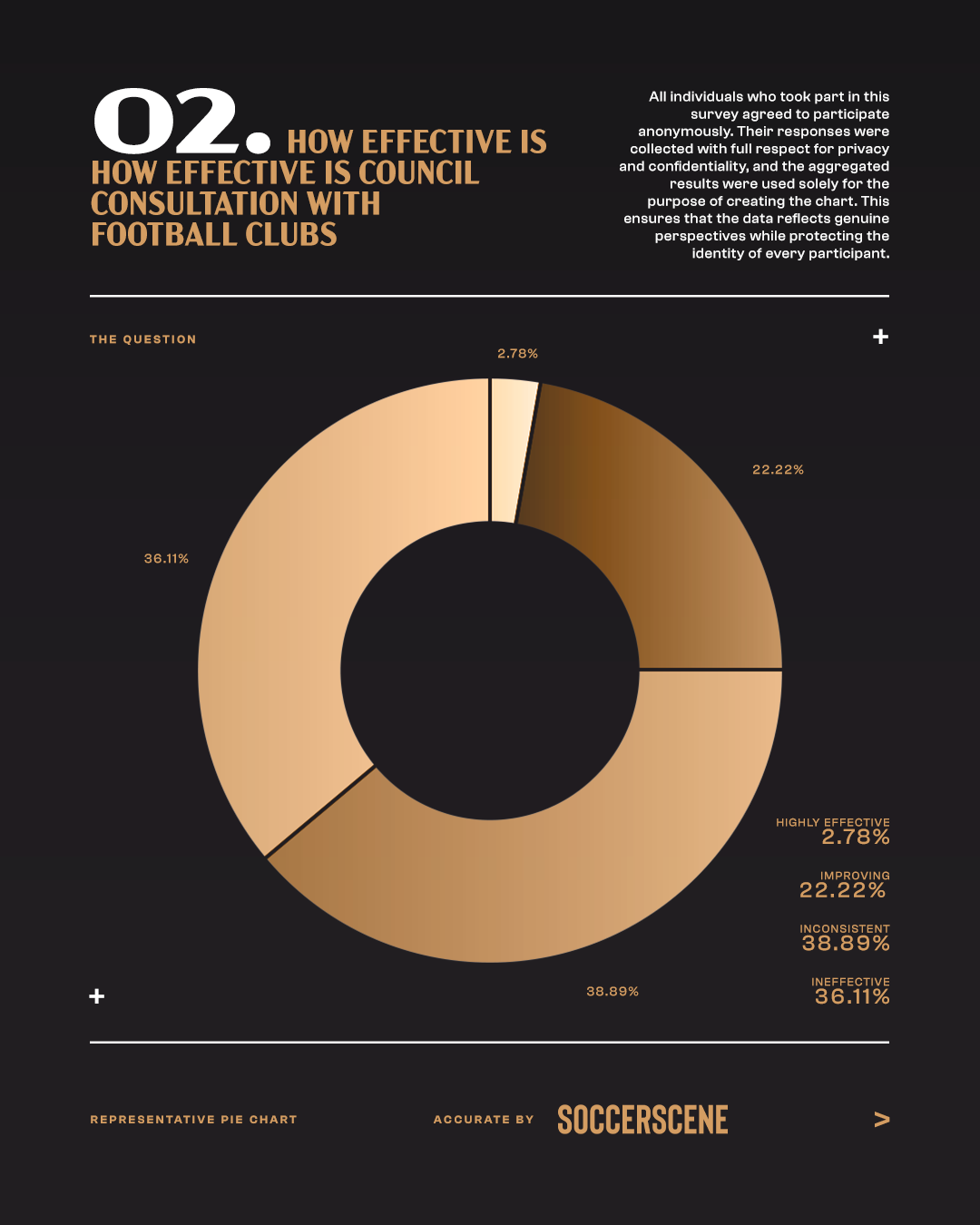
In our survey, over 61% of respondents said their council has limited or no understanding of football participation demand. Consultation outcomes were even worse: 74% said council consultation is inconsistent or ineffective. And when asked if facilities are being planned with long-term growth in mind, the answer should stop every policymaker in their tracks: more than 71% said planning is short-term or non-existent.

Results graphic from Soccerscene’s January industry survey:

This is not a small problem. This is a national warning sign.

Football is not a niche sport. It’s the world’s sport

Councils across Australia are making decisions as if football is still an emerging code, competing for scraps. That thinking is decades out of date.

Football is not only Australia’s largest participation sport in many communities – it is also part of the global economy of sport, the largest sport market on earth, and a cultural engine that connects Australia to Asia, Europe, Africa and the Americas.

When councils underinvest in football infrastructure, they’re not just failing local clubs. They’re failing an entire economic pipeline: participation growth, player development, coaching pathways, community engagement, multicultural integration, women’s sport, health outcomes, events, tourism, and commercial opportunity.

And yet, football is still treated as the code that should “make do”.

The Glenferrie Oval case: a perfect example of the imbalance.

Take the redevelopment of Glenferrie Oval and the historic Michael Tuck Stand in Hawthorn.

This is a major project with a total estimated investment of approximately $30 million, with the City of Boroondara allocating $29.47 million over four years to transform the site into a premier hub for women’s and junior AFL.

Let’s be clear: there is nothing wrong with investing in women’s sport. In fact, it’s essential.

But this investment is also a symbol of something football people have been saying quietly for years: councils understand AFL. Councils prioritise AFL. Councils know how to justify AFL.

They don’t do the same for football, despite its participation scale, multicultural reach, and global relevance.

Across the country, football clubs are being told there is “no funding,” that “planning takes time,” or that facilities “can’t be upgraded yet.” Meanwhile, we see multi-million-dollar grandstands, boutique ovals, and legacy infrastructure funded and delivered for other codes.

Football isn’t asking for special treatment.

Football is asking for fair treatment based on reality.

Councils are stuck in a domestic mindset – while football is global.

Here is the core issue: local councils are making decisions through a domestic sporting lens, while football operates in a global one.

Football isn’t just a Saturday sport. It’s a worldwide industry with elite pathways, commercial frameworks, international investment, and an ecosystem that Australia must compete within.

If councils don’t understand this, they will keep making decisions that shrink our competitiveness.

And this is where the stakes become real.

Australia is not only competing against itself. We are competing against countries like Japan and South Korea, who treat football as a national asset. They don’t leave football infrastructure to fragmented local decision-making without a clear national framework. They invest strategically, align education with delivery, and build systems that create long-term advantage.

We cannot keep pretending we are in the same conversation globally while our local facilities remain stuck in the past.

Clubs are carrying the burden – and it’s breaking the system.

The survey results point to a harsh reality: football clubs feel like they are carrying the weight of growth alone.

When asked what the biggest council-related challenge is, nearly 49% said funding is not prioritised, while others pointed to poor facility design, limited engagement, and slow planning processes.

This isn’t just an inconvenience.

It is creating volunteer burnout, club debt, stagnation in women’s participation, and barriers to junior growth. It is forcing clubs into survival mode – patching up grounds, sharing overcrowded facilities, and trying to grow in spaces that were never designed for modern football demand.

And when planning is short-term, the problem compounds. Councils aren’t just falling behind- they’re building the wrong solutions.

So what do we do? We stop reacting and start leading.

Football cannot keep waiting for councils to “get it” organically. That approach has failed.

What we need now is a national strategic response that is structured, intelligent, and relentless.

This is where football must learn from high-performing football nations  not just on the pitch, but in governance, philosophy, and decision-making.

A powerful example is Korea’s “Made in Korea” project, which was built to identify structural gaps, align stakeholders, and create a unified development philosophy. It wasn’t just a technical framework, it was a national alignment strategy.

Australia needs the off-field equivalent.

A National Football Facilities & Readiness Taskforce.

I believe the time has come to establish a National Football Facilities & Readiness Taskforce, made up of the most capable minds across the game and beyond it.

Not another committee. Not another meeting group.

A taskforce.

It should include leaders from football, infrastructure, urban planning, commercial strategy, government relations, and corporate Australia. We should be selecting the most intelligent and effective people in the country, not based on titles, but based on outcomes.

This taskforce should have one clear mission:

Educate, influence, and reshape how councils plan, consult, and invest in football infrastructure.

Alongside a taskforce, we need long-term strategic working groups embedded across the states, designed to:

educate councils on football participation demand and growth forecasting

standardise best-practice facility design and future-proofing

create consistent consultation frameworks

align football investment with economic, health and multicultural outcomes

build a national narrative that football is an asset rather than a cost

Because right now, the survey shows councils aren’t prioritising football for economic reasons. In fact, only 2.56% of respondents said councils should prioritise football due to economic benefits. This is not because it isn’t true, but because councils haven’t been educated to see football that way.

That is a failure of strategy, not a failure of the game.

This is bigger than facilities – it’s about Australia’s place in the world game.

If we want to be taken seriously as a football nation, we must build a country that treats football seriously.

Not just at elite level.

At local level – where the entire pyramid begins.

The message from the survey is blunt: football’s confidence in councils is collapsing. But within that truth is also an opportunity.

Because when trust hits its lowest point, change becomes possible.

The next step is ours.

We either continue accepting a system that doesn’t understand the world game – or we build one that does.

The Footballing Figures Recognised in January 26 Honours List

In an announcement made on Monday, four individuals were celebrated in the January 26 Honours List for their respective services to the football industry in Australia. 

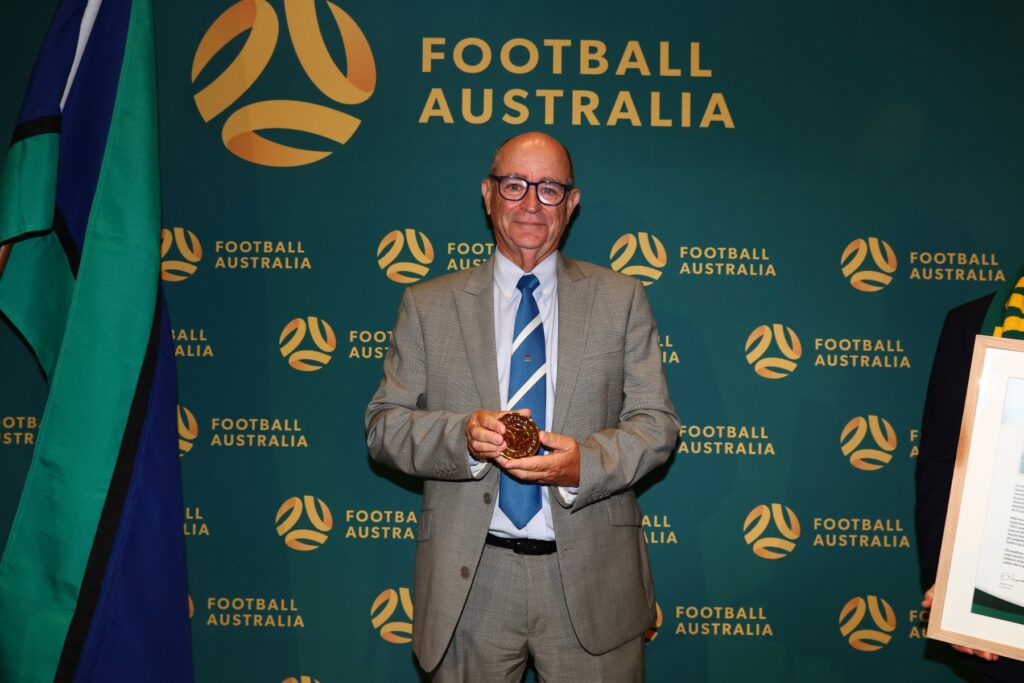
The cohort included Football Tasmania CEO, Tony Pignata, PFA Founder and former CEO, Brendan Schwab, former Football Australia CEO, Ian Holmes and former player and Matildas’ manager, Alen Stajcic. 


Leaders of Australia’s football landscape

Tony Pignata

Recipient of the Medal of the Order of Australia (OAM) is Football Tasmania CEO, Tony Pignata. 

From beginnings as a player for Box Hill Inter, to several leadership roles with clubs like Wellington Phoenix, Sydney FC and Perth Glory, Pignata has dedicated his life to the game. Since 2023, he has led Football Tasmania and helped to develop high-performance pathways and expand participation to ensure football has a long-term future in the region. 

Brendan Schwab

PFA Founder and former CEO, Brendan Schwab, was recognised with the Member of the Order of Australia (AM). 

Schwab’s contributions to football are undeniable, not only as a key figure in the creation of the PFA in 1993 and the A-League, but as an accomplished lawyer who advocated for Australian footballers on the global stage. As a Football Australia Hall of Fame Inductee and PFA Champion, Schwab has undoubtedly woven his name into the fabric of Australia’s football industry. 

Ian Holmes

Former Football Australia CEO, Ian Holmes, was another recipient of the Medal of the Order of Australia (OAM). 

With contributions to football in Australia spanning five decades, Holmes stands as an essential figure in the industry. His work has covered various levels of the game, including as President of New South Wales Amateur Soccer Federation, Football Australia CEO, and Director of Football New South Wales. His leadership and commitment has been pivotal to the growth of football at state and national levels. 

Alen Stajcic

Former player and football manager, Alen Stajcic, was awarded the Medal of the Order of Australia (OAM) for his services as a coach. 

In both the men’s and women’s game, Stajcic has forged a successful record on the international stage for the Matildas and the Philippine Women’s National team, as well as at club level for Sydney FC, Central Coast Mariners, Perth Glory and Western Sydney Wanderers. As Head Coach from 2014-2019, Stajcic helped the Matildas reach new heights on the pitch and thus pave the way for the development of the women’s game across the nation. 


Acknowledging dedication and commitment 

Whether in Australia or beyond, the football industry can be an unforgiving and ruthless sphere in which to work. This is why recognising the people who have made valuable contributions to the nation’s footballing landscape is so important. Through consistent hard work and commitment, they collectively helped to bring the football industry in Australia to where it is today. 

While development is constant and improvements can always be made, it is reassuring to know that the foundations were built with the help of four dedicated individuals deservedly recognised in this year’s January 26 Honours List.


See the full 26 January Honours List here.

Most Popular Topics

Editor Picks

Send this to a friend