

Will Australian football sink or swim in 2020?

A blockbuster calendar provides Australian football with huge opportunities over the next eleven months.

Last week, in what will be music to the ears of new FFA CEO James Johnson, the Olyroos passed a very important test.

The under-23 national team defeated Uzbekistan in the third-place playoff match at the AFC U-23 Championship, thanks to a solo effort from Nick D’Agostino.

Therefore, for the first time in 12 years, Australia will have a men’s football side competing at the Olympic games in Tokyo.

Discussions have already begun around who will be picked for the tournament, as Graham Arnold can also call up three over-age players for the tournament in late July.

The Copa America which Australia will be a part of this year will also factor into Graham Arnold’s decision making.

The South American continental championship also begins a month before the Olympics and the narrow time-frame between both tournaments poses a lot of questions for the Australian coach.

Will he choose a full-strength squad for the Copa America? Which tournament does he favour? Who will be the over-age players in the Olympic squad? Will the likes of Ryan and Mooy play in both tournaments? Or will their English Premier League clubs’ frown upon that?

These are good headaches to have, with exposure to these tournaments crucial for not only youth development but also to build the profile of Australia’s national teams.

Commercially, the FFA seems to be struggling in recent times with sponsors such as NAB and Caltex ending their partnerships with the governing body.

Participating in worldwide tournaments such as this can only improve the FFA’s situation, as potential sponsors see attractive possibilities.

Whilst the men’s teams may not stand a good chance of placing well in either of these tournaments, the Matildas do.

Unlike the men’s tournament, the women have no age restrictions placed on them at the Olympics, meaning Australia’s top players such as Sam Kerr, Caitlin Foord and Steph Catley are all expected to play.

Australia’s favourite national sporting team playing at the Olympics in a good time zone for Australian viewers, should lead to considerable corporate sponsorship interest.

But let’s not get ahead of ourselves.

The women’s national team are yet to qualify for the Olympics, with qualifiers for the tournament set to be held in Sydney next week.

The qualifiers were under threat due to the outbreak of the coronavirus, which was the reason the games were shifted to Sydney in the first place.

The qualifying tournament will go ahead next week, which will boost the coffers at FFA HQ, with games to be played at Campbelltown and Bankwest Stadium.

However, of greater focus to the FFA is the successful hosting of the tournament on such short notice and impressing FIFA in the year the host of the 2023 Women’s World Cup will be announced.

The announcement of the host for 2023 is due in June, with Japan, Colombia and Brazil vying for the honour (alongside Australia and New Zealand’s co-bid).

If the tournament hosting rights were to be won by Australia and New Zealand, FFA would be rubbing their hands together with glee at the long-term benefits that would have on the sport.

But first, Chinese Taipei at home on Thursday and hopefully one step closer to having both male and female teams at the Olympic Games.

And I haven’t even mentioned the road to Qatar 2022…

Previous ArticleNext Article

Football NSW calls on clubs to Make It Red for Heart Health Round

Football NSW is calling on clubs and associations across the state to register for the 2026 Make It Red campaign, joining a national awareness movement aimed at reducing heart-related deaths on sporting grounds ahead of Heart Health Round on the weekend of June 5 to 7.

The campaign, developed by the Heartbeat of Football Foundation, asks sporting clubs to wear red, raise funds and build awareness around heart disease and sudden cardiac arrest, which is the leading single cause of disease burden and death in Australia for both men and women, and one that health authorities say is largely preventable through modifiable risk factors.

The call to action comes as the Foundation continues its work to map and register Automated External Defibrillators across NSW sporting facilities, a project that has already engaged twelve football associations and fed data into both the NSW Ambulance GoodSAM registry and NSW Health’s public AED map. The availability of a functioning, registered AED on site is among the most significant determinants of survival following sudden cardiac arrest, with survival rates declining sharply for every minute without defibrillation.

Football NSW is encouraging clubs to engage with the campaign across three areas. Clubs can register for the Make It Red campaign to help fund research, education and prevention programs. Participants, particularly those aged over 35, are encouraged to seek a free heart health screening test from their local GP or enquire about hosting a Heartbeat of Football testing day. Clubs are also urged to ensure their grounds have active, accessible AEDs in place, with guidance available through Football NSW’s Rescue Ready Guide.

The Make It Red campaign runs from June 5 to July 12, with Heart Health Round taking place across the opening weekend. Clubs can register and access participation resources at makeitred.org.

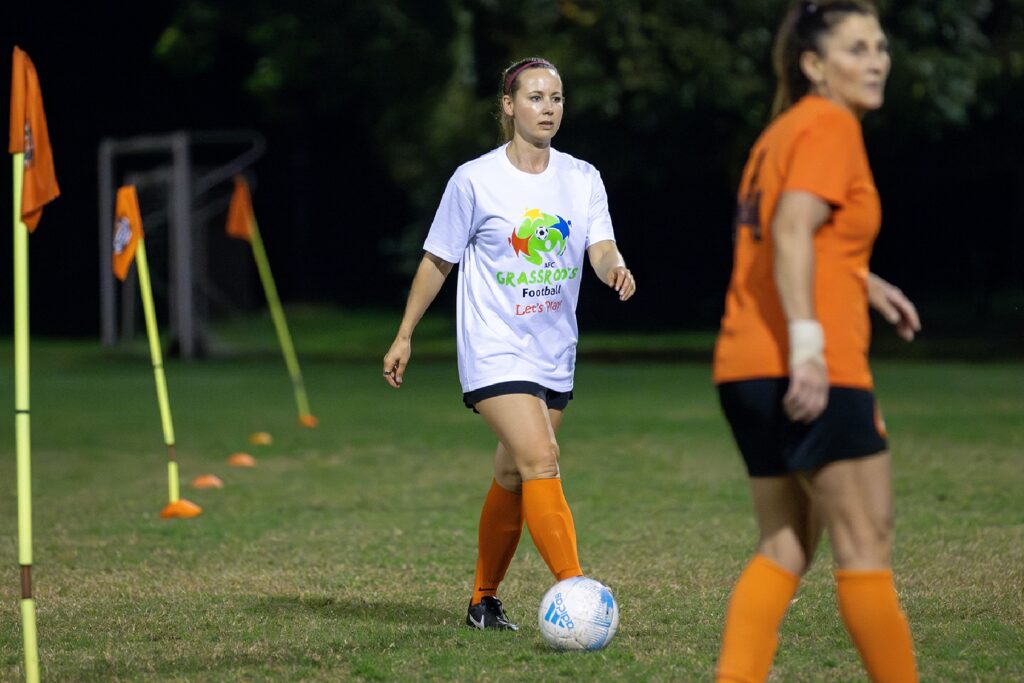
Community Spirit Shines on AFC Grassroots Football Day 2026

This week, Football Australia (FA) celebrated AFC Grassroots Football Day 2026, championing the people and communities who continue to hold up a safe, inclusive and supportive environment in the football landscape.

‘For all, for life’

In collaboration with Football NSW, Canterbury Football Association and community club, Balmain & District Football Club, the day reflected the very best of what football provides.

The event brought in participants of all ages – from 4-74 years-old – and reached a total of 400 people. Girls-only programs, all-abilities sessions and over-age football ensured all were catered for.

Such a diverse range of participants builds on a wider drive during FIFA World Football Week, which seeks to promote the sport not just as the dazzling lights of 100,000-seater stadiums, but as a way to foster community spirit and social development.

Furthermore, FA support through its Club Changer program was a welcome addition to the action, emphasising the organisation’s commitment to nurture a real love for the game across communities in Australia.

“Through Club Changer we support our clubs to provide a safe, fun and enjoyable environment where everyone is welcome; whether that be as a player, volunteer, referee or supporter,” explained National Program Manager Club Development at FA, Grace Lambourne.

“Everyone should feel they belong and are welcome to play, stay, and love the game.”


A welcome celebration

While the upcoming FIFA World Cup will no doubt inspire millions of future Socceroos and Matildas, events like the AFC Grassroots Football Day represent something beyond just inspiration.

It is a platform. An opportunity to express a love for football and to connect with others while doing so.

And connections between the professional and grassroots game is more important than ever if Australia is to nurture the next generation of talent.

This is particularly clear in the rise of women’s football across the nation. Since the FIFA Women’s World Cup, female participation rose by 32%, and registrations for the MiniTillies Program skyrocketed from 264 in 2023, to 1223 in 2024.

The professionals spark passion. But communities turn that passion into playing time.

That is why celebrating grassroots football – and the volunteers and families who sustain it – is a vital part of Australia’s football future. Together, FA and the AFC are creating strong foundations built on positivity, engagement, and inclusivity for all with a love for the beautiful game.

Most Popular Topics

Editor Picks

Send this to a friend