




QUT’s Future of Sport Conference to Shape the Next Era of Global Sport

As Australia accelerates toward the Brisbane 2032 Olympic and Paralympic Games, the Queensland University of Technology (QUT) is set to host a landmark event that will bring together some of the brightest minds in sport, technology, and innovation.

The Future of Sport Conference 2026, taking place on March 27 at QUT’s Gardens Point campus in Brisbane, will unite international and Australian leaders to explore how research, technology, and cross-sector collaboration are redefining the global sporting landscape.

Held as a one-day flagship event, the conference represents a critical platform for dialogue across sport, government, academia, and industry. The aim is to collaborate for a shared vision of sport’s future in a rapidly evolving world.

Driving innovation ahead of Brisbane 2032

Positioned within the broader momentum of Brisbane’s Olympic decade, the conference will examine how emerging technologies and data-driven strategies are reshaping performance, fan engagement, and sporting infrastructure.

Delivered in collaboration with global partners including the MIT Sloan School of Management and supported by major industry stakeholders such as Cisco and PMY Group, the event highlights the increasing convergence between sport and advanced technology.

Key themes include:

  • Emerging sports technologies and performance analytics
  • Mental health and wellbeing in high-performance environments
  • The business of sport and sustainable futures
  • Inclusion and social impact through sport

These focus areas reflect a broader shift within the industry towards positioning sport as a driver of social change, economic growth, and community wellbeing, not just measuring its performance.

A global lineup of industry leaders

The conference will feature an impressive roster of speakers drawn from elite sport organisations, academia, and global technology firms.

International expertise will be complemented by leading Australian voices, including executives, high-performance specialists, and researchers shaping the future of sport both domestically and abroad.

Among them are figures working across professional sport, data science, and innovation, offering attendees rare insight into the trends and strategies defining the next decade.

Collaboration at the core

Beyond keynote presentations, the conference is designed to foster meaningful collaboration. An industry roundtable and networking opportunities will allow stakeholders to exchange ideas, build partnerships, and explore practical solutions to shared challenges.

From grassroots development to elite performance systems, the emphasis on collaboration reflects a growing recognition that the future of sport will be shaped not by isolated innovation, but by connected ecosystems.

Shaping sport’s future

As sport continues to intersect with technology, health, and society, events such as the Future of Sport Conference play a vital role in aligning vision with action.

By bringing together diverse perspectives, from athletes and academics to policymakers and industry leaders, QUT is positioning itself at the forefront of global sport innovation.

With Brisbane 2032 on the horizon, the conference offers a timely and influential platform to not only discuss the future of sport but actively shape it.
Previous ArticleNext Article

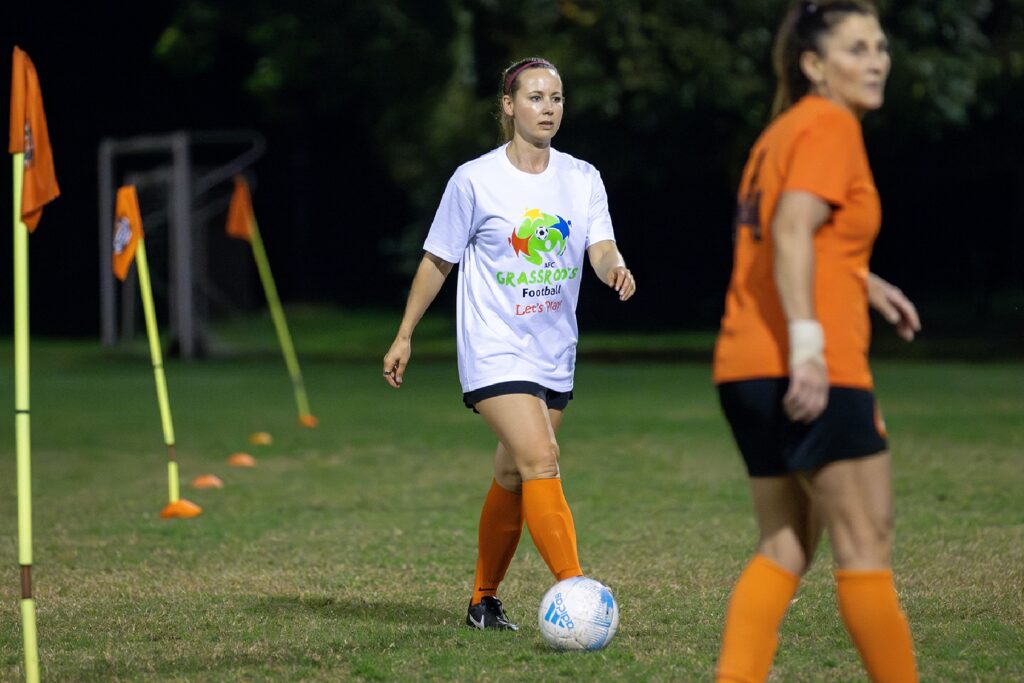
Community Spirit Shines on AFC Grassroots Football Day 2026

This week, Football Australia (FA) celebrated AFC Grassroots Football Day 2026, championing the people and communities who continue to hold up a safe, inclusive and supportive environment in the football landscape.

‘For all, for life’

In collaboration with Football NSW, Canterbury Football Association and community club, Balmain & District Football Club, the day reflected the very best of what football provides.

The event brought in participants of all ages – from 4-74 years-old – and reached a total of 400 people. Girls-only programs, all-abilities sessions and over-age football ensured all were catered for.

Such a diverse range of participants builds on a wider drive during FIFA World Football Week, which seeks to promote the sport not just as the dazzling lights of 100,000-seater stadiums, but as a way to foster community spirit and social development.

Furthermore, FA support through its Club Changer program was a welcome addition to the action, emphasising the organisation’s commitment to nurture a real love for the game across communities in Australia.

“Through Club Changer we support our clubs to provide a safe, fun and enjoyable environment where everyone is welcome; whether that be as a player, volunteer, referee or supporter,” explained National Program Manager Club Development at FA, Grace Lambourne.

“Everyone should feel they belong and are welcome to play, stay, and love the game.”


A welcome celebration

While the upcoming FIFA World Cup will no doubt inspire millions of future Socceroos and Matildas, events like the AFC Grassroots Football Day represent something beyond just inspiration.

It is a platform. An opportunity to express a love for football and to connect with others while doing so.

And connections between the professional and grassroots game is more important than ever if Australia is to nurture the next generation of talent.

This is particularly clear in the rise of women’s football across the nation. Since the FIFA Women’s World Cup, female participation rose by 32%, and registrations for the MiniTillies Program skyrocketed from 264 in 2023, to 1223 in 2024.

The professionals spark passion. But communities turn that passion into playing time.

That is why celebrating grassroots football – and the volunteers and families who sustain it – is a vital part of Australia’s football future. Together, FA and the AFC are creating strong foundations built on positivity, engagement, and inclusivity for all with a love for the beautiful game.

What do Football Queensland’s Annual Numbers mean for Australian Football?

Football Queensland has released its 2025 Annual Report, revealing record total revenue of $25.3 million, participation exceeding 296,000 and more than 94,000 female participants across the state, as the organisation positions itself for a decade of growth leading into the Brisbane 2032 Olympic and Paralympic Games.

The report, released following the Annual General Meeting on Friday May 22, documents a year in which Football Queensland recorded a pre-depreciation surplus of $306,599 while maintaining participant registration fees at their lowest level among all Australian member federations for the fifth consecutive year. A statutory deficit of $269,860 after depreciation was recorded following the recognition of a $295,953 impairment against a long-outstanding debt owed by Football Australia, a matter the board and executive indicated they would continue to pursue.

Total revenue grew from $23.9 million in 2024 to $25.3 million in 2025, driven by increases across registration income, community and advanced football programs, and other income streams. Commercial revenue declined slightly from $3.66 million to $3.36 million across the same period.

Growth on and off the field

The participation figures embedded in the report underscore the scale of the challenge and opportunity facing Queensland football. Women’s and girls’ participation reached 94,165 across all programs, with club-based women’s and girls’ participation growing to 37,946. Coles MiniRoos participation climbed seven percent to 46,448, with female MiniRoos participation up ten percent.

Girls United programs welcomed more than 3,500 participants across leagues, social sessions and carnivals statewide, while the Q-League Schools Competition has now delivered playing opportunities to close to 1,000 students since its inception. Walking Football continued to expand, with the 7th Annual QUT Walking Football Cup attracting 39 teams and more than 300 participants.

Digital engagement also reached new heights, with FQTV livestream views climbing to 2.47 million and women’s viewership surging 67 percent across the year, a figure that reflects the growing audience for female football at state competition level and points to the commercial opportunity the women’s game represents for Queensland football governance.

Coach registrations grew 22.9 percent, with Football Queensland delivering courses to close to 3,000 participants across the state including dedicated all-female Foundation of Football, C Diploma and B Diploma programs. Referee registrations grew 6.3 percent, supported by 170 courses delivered to more than 2,100 attendees and a landmark Memorandum of Understanding with three of Queensland’s leading school sport associations to strengthen referee development pathways.

The 2032 dimension

Perhaps the most consequential element of the 2025 report is Football Queensland’s progress on the Brisbane 2032 infrastructure agenda. The organisation submitted a comprehensive proposal to the Queensland Government’s 100-Day Olympic Infrastructure Review, advocating for a purpose-built Tier 2 rectangular stadium, upgrades to Perry Park and the establishment of a Queensland State Home of Community Football at Meakin Park.

The submission secured meaningful outcomes, with Queensland Government contributions toward Perry Park and a State Home of Community Football included in the government’s 2032 Delivery Plan. The infrastructure foundations being laid now will determine whether the Games leave a lasting legacy for football in Queensland or a missed opportunity.

CEO Robert Cavallucci said the year had been defined by investment in the structures that make participation possible.

“Our priority remained the delivery of accessible and inclusive participation opportunities for all Queenslanders as our community and social programs reached thousands of players in every corner of the state,” Cavallucci said.

Most Popular Topics

Editor Picks

Send this to a friend