



In the fast-evolving field of sports technology, KineMo’s trajectory in early 2026 reflects a piece of a wider movement- one powered by AI, single-camera biomechanics, and a drive to democratise motion tracking across sport, rehab, and even astronaut training.
For Australian club administrators, physios, coaches, and technology partners, KineMo’s recent engagement with Juventus Football Club and the European Space Agency offers both a reflection and a challenge on where athlete monitoring and performance development are heading.
In Turin: Juventus’ Bet on Startup-Led Innovation
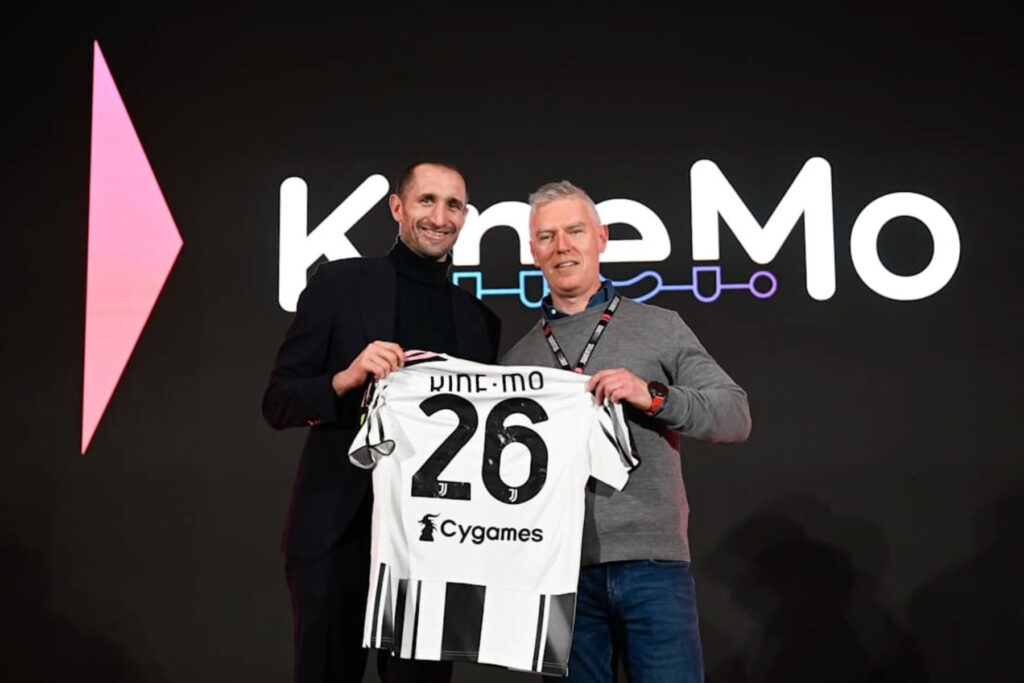
The whirlwind started in Turin. KineMo was announced as part of the inaugural cohort of the Juventus Forward innovation program, a next-generation initiative positioning the iconic Italian club as a hub for open innovation in elite sports. The launch event put KineMo’s founders beside Juventus legends and leading sports strategists, confirming the club’s intent to overhaul performance workflows by welcoming global tech startups directly onto the stadium floor.
As part of the initiative, Juventus Forward embeds startups across athlete development, content creation, and guest management, with the club’s staff collaborating in a “live fire” model that lets technology address complex problems in athlete health, rehabilitation, and skills progression. KineMo’s mandate within this environment is clear: deliver scalable, on-demand 3D functional movement screening from ordinary mobile video, no matter the athlete’s level or setting.
For Australian football, especially at NPL or A-League level, this open-access model holds specific appeal. The legacy of expensive, marker-based lab systems has left grassroots teams and independent physios excluded from best-practice movement analysis, a gap that often translates into missed talent, misdiagnosed rehab, and higher injury risk. KineMo levels this by bringing a clinically validated platform, only requiring a phone and no wearables or calibration. The technology delivers peer-reviewed kinematics across a 33-joint skeleton in 3D, turning club footage, rehab videos, or match film into actionable data for coaches and medical staff.
Expanding the Ecosystem: Milan, Irish Tech, and Global Collaboration
KineMo’s Italian tour continued in Milan, where the team joined other standout Irish sports tech businesses for a market mission tied to Fondazione Milano Cortina 2026. The event, led by Enterprise Ireland, gave KineMo direct access to Olympic officials, ministry representatives, space medicine researchers, and leading kinematics academics.
What began within Trinity College Dublin, as a research thread exploring rugby head injury assessment, now breathes a spectrum of disciplines. The KineMo core AI, capable of extracting force and joint movement from video, is being iterated for use cases in yoga, pilates, gym, remote physiotherapy, and broadcasting. These are not just lateral moves; they’re part of a grander vision to break the silo of high-performance motion tracking and return it to the everyday athlete, rehab professional, or remote coach.
ESA BIC Ireland: Space Medicine Meets Sport Science
Perhaps most symbolically, KineMo recently joined the ESA BIC Ireland incubation program, making its single-camera motion platform part of European astronaut screening, in-flight exercise monitoring, and post-mission rehabilitation. Partnering with the European Space Agency moves KineMo’s AI out of the sports hall and onto the International Space Station, where every movement pattern is a data point in keeping astronauts safe and healthy over long-duration missions.
ESA’s Space Medicine Office described the collaboration as an advance in “resource-efficient assessment of pre, in and post-mission astronaut movement patterns.” For KineMo, and by extension, for every coach or clinician monitoring movement in football or rugby, it’s both validation and opportunity: if the tech is good enough for space medicine, it’s likely robust and adaptable enough for club athlete care.
The Science: Validated Motion Analysis at Scale
KineMo’s published work reinforces its credibility. Trials using multicamera setups for contact scenarios and single-camera video for common strength and rehab exercises showed error margins comparable to gold standard lab outputs. Applying open-source pose estimation and proprietary learning algorithms, the platform can lift 2D joint markers into 3D space. Tests with Vicon systems and mobile phones returned small errors in knee angle and torso metrics, confirming the tech’s accuracy and reliability out in the field.
For sports like football, where injury patterns, return-to-play decisions, and load management are all contingent on movement quality, KineMo’s model enables clubs to run mass screenings, establish robust kinematic baselines, and maintain objective tracking throughout an athlete’s career. For Australia, whose geographically dispersed talent pipeline often makes in-person testing unfeasible, remote video-based motion analysis could spell a revolution in player welfare and recruitment.
The Road Ahead: Integrations, Gamification, and Scaling
Looking ahead, KineMo has positioned itself to integrate directly with partner platforms, offering longitudinal tracking, remote consults, gamified skill monitoring, and population-level screening for youth and senior athletes. Its ability to quantify and visualise movement is already influencing rehabilitation protocols and talent frameworks in European football, but also in allied sectors like healthcare, broadcasting, and at-home fitness.
For Australian football, the lesson is clear. Open innovation isn’t just for the Champions League. Its application has become increasingly relevant for every club, physiotherapy clinic, and federation seeking efficient, scalable athlete monitoring. KineMo’s rise signals a new era where peer-reviewed, lab-grade movement analysis is as close as your smartphone.
Clubs willing to invest now in these solutions will not only improve athlete health but will be at the forefront of a transformation. Objective data will be what underpins all key decisions about player recruitment, return to play, and long-term athlete development. The next decade of sport will belong to those ready to act, test, and iterate and it’s up to clubs in Australia whether to embrace the change or fall behind.